India Inc gives thumbs up as GST turns 10

As GST, considered the biggest tax reform since India’s independence, completes 9 years on July 1, it has also gained near-universal acceptance among businesses as a simple and trusted digital ecosystem, according to the latest Deloitte Survey.
The next phase, GST 2.0, will move beyond digitalisation to an intelligent, predictive and integrated framework, with businesses seeking AI-driven compliance, data-led dispute reduction and a seamless, unified taxpayer experience, the report stated.
GST continues to enjoy strong and growing confidence across India Inc., with more than 99 per cent of businesses reporting a positive and neutral experience and negative sentiment dropping to near zero, down significantly from 5 per cent in 2025 and 10 per cent in 2022. This trust is driven by key improvements such as digitalisation of compliance (69 per cent), automation of tax processes (54 per cent) and the stabilisation of e-invoicing and e-way bill systems (48 per cent), alongside greater transparency, consistency and ease of doing business, the report observed.
MSMEs are increasingly embracing quarterly return filing, considering this as the top GST initiative, which is evidenced by a sharp increase in positive response for implementation of the scheme from 12 per cent in 2023 to 67 per cent in 2026, the report states.
Thus, it is evident that technology-led administration is pivotal, as organisations increasingly depend on digital systems for enhanced accuracy, speed and predictability.
The impact of rate rationalisation is strongest in consumer (64 per cent) and life sciences and healthcare (58 per cent), but remains structurally driven, with few sectors reporting no change in consumption. Overall, despite sector-specific nuances, expectations converge on a more simplified, intelligent GST system, the report pointed out.
GST replaced as many as 17 central and state taxes, along with 13 cesses, with a unified indirect tax system designed to create a common national market across India and eliminate double taxation.
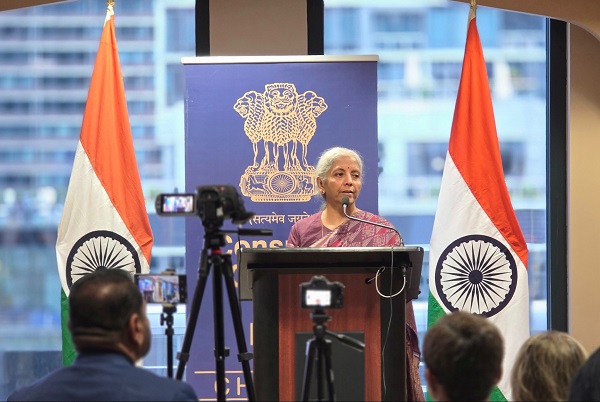
Finance Minister Nirmala Sitharaman has pointed out that the roll-out of Goods and Services Tax (GST) 2.0 with rate cuts across the board has injected fresh momentum into India’s growth story by enhancing household purchasing power, easing business operations, and simplifying tax administration.
"By rationalising slabs and lowering rates across a range of consumer goods, the reform has delivered tangible savings for households, freeing up disposable income and helping stimulate demand," she remarked.
After beginning with multiple slabs of 5, 12, 18 and 28 per cent, along with a cess on luxury and demerit goods, the government introduced a revamped two-tier framework from September 22, 2025. Under the new structure, most goods and services fall under either the 5 per cent or 18 per cent slab, while a separate 40 per cent rate has been retained only for luxury and ‘sin goods’ such as sugary drinks.
The number of registered taxpayers has more than doubled over the past nine years, rising from 66.5 lakh at launch to around 1.6 crore in 2026, reflecting greater formalisation of the economy.
Average monthly GST collections have also nearly doubled from Rs 89,700 crore in 2017-18 to Rs 1.85 lakh crore in FY26, with annual revenues surging to Rs 22.27 lakh crore, which represents an over 8 per cent jump over the previous year.
.jpg)