How Women Can Become More Confident With Everyday Home Repairs
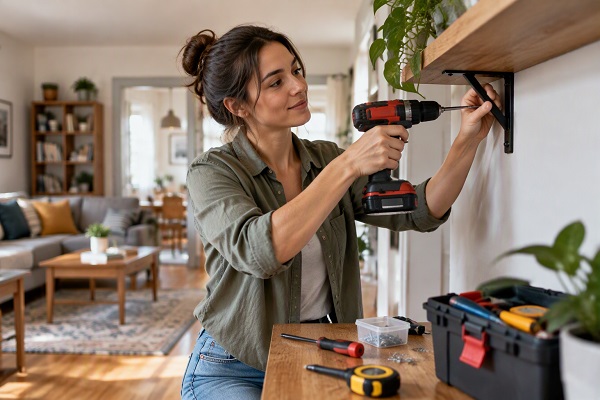
Basic home repairs are often treated as skills that require special expertise or professional experience. In reality, many everyday household problems can be understood and handled with a little knowledge, the right tools and a willingness to learn.
For women, becoming familiar with simple home maintenance can provide greater independence and make it easier to deal with small problems without immediately relying on someone else.
Start With Simple Repairs
There is no need to begin with complicated electrical or plumbing work. Small tasks such as tightening loose screws, replacing cabinet handles, fixing minor furniture issues or adjusting hinges can be good starting points.
Successfully handling simple problems can gradually build confidence for more practical tasks.
Learn How Common Household Systems Work
Understanding the basics of a home can make repairs feel much less intimidating. Knowing where the main water shut-off valve is, how circuit breakers work and where important appliances are connected can be useful during everyday problems.
The goal is not to become an expert, but to understand enough to recognise what is happening.
Build a Basic Tool Kit
A small collection of useful tools can make common repairs much easier. A screwdriver set, measuring tape, adjustable wrench, pliers, utility knife and a few suitable fasteners can cover many basic household tasks.
Knowing what each tool is designed to do is just as important as owning it.
Watch and Learn Before Doing
Tutorial videos, manufacturer instructions and reliable home-maintenance guides can help explain unfamiliar tasks. Watching the full process before picking up a tool can reduce mistakes and make the job feel more manageable.
It is also useful to check whether instructions are specific to the particular appliance, fitting or material involved.
Know Your Limits
Confidence does not mean trying to fix everything yourself. Some problems are better handled by trained professionals, particularly tasks involving mains electricity, gas lines, major plumbing failures or structural damage.
Knowing when to stop is an important part of becoming capable at home maintenance.
Safety Should Come First
Before attempting a repair, the relevant power supply, water source or appliance should be made safe whenever applicable. Protective equipment may also be necessary depending on the task.
A repair that saves a few minutes is not worth creating a bigger safety problem.
Understand Basic Maintenance
Home care is not only about fixing things after they break. Regularly checking loose fittings, leaks, damaged seals, appliance filters and other common maintenance points can help identify problems earlier.
Preventive attention can sometimes be easier and less expensive than dealing with a larger failure later.
Keep Instructions and Information Organised
It can be helpful to keep appliance manuals, warranty details, model numbers and service information in one place. These details are particularly useful when replacement parts or professional support are needed.
Good records can also prevent unnecessary guesswork.
Learn From Small Mistakes
Not every repair will go perfectly the first time. A screw may be stripped, a fitting may be installed incorrectly or a measurement may need to be redone.
Instead of treating mistakes as proof that you are not good at repairs, they can be treated as part of the learning process. The key is to understand what went wrong and improve the next time.
Teach the Next Skill
Once one basic task becomes familiar, another can be added gradually. Learning how to use a drill, understand wall anchors, replace simple hardware or carry out routine maintenance can expand practical knowledge over time.
Building skills step by step is usually more effective than trying to learn everything at once.
The Bigger Picture
Everyday home-repair confidence is less about doing major renovation work and more about becoming comfortable with small practical problems. Knowing how to inspect an issue, use basic tools safely, find reliable instructions and recognise when professional help is necessary can make household life easier.
For women, these skills can add another layer of independence and confidence. The aim is not to become an expert at every repair, but to feel capable enough to handle the problems that are safely within your ability.






 Ltd.jpg)