How to Match Shoes With Your Clothes
Choosing the right shoes can completely change the way an outfit looks. Even a simple combination of jeans and a shirt can look stylish when paired with the right footwear. On the other hand, the wrong shoes can make an otherwise good outfit look unbalanced.
The good news is that matching shoes with clothes does not have to be complicated. By understanding a few basic colour combinations, outfit styles and occasions, you can easily choose the right pair for almost any look.
1. Start With the Occasion
Before choosing your shoes, consider where you are going.
For formal occasions, classic shoes such as black or brown leather shoes usually work well. For casual outings, sneakers, loafers or sandals can be better choices.
For example:
* Office meetings: Black or brown formal shoes
* Casual outings: Sneakers or loafers
* Weddings: Formal leather shoes or elegant loafers
* Travel: Comfortable sneakers
* Beach holidays: Sandals or casual slip-ons
The occasion should always be one of the first things you consider.
2. Match Black Shoes With Neutral Colours
Black shoes are among the easiest footwear options to style. They work particularly well with black, grey, navy and other darker colours.
A black shoe can be paired with:
* Black trousers
* Grey trousers
* Navy suits
* Dark jeans
* Black chinos
For a formal outfit, black shoes with black or charcoal trousers create a clean and sophisticated appearance.
3. Brown Shoes Work Well With Earthy Colours
Brown shoes are versatile and can add warmth to an outfit. They work especially well with beige, cream, khaki, navy and lighter shades of blue.
Try combinations such as:
* Brown shoes + navy trousers
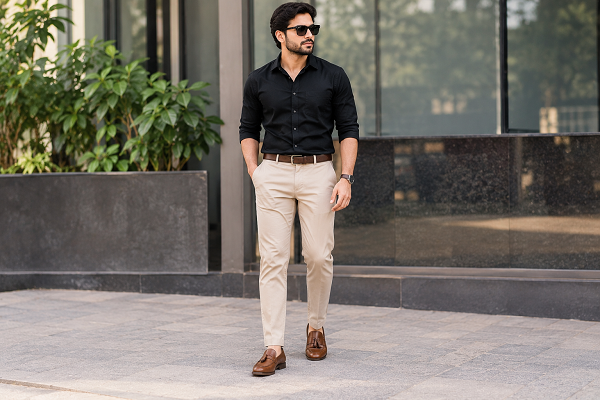
* Brown shoes + beige chinos
* Brown shoes + blue jeans
* Brown shoes + khaki trousers
* Brown shoes + cream trousers
The darker the brown, the more formal the shoe generally appears.
4. White Sneakers Are Extremely Versatile
A clean pair of white sneakers can work with a wide range of casual outfits.
They look particularly good with:
* Blue jeans
* Black jeans
* Chinos
* Shorts
* Casual trousers
* T-shirts
* Polo shirts
White sneakers are especially useful if you want a simple and modern everyday look.
5. Match Shoes With Jeans
Jeans provide plenty of flexibility when it comes to footwear.
Blue jeans can be paired with white sneakers, brown shoes, loafers or boots. Black jeans generally work well with black sneakers, white sneakers or darker boots.
For a relaxed outfit, try:
**Blue jeans + white sneakers + T-shirt**
For a slightly smarter look:
**Blue jeans + brown loafers + casual shirt**
For a darker outfit:
**Black jeans + black sneakers + black or grey T-shirt**
6. Match Shoes With Chinos
Chinos are one of the easiest trousers to style because they sit between casual and formal clothing.
Beige and khaki chinos can be paired with brown loafers, white sneakers or casual boots.
Navy chinos can work with:
* Brown loafers
* Brown leather shoes
* White sneakers
* Dark sneakers
The right choice depends on whether you want a casual or polished appearance.
7. Match Shoes With Formal Trousers
Formal trousers usually require more refined footwear.
Black trousers are traditionally paired with black formal shoes. Grey trousers can work with black or dark brown shoes, while navy trousers can look excellent with brown leather shoes.
Avoid pairing highly casual sneakers with very formal trousers unless you are intentionally creating a modern smart-casual outfit.
8. How to Match Shoes With a Suit
When wearing a suit, your footwear should complement the formality of the outfit.
For a black suit, black formal shoes are usually the safest option.
For a navy suit, black or dark brown shoes can work well.
For grey suits, black or brown shoes can both be suitable depending on the shade and occasion.
A simple rule is:
**The more formal the suit, the more classic and polished the shoes should be.**
## 9. Match Sneakers With Casual Outfits
Sneakers are ideal for everyday clothing. However, different sneaker styles create different looks.
Minimal white sneakers can create a clean and sophisticated appearance. Chunkier sneakers can give an outfit a more streetwear-inspired feel.
For example:
**Oversized T-shirt + relaxed jeans + chunky sneakers**
creates a completely different look from:
**Polo shirt + chinos + minimal white sneakers.**
The shoes should therefore match not only the colour of your clothes but also their overall style.
10. Don't Ignore the Colour of Your Belt
If you're wearing formal leather shoes, matching your belt with your shoes can make the outfit look more coordinated.
For example:
**Brown shoes + brown belt**
or
**Black shoes + black belt**
The shades do not always need to be perfectly identical, but they should look harmonious.
11. Consider the Colour of Your Clothes
You don't always have to match your shoes exactly with your clothes. In fact, wearing exactly the same colour from head to toe can sometimes make an outfit look flat.
Instead, look for colours that complement each other.
Some easy combinations include:
* White + almost any neutral shoe
* Blue + brown or white
* Black + black or white
* Beige + brown or white
* Grey + black, white or brown
* Navy + brown, black or white
* Khaki + brown, white or beige
Neutral shoes are generally the easiest starting point.
12. Choose Shoes According to the Season
The weather and season can also influence your footwear choice.
During summer, lightweight sneakers, loafers and sandals can be comfortable choices.
During the monsoon, waterproof or easy-to-clean footwear may be more practical.
During winter, boots, sneakers and leather shoes can work well depending on the outfit and weather.
Choosing footwear according to the season can make your outfit both stylish and practical.
13. Think About the Overall Style
Colour is important, but it is not everything.
A pair of athletic running shoes may not work well with a formal shirt and trousers. Similarly, highly polished formal shoes may look out of place with shorts and a casual T-shirt.
Think about the overall style:
**Casual clothes → Casual footwear**
**Smart-casual clothes → Loafers, clean sneakers or casual leather shoes**
**Formal clothes → Formal leather shoes**
This simple approach makes shoe selection much easier.
14. Don't Forget Comfort
Looking stylish is important, but comfortable shoes are equally important.
If you are going to walk or stand for several hours, choose footwear that provides adequate support and fits properly.
A stylish pair of shoes that causes discomfort can quickly ruin your entire day.
15. Build a Basic Shoe Collection
You don't need dozens of pairs of shoes to create different outfits.
A practical collection can include:
* One pair of clean white sneakers
* One pair of black formal shoes
* One pair of brown leather shoes
* One pair of casual sneakers
* One pair of loafers
* One pair of comfortable everyday footwear
These basic options can cover a large number of outfits and occasions.
Final Thoughts
Matching shoes with clothes becomes much easier when you focus on three things: **colour, occasion and overall style**.
Black shoes are excellent for formal and darker outfits, brown shoes work particularly well with earthy and lighter colours, and white sneakers are a versatile choice for casual clothing.
You don't need to follow complicated fashion rules. Start with neutral colours, choose shoes that suit the occasion and make sure the footwear complements the overall outfit.
The right pair of shoes can turn a basic outfit into a polished and confident look.