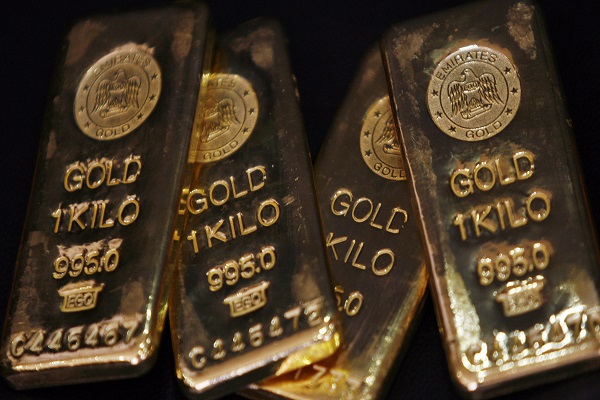
Gold Will Never Lose the Sheen while silver outlook remains constructive: Emkay Wealth Management

According to Emkay Wealth Management, Gold and silver continue to retain their long-term appeal despite recent profit booking and short-term volatility, supported by strong fundamentals, central bank demand and expectations around global interest-rate movements. As of July 31, 2026, gold was trading around US$4,328 per ounce, while silver was at approximately US$62 per ounce.
Gold has found strong support around the US$4,060 level, while silver has held the US$58 level over the past four to six weeks. Despite the recent correction, the resilience in precious metals indicates that the broader uptrend remains intact, with the current phase of consolidation providing a stronger base for the next leg of the cycle.
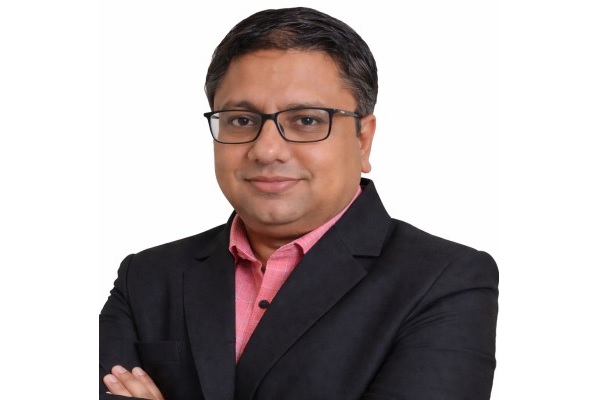
According to Mr. Vivek Choksey, Regional Manager, Emkay Wealth Management, Ahmedabad, “The recent correction in precious metals needs to be viewed in the context of the larger structural rally. Gold and silver have continued to demonstrate resilience despite profit booking and uncertainty around the interest-rate trajectory. Gold, in particular, continues to benefit from its role as a strategic reserve asset, while sustained central bank accumulation provides an important fundamental support. With the rally having completed only a part of its historical cyclical journey, we believe the long-term case for gold remains constructive. Any sustained shift towards a softer interest-rate environment could further strengthen the outlook for precious metals.”
Gold: Strong Fundamentals Keep the Long-Term Outlook Intact
Gold's recent movement has been supported by multiple structural factors. The rally in the metal has been driven not merely by momentum but by underlying fundamentals, including continued central bank buying and demand for diversification of reserves.
The current rally has also completed only a portion of its average historical cyclical period, suggesting that the longer-term cycle may still have room to play out. While profit booking may continue to create intermittent volatility, the broader support structure remains healthy.
Gold ETFs have also delivered strong returns over the longer term. As of July 31, 2026, the one-year returns of leading Gold ETFs stood above 43%, with HDFC Gold ETF delivering 43.47%, Kotak Gold ETF 43.53% and Nippon India ETF Gold BeES 43.24%. Over a three-year period, the respective schemes delivered 32.37%, 32.49% and 32.27%.
Gold Funds have similarly generated robust long-term returns, with leading schemes delivering around 42% over one year and more than 31% over three years.
Silver: Strong Returns but Higher Volatility
Silver has also witnessed significant long-term appreciation, although its higher sensitivity to industrial demand and market sentiment has resulted in greater short-term volatility.
As of July 31, 2026, ICICI Pru Silver ETF delivered a one-year return of 95.24%, while Nippon India Silver ETF delivered 94.55%. Over three years, the schemes generated returns of 42.09% and 41.71%, respectively.
Silver Funds have also maintained strong long-term performance, with one-year returns of over 90% for the schemes tracked.
Looking ahead, the outlook for gold remains particularly favourable if global monetary policy shifts towards a softer interest-rate regime for an extended period. Such a scenario could reduce the opportunity cost of holding non-yielding assets and further strengthen the investment case for gold.
Gold is estimated to have another 12% upside potential, while silver could encounter resistance around US$68 and US$74 per ounce, respectively. Investors, however, should remain mindful of the higher volatility associated with silver and the possibility of intermittent corrections across the precious-metals complex.
For investors, the recent correction may therefore be viewed less as a change in the long-term narrative and more as part of the normal cyclical movement of precious metals. A measured allocation to gold and silver can continue to play a role in portfolio diversification, subject to individual risk appetite, investment horizon and asset-allocation strategy.
Above views are of the author and not of the website kindly read disclaimer