Gold's Rally Takes a Pause, But the Long-Term Story Remains Strong say’s Motilal Oswal Financial Services Precious Metals Report
Maintains Positive Outlook on Precious Metals; Sees Gold at $4,500–$4,700 in the Medium Term
Gold and silver markets have witnessed significant volatility in 2026 following an exceptional rally in the previous year, with global macroeconomic developments, shifting US monetary policy expectations and geopolitical uncertainties influencing price movements. According to the latest Precious Metals Quarterly report by Motilal Oswal Financial Services Ltd. (MOFSL), the long-term outlook for precious metals remains constructive despite near-term headwinds, with price corrections offering potential accumulation opportunities.
Titled 'Gold's Rally: Deferred, Not Derailed', the report highlights the contrasting price movements witnessed in precious metals during the year. Gold surged to a record level of nearly $5,600 per ounce in January 2026 before correcting below $4,000 and subsequently recovering. Silver, meanwhile, rallied beyond $100 per ounce before witnessing an even sharper correction. These movements were also reflected in domestic markets, with fluctuations in the USD/INR exchange rate adding to price volatility.
Unlike the largely one-directional rally witnessed in 2025, precious metals have experienced sharper swings in 2026, driven by changing expectations around US interest rates, persistent inflation, elevated bond yields and geopolitical developments.
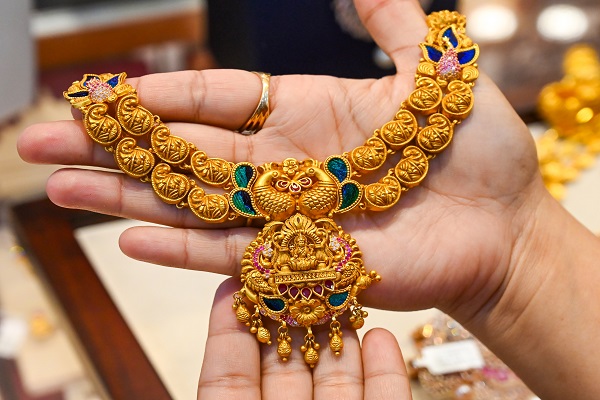
Diwali and Dhanteras remain among India's most important occasions for precious-metal purchases, supported by traditional buying patterns, the wedding season and the cultural significance of gold and silver. However, historical trends indicate that festive demand has a stronger correlation with domestic premiums, imports and physical buying volumes than with international price movements.
Over the longer term, domestic Diwali gold prices have increased from approximately Rs 30,000 in 2016 to nearly rs 1.50 lakh in 2026, reflecting the significant appreciation in gold prices over the past decade. Historical performance also indicates that gold has generally delivered stronger returns during the 30 days preceding Diwali compared with the subsequent 30 days. This trend was particularly pronounced in 2025, when gold gained nearly 20% and silver approximately 38% in the month leading up to the festival.
Despite elevated prices, investment demand has remained relatively resilient. Global gold ETF holdings increased by approximately 187 tonnes during August and September 2026, taking total holdings to a record 4,256 tonnes, while third-quarter inflows reached a record US$31 billion. In India, gold ETF inflows increased 71% month-on-month to Rs 44.5 billion in September 2026, while silver ETFs attracted inflows of rs 19.7 billion. Meanwhile, Indian gold imports moderated to US$1.8 billion in September from US$2.3 billion in August, reflecting the impact of higher prices and measures to restrain bullion inflows.
Commenting on the factors influencing precious metals, Navneet Damani, Head of Research – Commodities, Motilal Oswal Financial Services Ltd., said:
"Gold continues to retain its importance as a defensive asset amid global economic and geopolitical uncertainties. However, its near-term trajectory will remain sensitive to the US Federal Reserve's monetary policy, inflation trends, movements in the US dollar and real bond yields. The 25-basis-point rate hike by the US Federal Reserve in September, taking the policy rate to 3.75%–4.00%, has reinforced concerns around tighter monetary conditions. At the same time, central-bank diversification, sustained investment demand and fiscal uncertainties continue to provide structural support to gold. In India, elevated prices have moderated discretionary jewellery demand, although wedding-related purchases and investment demand have remained relatively resilient."
Manav Modi, Commodities Analyst at Motilal Oswal Financial Services Ltd., added:
“Gold and silver are navigating a more complex market environment in 2026, with the interplay between safe-haven demand and macroeconomic headwinds driving heightened volatility. While elevated US Treasury yields and a stronger dollar have weighed on prices, underlying investment demand remains encouraging. Global gold ETF holdings have risen to record levels, with significant inflows during the third quarter, indicating that investor interest in gold remains resilient despite recent price corrections. Silver, on the other hand, offers greater upside potential but is accompanied by significantly higher price volatility."
Looking ahead, the direction of US real yields is expected to remain a key determinant of gold prices. While elevated yields and a stronger dollar could trigger near-term profit-taking and volatility, persistent inflation, fiscal concerns, geopolitical uncertainty and central-bank diversification could provide support to precious metals over the medium to long term.
Commenting on the outlook, Navneet Damani, Head of Research – Commodities and Manav Modi, Commodities Analyst at Motilal Oswal Financial Services Ltd jointly said:
"While near-term volatility cannot be ruled out, we believe the long-term investment case for precious metals remains intact. The next turning point for gold could emerge when real yields stop rising, particularly if persistent inflation, fiscal concerns or slowing economic growth begin to alter the monetary policy outlook. We continue to maintain a buy-on-dips approach towards gold, with an accumulation zone of $3,800–$3,900 per ounce, a short-term target of $4,200 and a medium-term target of $4,500–$4,700. In the domestic market, assuming USD/INR at 96, we see Rs 1,35,000 as a favourable accumulation zone, with a short-term target of Rs 1,48,000 and a medium-term target of Rs 1,60,000–Rs 1,68,000. Silver offers greater upside leverage, but investors should remain mindful of its significantly higher volatility. Overall, rather than chasing price momentum, we believe investors should focus on disciplined accumulation during corrections, keeping in mind the role of precious metals in wealth preservation and portfolio diversification."
Against this backdrop, gold continues to maintain its appeal as a relatively defensive asset, while silver offers greater upside potential but carries a higher degree of volatility. As global macroeconomic conditions, monetary policy expectations and geopolitical developments continue to shape the precious metals market, investors may consider a disciplined accumulation strategy during price corrections rather than chasing short-term momentum.
Above views are of the author and not of the website kindly read disclaimer