FTAs, trade promotion events help India’s services exports rise to $421.3 billion in FY26
India’s services exports rose to $421.3 billion in fiscal 2025-26, driven largely by telecommunications, computer and information services and business services, the government said on Friday.
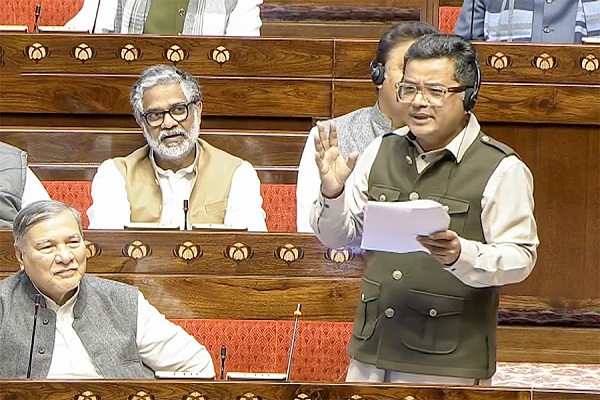
Telecommunications, computer and information services accounted for $206.6 billion and business services contributed $124.2 billion in 2025-26, MoS Commerce and Industry, Jitin Prasada said in Rajya Sabha, outlining FTAs and trade promotion events playing a key role in boosting exports.
The total services exports climbed from $254.5 billion in 2021-22 to $325.3 billion in 2022-23, $341.1 billion in 2023-24 and $387.5 billion in 2024-25 before reaching $421.3 billion in 2025-26, the statement added.
To enhance services exports growth, the government follows a multi?pronged strategy that includes focused market and sector strategies, addressing domestic constraints in consultation with stakeholders, and expanding market access through free trade agreements, the minister said.
Government has secured comprehensive market access and national treatment in services to allow Indian service providers to provide services in key sectors on no less favourable terms through different modes such as cross-border (including digital mode), commercial presence in the FTA partner country and temporary movement of professionals to the partner country.
India’s recent FTAs have incorporated disciplines on domestic regulation to ensure that authorisation processes for key services are time-bound, predictable, objective, impartial, and transparent. This ensures that Indian service suppliers do not face challenges in partner countries due to opaque, unpredictable or burdensome regulatory procedures.
Through FTAs, India has been able to obtain structured, expedited routes that will facilitate temporary mobility of skilled Indian professionals to provide services in foreign markets.
The government also worked on facilitative provisions for time-bound negotiations of Mutual Recognition Agreements (MRAs) between relevant professional bodies, to facilitate recognition of qualifications and associated licensing requirements. Such MRAs aim to ensure that partner nations accept each other's certifications, and professionals do not have to go through duplicative local testing, additional training, or lengthy re-certification processes before they can practice.
Dedicated provisions or annexes were secured in the field of traditional medicine in agreements with Oman and EU, the minister mentioned among several other steps to strengthen services exports.