Forex volatility highest in S. Korea since pandemic amid Middle East tensions
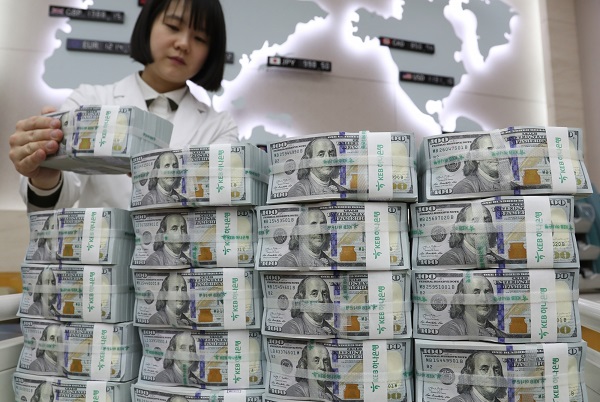
The daily volatility of the Korean won against the US dollar has risen to its highest level since the Covid-19 pandemic amid heightened tensions in the Middle East, data showed on Sunday.
The won has fluctuated sharply following the US-Israeli joint attacks on Iran on February 28, with the average daily fluctuation of the won against the greenback reaching 13.2 won as of Friday, according to the economic statistics system of the Bank of Korea, reports Yonhap news agency.
The level of volatility marks the highest since March 2020, when it reached 13.8 won as the COVID-19 pandemic roiled global financial markets.
It is also higher than the 9.7 won recorded in April 2025, when U.S. President Donald Trump threatened to impose sweeping tariffs on foreign imports in what he dubbed "Liberation Day."
The Korean won was also among the worst-performing currencies, falling 2.81 percent against the U.S. dollar this month alone, according to Yonhap Infomax, the financial data arm of Yonhap News Agency.
The decline was steeper than that of the euro (1.69 percent), the Australian dollar (1.24 percent) and the Japanese yen (1.21 percent).
Market watchers attribute the heightened volatility to South Korea's heavy reliance on energy imports and its export-dependent economy.
"As South Korea has relatively higher dependence on energy imports and its market is more open, the Korean won is more sensitive to related risks and is showing increased volatility," said Park Hyung-joong, an economist at Woori Bank.
Meanwhile, South Korean stocks pared earlier losses to close nearly unchanged on Friday on a growing appetite for autos and defense firms amid the ongoing Middle East crisis. The local currency fell against the U.S. dollar.
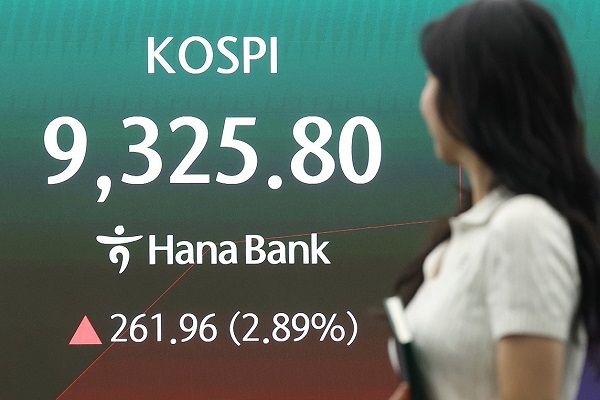
Starting 1.66 percent lower, the Korea Composite Stock Price Index (KOSPI) turned positive in the afternoon to close at 5,584.87, up 0.02 percent, or 0.97 point.