South Korea, Qatar to push for deeper cooperation in manufacturing AI, semiconductor
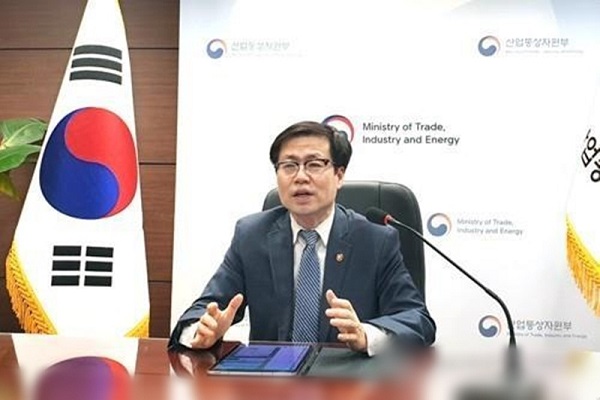
Trade ministers of South Korea and Qatar agreed on Wednesday to expand the two countries' cooperation in advanced industries, including artificial intelligence (AI) transformation of the manufacturing sector, semiconductor and biohealth, a Seoul ministry said.
Trade Minister Yeo Han-koo met with his Qatar counterpart, Ahmed bin Mohammed Al-Sayed, in Seoul to discuss ways to expand economic and investment cooperation between the two nations, according to the Ministry of Trade, Industry and Resources, reports Yonhap News Agency.
The ministers concurred to bolster bilateral cooperation in advanced industries by integrating Seoul's manufacturing capabilities and Qatar's capital and strong commitment to industrial diversification, the ministry said.
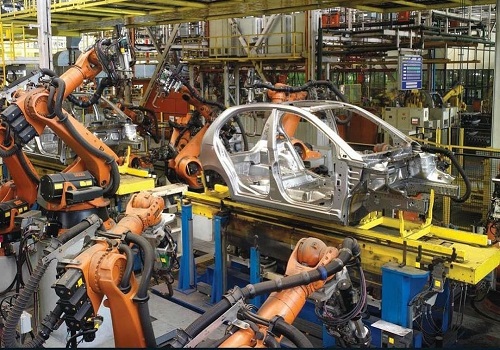
In particular, they discussed possible cooperation in the manufacturing AI and robotics sectors with Korea's push for the manufacturing AI transformation (M.AX) initiative.
Yeo also highlighted Korean biopharmaceutical firms' ongoing expansion into Qatar and the potential of local AI chip fabless companies, calling for investment collaboration in such areas.
He also commended the resilience of Qatar amid the ongoing conflict in the Middle East, reaffirming Seoul's commitment to energy cooperation with the country, according to the ministry.
"Going forward, we will continue to strengthen energy security based on our strategic partnership with Qatar while steadily expanding the scope of bilateral economic cooperation into future industries, such as manufacturing AI and biotechnology," Yeo was quoted as saying.
Meanwhile, South Korea has secured 273 million barrels of crude oil by the end of this year from four nations in the Middle East, presidential chief of staff Kang Hoon-sik said this month.
Kang, who returned home from his eight-day trip to Oman, Saudi Arabia, Qatar and Kazakhstan, said the nation also secured 2.1 million tons of naphtha by the end of this year.
"The 273 million barrels of crude oil, based on last year's consumption levels, are sufficient to sustain the economy for more than three months under normal operating conditions without the need for additional emergency measures," Kang told reporters.