EV Battery Recycling: The Hidden Industry Powering Sustainable Transport
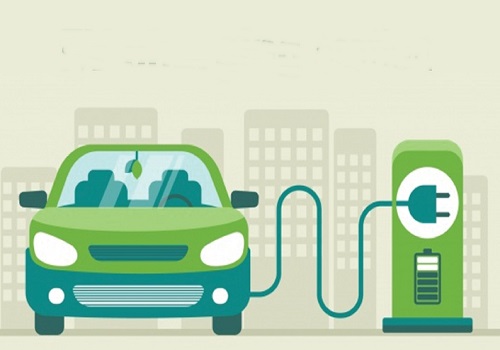
As electric vehicles dominate roads worldwide in 2026, a new industry has quietly emerged as the backbone of sustainability EV battery recycling. With millions of lithium-ion batteries reaching end-of-life, governments and companies are racing to recover valuable materials like lithium, nickel, and cobalt to reduce waste and dependence on mining. This hidden industry is now central to the global clean-energy transition.
The world’s EV fleet surpassed 300 million units this year, and recycling has become a strategic necessity. China, the largest EV market, has implemented strict regulations requiring automakers to track battery life cycles and ensure proper recycling. The country’s Ministry of Industry and Information Technology expanded its “Battery Traceability Platform” in 2026, linking manufacturers directly with certified recyclers. Europe followed suit with the EU Battery Regulation, which came into full effect this year, mandating that all batteries sold must contain a minimum percentage of recycled materials 16 Percent cobalt, 6 Percent lithium, and 6 Percent nickel by 2030.
In the United States, the Inflation Reduction Act continues to fuel investment in domestic recycling facilities. Companies like Redwood Materials, founded by Tesla co-founder JB Straubel, and Li-Cycle in Canada have expanded operations to process thousands of tons of used batteries annually. Their goal create a closed-loop supply chain where old batteries feed new ones. The U.S. Department of Energy’s 2026 “Battery Materials Recovery Program” has also launched grants for startups developing eco-friendly extraction methods using water-based chemistry instead of high-temperature smelting.
India, too, has entered the race. The Ministry of Heavy Industries announced the Battery Waste Management Rules 2026, requiring EV manufacturers to partner with certified recyclers. Startups like Attero Recycling and Lohum Cleantech are scaling up lithium recovery plants, positioning India as a regional hub for sustainable battery materials. These initiatives align with the government’s broader National Electric Mobility Mission Plan, which aims to make EVs account for 30 Percent of new vehicle sales by 2030.
Globally, innovation is accelerating. Northvolt in Sweden unveiled its ''Revold Ett'' facility, capable of recycling 125,000 tons of batteries per year, while CATL in China introduced a new process that recovers 99 Percent of lithium from used cells. Japanese automakers like Toyota and Honda are collaborating with local recyclers to reclaim rare metals from hybrid and EV batteries, reducing reliance on imported raw materials. Meanwhile, researchers in South Korea and Germany are developing solid-state battery recycling techniques, anticipating the next generation of EV technology.
The environmental impact is profound. Recycling reduces carbon emissions by up to 70 Percent compared to mining new materials and prevents hazardous waste from entering landfills. Economically, it’s creating thousands of green jobs and stabilizing supply chains disrupted by geopolitical tensions and resource scarcity. Analysts predict that by 2030, recycled materials could supply nearly half of the global battery production demand.
EV battery recycling is no longer a side story it’s the engine of sustainable transport. As governments tighten regulations and technology advances, this industry is transforming waste into wealth, ensuring that the electric revolution remains truly green. The next frontier will be scaling these solutions globally, making every battery part of a circular economy that powers the future responsibly.