ECOSCOPE : The Economy Observer CAD widens and capital flows weaken by Motilal Oswal Financial Services Ltd

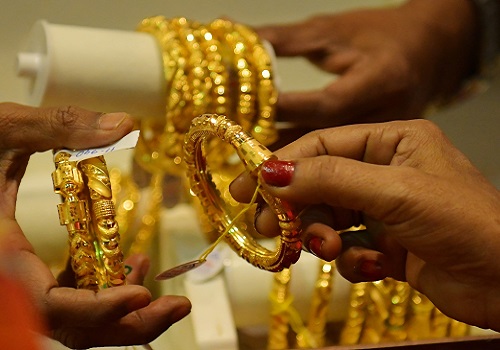
- India’s external account deteriorated in 2QFY26, with the surge in gold imports widening the trade deficit and weak FII flows impacting the capital account. As a result, the balance of payments (BoP) worsened, declining to 1.1% of GDP (-USD10.9b) on a net basis.
- For FY26, the wider trade deficit is expected to increase the CAD/GDP to 1.2% from a modest 0.6% deficit in FY25. For FY27, we expect CAD to remain steady at 1.2% of GDP (assuming the oil price at USD60pb).
- The CAD trajectory has a direct bearing on USDINR depreciation. With USDINR closing at around 89.90 on 2nd December, it is only a matter of time before it reaches 90. So far, USDINR has depreciated ~5% FYTD. By March-end, it is likely to remain range-bound at 88-90, depending on the trade deal outcome. Any appreciation is likely to be bought in by the RBI to rebuild lost FX reserves, along with importers’ participation. For FY27, we expect USDINR to average 90 per US dollar.
2QFY26 CAD/GDP widens to 1.3%
India’s 2QFY26 CAD rose significantly to USD12.3b (1.3% of GDP) from USD2.7b (0.3% of GDP) in 1QFY26, led by the widening of the trade gap. Merchandise trade deficit widened to USD87.4b in 2QFY26 from USD68.9b in 1QFY26, with a sharp increase in imports, notably gold and non-oil-non-gold imports. It is noteworthy that core exports were steady despite global uncertainty, supported by the advancement of export orders (+0.6% QoQ). Core imports picked up by 7.4% QoQ, led by electronics, agri, pharma, metals, and certain capital goods. The widening of the trade deficit was marginally offset by strong service flows. Net service surplus increased by USD3b to USD51b in 2QFY26, led by software and business service exports. Net private remittances increased to USD38.2b in 2QFY26 (+USD5b), led by workers’ remittances (Indians working overseas).
Net capital inflows weaken the BoP account
India’s capital account moderated to USD0.1b in 2QFY26 (0.6% of GDP) as against USD0.8b in 1QFY26 (8.0% of GDP). This was led by a sharp decline in FII inflows of USD5.7b, especially via the equity route. Net equity outflows were USD9.1b (1Q: Inflows of USD5.4b). Net debt inflows were USD3.7b (1Q: Outflows of USD2.9b).
Net FDI moderated 40% QoQ to USD2.9b. ECBs dropped to USD0b, the lowest in seven quarters, while short-term credit to India picked up to USD2.9b, marking a three-quarter high. Short-term trade credit is likely to reverse in 3QFY26 on the back of reduced export growth (refer to Exhibit 1).
CAD likely to remain steady at 1.2% in FY27 despite weaker oil prices
The domestic economy, so far, has remained resilient to external sector headwinds, according to 2QFY26 GDP data. However, exports continue to depend on global growth, especially that of key trading partners. This highlights India’s vulnerability to US trade tariffs and, in general, to the growth outlook in the US, EZ, UK, and Asian regions, even as it attempted to diversify exports. We anticipate a modest 6% growth in core exports for FY27. On the imports front, core imports are expected to pick up by 10%, broadly in line with our assumption for nominal GDP growth. We forecast a net services surplus of 8%. An important variable likely to determine the trajectory of CAD is the oil price, which is expected to average USD65 pb in FY26.
For FY27, we expect the supply overhang and demand weakness from China to push oil prices to USD60 pb with downside risks. Against this backdrop, we expect CAD to remain steady at 1.2% of GDP in FY27 (assuming oil price at USD60pb). The CAD trajectory has a direct bearing on USDINR depreciation. With USDINR closing at around 89.90 on 2nd December, it is only a matter of time before it reaches 90. So far, USDINR has depreciated by ~5% FYTD. By March-end, it is likely to remain range-bound at around 88-90, depending on the trade deal outcome. Any appreciation is likely to be bought in by the RBI to rebuild lost FX reserves, along with the importers’ participation.
For More Research Reports : Click Here
For More Motilal Oswal Securities Ltd Disclaimer
http://www.motilaloswal.com/MOSLdisclaimer/disclaimer.html
SEBI Registration number is INH000000412