Economy Weekly Macro Briefing by Choice Institutional Equities Ltd
Almost 60% of Fertiliser Subsidy for FY27 Used Up Till Now
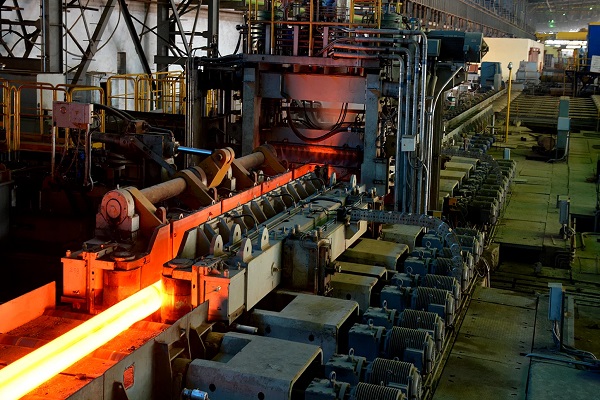
* GoI has already spent more than half of its fertiliser subsidy allocation for FY27 in less than five months. It has utilised around 58% of the budgetary allocation, or approximately 56% of the budget estimate when a re-appropriation of certain expenditures is taken into account.
* The government has spent Rs.990 Bn in the first 4.5 months, signalling that the annual subsidy requirement is expected to breach the budgeted estimate of Rs.1.77 Tn.
* Of the Rs.990 Bn spent, Rs.778 Bn has been spent on imports and domestic production of urea. The remaining Rs.212Bn has been utilised for imports as well as domestic production of DAP, MoP and NPKs.
Burning through 58% of the annual allocation in under five months points to a budgeting problem as much as a spending one. The near-certain breach of the Rs.1.77 Tn estimate suggests the original provision was optimistic, and a fiscal overshoot on subsidies will have to be met either by supplementary demands or by squeezing other heads, neither of which is costless. Elevated import dependence also leaves the bill exposed to global price and currency swings that the Centre cannot control. The overrun is manageable in isolation, but it is a recurring pattern that reflects the absence of durable reform to nutrient-based pricing rather than a one-off shock
Centre Lifts Export Ban on Wheat Flour
* The central government lifted the export ban on wheat flour and related products, including maida, semolina, wholewheat atta and resultant atta, with immediate effect.
* The move allows free exports of these products for the first time since Jul’22, when India halted wheat exports after a sharp surge in global wheat and atta prices post the Russia-Ukraine conflict.
* The government had partially eased the restrictions earlier this year by allowing exports of up to five million tonnes of wheat annually.
Lifting the ban is a confident signal on domestic supply, but the timing warrants some caution. Freeing flour exports for the first time since 2022 implies the government is comfortable that stocks and the incoming crop can absorb external demand without reigniting the very price pressures that triggered the ban. Yet that comfort sits awkwardly against a food basket the MPC still flags as the dominant inflation risk, and a deficient monsoon could quickly change the arithmetic. The staggered approach, moving from a five-million-tonne wheat quota to a full flour reopening, suggests policy is being calibrated in steps rather than from a position of clear surplus. The move is welcome for exporters and mills, but it leaves little buffer if the domestic balance tightens again.
India Steps Up Trade Focus on South America
* India is stepping up its focus on Chile, Argentina and Brazil as part of efforts to diversify trade and expand export opportunities. Commerce Secretary Rajesh Agrawal will visit the three countries from 24 to 28 Aug’26.
* With Chile, discussions will focus on resolving pending issues like market access and critical minerals to advance the Comprehensive Economic Partnership Agreement.
* India is also exploring an expansion of its preferential trade agreement with Mercosur, comprising Brazil, Argentina, Uruguay and Paraguay. The proposed expansion will be discussed with Argentina and Brazil, along with ways to deepen bilateral trade.
* India's bilateral trade with Brazil rose to USD 15 Bn in FY26, while trade with Chile increased to USD 6.3 Bn and with Argentina to USD 6 Bn.
The South American push is strategically sound but modest in scale relative to the diversification rhetoric. Courting Chile, Argentina and Brazil makes sense amid US tariff friction and a scramble for critical minerals, and the CEPA and Mercosur tracks are the right vehicles. Still, the combined trade of roughly USD 27 Bn across the three is small against India's overall external trade, so the near-term impact on export diversification appears to be incremental rather than transformative. The Chile talks hinge on unresolved market-access and minerals issues, and Mercosur expansion has historically moved slowly, which tempers expectations of quick wins.
Centre to Sell Onions at Rs.35 per kg as Prices Surge
* The Centre will begin selling onions at a subsidised price of Rs.35 per kg in Delhi from 26th Aug’26, as retail prices have risen sharply across several cities. The onions will be released from the government's 121,000 tonne buffer stock for 2026.
* The intervention will be undertaken through NAFED, NCCF and Kendriya Bhandar, with supplies also being transported to Delhi and other cities through dedicated railway rakes.
* The all-India average retail price of onions rose 28% to Rs.44.72 per kg on 25 August 2026 from Rs.34.80 a month earlier, and was 56% higher than a year ago.
* The government, however, stated that supplies remain adequate, with onion production in 2025-26 estimated at 30.7 million tonnes, broadly unchanged from the previous year.
The onion intervention is a well-rehearsed playbook, but its recurrence is itself the story. Releasing buffer stock at Rs.35 against a retail price of Rs.44.72 will offer visible relief in Delhi and blunt the political sting of a 56% YoY spike, yet it treats the symptom rather than the cause. The government's own insistence that production at 30.7 million tonnes is broadly unchanged sits uneasily beside a 28% price jump in a single month, pointing to distribution, storage and hoarding frictions rather than a genuine supply shortfall. That disconnect is precisely the problem: if output is stable, recurring price surges indicate the perishablesupply chain problem and the absence of durable storage capacity, not the harvest. Buffer releases and dedicated rakes are useful firefighting, but they are an annual ritual that substitutes for the cold-chain and market reforms that would stop the fire from starting.
For Detailed Report With Disclaimer Visit. https://choicebroking.in/disclaimer
SEBI Registration no.: INZ 000160131