Smart Packing Tips for Stress-Free Family Travel
Family holidays are a wonderful opportunity to spend quality time together, explore new destinations and create lasting memories. However, packing for an entire family can sometimes become stressful, especially when travelling with young children. Forgetting essential items, carrying too much luggage or struggling to find important belongings can make the journey more difficult than expected.
With a little planning and a few smart packing strategies, families can organise their luggage efficiently and enjoy a smoother travel experience. Whether planning a weekend getaway, a road trip or a long vacation, these practical tips can help make packing easier and more organised.
1. Prepare a Packing Checklist in Advance
One of the simplest ways to avoid last-minute confusion is to prepare a packing checklist a few days before departure. Write down the essential items required by each family member, including clothing, toiletries, travel documents, medicines and electronic accessories.
Divide the checklist into categories such as clothing, personal care, entertainment and travel essentials. Tick off each item as it goes into the luggage. This method helps prevent forgotten belongings and reduces the chances of packing unnecessary items.
It is also helpful to check the weather forecast and planned activities before deciding what to carry.
2. Choose Clothes According to the Destination
Packing too many clothes is a common mistake during family travel. Instead of carrying an outfit for every possible occasion, select versatile clothing that can be mixed and matched.
For example, neutral-coloured trousers, comfortable T-shirts and lightweight layers can be combined to create different outfits. Choose breathable fabrics for warm destinations and carry jackets or sweaters for colder places.
For children, pack a few extra sets of clothes to manage accidental spills, food stains or unexpected weather changes. Keep one complete change of clothes easily accessible during the journey.
3. Use Packing Cubes and Separate Organisers
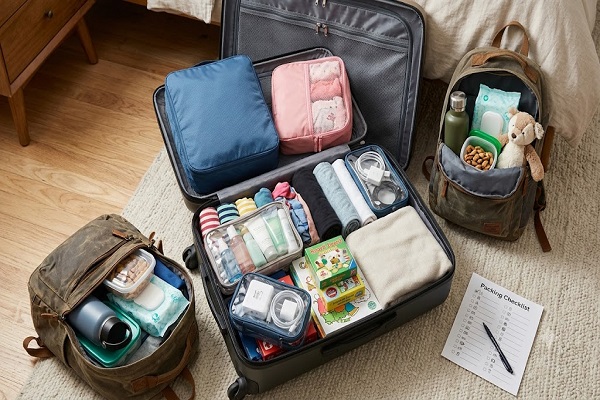
Packing cubes, zippered pouches and small storage bags can make luggage more organised. Assign a separate cube or pouch to each family member or clothing category.
Keep children's clothes together, place undergarments in a separate pouch and store accessories in a small organiser. This arrangement makes it easier to locate items without unpacking the entire suitcase.
For road trips, transparent pouches can also help keep frequently used items within easy reach.
4. Pack a Separate Travel Essentials Bag
A small day bag or backpack can be extremely useful during flights, train journeys and long road trips. It should contain the items the family may need while travelling rather than those required only after reaching the destination.
Consider carrying:
Water bottles and light snacks
Wet wipes, tissues and hand sanitiser
Essential medicines and any required prescriptions
Travel documents and identification
Phone chargers and a power bank
A change of clothes for young children
Small toys, colouring books or other quiet activities
Keep important documents and valuable belongings secure and easily accessible.
5. Make Packing Easier When Travelling With Children
Travelling with children requires additional planning because their needs can change throughout the journey. Pack familiar snacks, a favourite small toy or a comfort item to help them feel relaxed in unfamiliar surroundings.
Keep diapers, feeding supplies and other age-appropriate essentials in an accessible bag when travelling with younger children. For school-age children, a small backpack containing their own water bottle, snacks and entertainment can help them participate in the preparation.
Avoid overloading children's bags. Adults should carry essential documents, medicines and items that require careful handling.
6. Roll Clothes to Save Space
Rolling clothes instead of folding every item flat can help make luggage easier to arrange, particularly for casual clothing such as T-shirts, pyjamas and lightweight trousers.
Place heavier items near the bottom of a suitcase and lighter clothing above them. Use empty spaces inside the luggage for small, suitable items such as socks.
However, delicate fabrics and clothes that crease easily may be better folded. The aim is to use available space efficiently without making the suitcase difficult to close.
7. Pack Toiletries in Leak-Proof Bags
Shampoo, moisturiser, toothpaste and other personal-care products can leak during travel if their containers are not secured properly. Use travel-sized bottles with tightly closed lids and place them in a waterproof toiletry pouch.
Keep toiletries separate from clothing and electronic devices. For longer trips, check which products can be shared among family members to avoid carrying duplicate bottles.
When travelling by air, check the airline's current rules for liquids, aerosols and restricted items, particularly for cabin baggage.
8. Plan for Weather and Unexpected Situations
Weather conditions can change during a holiday, so packing a few practical extras can prevent inconvenience. A compact umbrella, lightweight raincoat, reusable shopping bag and an extra layer of clothing may be useful depending on the destination.
For outdoor trips, carry suitable footwear, sunscreen and insect repellent where appropriate. For destinations with colder weather, gloves, warm socks and layered clothing may be more practical than bulky outfits alone.
A small emergency kit with basic first-aid supplies can also be useful. Pack medicines according to individual needs and seek professional advice when necessary.
9. Avoid Overpacking and Check Luggage Limits
Before leaving home, review the airline's baggage allowance or the luggage space available in your vehicle. Carrying unnecessary items can make travelling between hotels, railway stations and tourist attractions more tiring.
Ask whether certain items, such as towels, hairdryers or basic toiletries, are already available at the accommodation. If laundry facilities are accessible, packing fewer outfits may be sufficient for a longer holiday.
Leave some space for souvenirs and purchases made during the trip. A well-organised suitcase is more useful than one packed to its maximum capacity.
10. Keep Travel Documents and Electronics Organised
Store tickets, booking confirmations, identification documents and other essential paperwork in a dedicated folder or secure travel organiser. Keep digital copies of important documents in a protected location as a backup.
Charge electronic devices before departure and pack the correct chargers and cables. A small cable organiser can prevent accessories from becoming tangled.
If travelling internationally, check passport validity, visa requirements, travel insurance details and destination-specific entry rules well in advance.
11. Prepare a Small Comfort Kit for Long Journeys
Long journeys can be tiring for adults and children alike. A compact comfort kit can help make the experience more pleasant.
Depending on the mode of transport, include a neck pillow, eye mask, tissues, lip balm, a light scarf and entertainment that does not require a constant internet connection. For children, familiar books, puzzles or downloaded cartoons may help keep them occupied.
Choose items according to the family's needs rather than carrying every possible accessory.
12. Do a Final Check Before Leaving
Complete packing the evening before departure whenever possible. On the day of travel, check the essentials rather than reopening every suitcase.
Confirm that everyone has their identification, tickets, phone, wallet and any necessary medication. Check that windows and doors are secured, appliances are switched off where appropriate, and the home is ready to be left unattended.
A final five-minute review can prevent unnecessary delays and reduce travel-day anxiety.
Conclusion
Smart packing is not about carrying everything the family might need. It is about choosing the right items, keeping them organised and making essential belongings easy to access. From preparing a checklist and using packing cubes to planning children's needs and avoiding excess luggage, small changes can make a significant difference.
With thoughtful preparation, families can spend less time worrying about their suitcases and more time enjoying the journey. A well-planned packing routine can turn the start of a holiday into a calmer, more comfortable experience for everyone.