Economy Weekly Macro Briefing by Choice Institutional Equities Ltd

India Not in Favour of a Common BRICS Currency
* Commerce and Industry Minister Piyush Goyal said India is not in favour of introducing a common BRICS currency and does not support any such proposal.
* At the BRICS trade and industry ministers' meeting on 6-7 August 2026, members discussed ways to promote more balanced trade and investment across the group's 11 countries.
* The meeting also covered easier and adequate access to finance for micro, small and medium enterprises, and better access to larger markets and expansion-suited financing.
* India's stance comes as members such as Russia and China have explored alternatives to the US dollar; in 2024, US President Donald Trump warned BRICS against efforts to reduce the dollar's role in global trade
India's rejection is pragmatic rather than ideological, and it exposes the fault line running through BRICS. A common currency would demand a level of monetary and fiscal convergence the bloc simply does not have, and for India it would mean ceding policy autonomy to a group where China's weight dominates. De-dollarisation may suit Russia and China, but India runs large dollar-denominated trade and cannot afford the friction of antagonising the US, as Trump's earlier warning made explicit. The more telling signal is that the ministers spent their time on MSME finance and balanced trade rather than currency architecture, which suggests the common-currency idea remains aspirational rhetoric.
Duty-Free Sugar Imports Signal a Tight Market
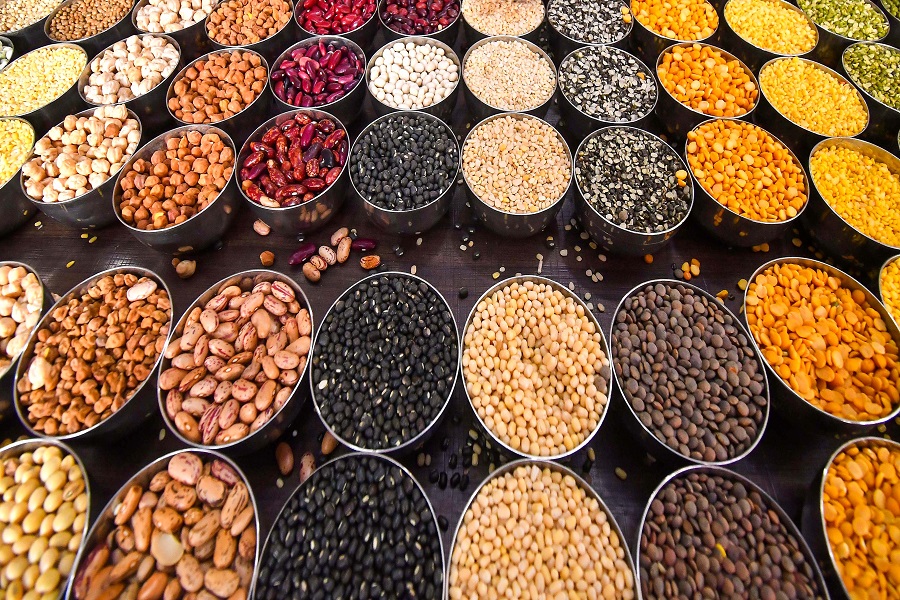
* The government allowed duty-free import of 10 lakh tonnes (1 MT) of raw sugar under a Tariff Rate Quota until 31st October 2026, the first such move in nearly a decade.
* Ex-mill prices had hit record highs of around INR 5,400-5,500/quintal, while retail prices rose about 13% YoY to roughly INR 52.30/kg amid tight stocks and festival demand.
* Bulk consumers also face stockholding limits capped at 15 days' requirement.
Reopening duty-free imports after nearly a decade is a candid admission that the domestic balance has tightened sharply, and it fits the broader food-inflation picture the MPC is watching. The measure should cool ex-mill and retail prices near-term and is well-timed against festival demand, but it is a reactive lever rather than a structural fix. Record mill prices and a 13% retail jump reflect genuine supply stress that a one-off quota cannot resolve if the deficient monsoon crimps the coming cane crop. Stockholding limits on bulk buyers add a rationing element that signals just how thin availability has become. For a country that habitually exports sugar, turning importer even briefly underscores how quickly the monsoon shortfall is rippling through the food basket. It further reinforces the case that food-led price pressure, not demand, remains the dominant inflation risk this quarter.
RBI MPC Minutes More Hawkish than the Statement
* Dr. Nagesh Kumar flagged that the US-Iran conflict continues to threaten crude supplies, compounded by fresh US tariff actions; recently concluded FTAs with the EU and EFTA could help diversify export markets.
* Saugata Bhattacharya cautioned that persistently high fuel prices risk feeding second-round inflation, even as tight financial conditions have eased following measures to attract foreign deposits.
* Prof. Ram Singh noted that flows under the FCNR(B) swap facility supported the rupee, though input-cost pressures are surfacing in enterprise surveys.
* Indranil Bhattacharyya observed price spikes remain concentrated in food and fuel, with 69% of the CPI basket at or below 4% inflation, arguing for evidence-based caution; Dr. Poonam Gupta cited improved rainfall and softer oil assumptions behind the downward inflation revision.
*Sanjay Malhotra said headline inflation remains supply-driven rather than demand-generalised, though he flagged early signs of normalisation from last year's benign 2% average.
The hold is defensible, but the commentary reveals a committee more comfortable describing risks than resolving them. Revising growth up and inflation down in the same breath, while insisting more clarity is needed, is an awkward straddle that leaves the RBI reactive rather than pre-emptive. The reassurance that 69% of the basket sits at or below 4% understates the concentration risk: food and fuel are precisely the volatile, politically sensitive components where second-round effects begin, and Bhattacharya's own warning on fuel pass-through cuts against the sanguine read. Leaning on the FCNR(B) swap inflows for rupee stability is a useful bridge, but it substitutes a financing tailwind for a durable external buffer and can reverse quickly if global risk appetite turns. With the Strait of Hormuz and fresh US tariffs sitting squarely on the supply side, a neutral stance that waits for clarity may simply mean the RBI is behind the curve if the December peak proves stickier than the revised 5.0% projection implies.
Core Industries Grow 5.4% in July, but Breadth Narrows
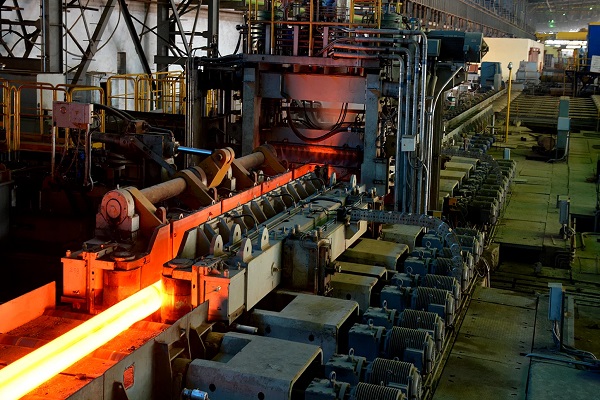
* The Index of Core Industries grew 5.4% year-on-year in July 2026, the second release under the new 2022-23 base year, which added iron ore as a ninth component.
* This compares with June 2026, whose final growth was revised up to 6% from a provisional 5%.
* Six of nine components grew: iron ore led at 29.5%, followed by cement (13.1%), electricity (9%), coal (7.6%), steel (2.9%) and refinery products (2.7%).
* Three components contracted: natural gas fell 3.7%, crude oil 5.3% and fertilisers 8%
A 5.4% headline is respectable, but the composition is less reassuring than the number suggests. Growth is leaning heavily on iron ore, cement and electricity, while the downward pull from crude oil, natural gas and fertilisers points to soft energy output and weak agriinput demand ahead of a deficient monsoon. Iron ore's 29.5% surge is partly a base-year artefact of its recent inclusion and should not be read as a durable demand signal. The stepdown from June's revised 6% also hints that momentum is cooling rather than building.
For Detailed Report With Disclaimer Visit. https://choicebroking.in/disclaimer
SEBI Registration no.: INZ 000160131