
Dairy Gold: The Agri Super-Cycle Reaches the Cattle-Feed Bin by Amit Gupta, Kedia Advisory
Spices, guar, cotton and crude have all taken their turn in 2026 – the baton now passes to cottonseed oilcake
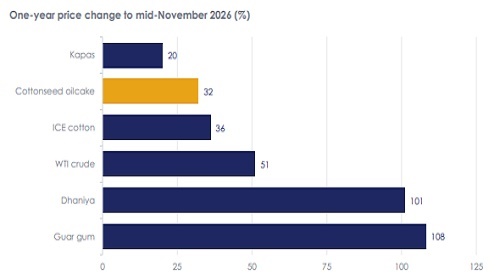
The super-cycle rotates: when the leaders have doubled, capital looks for the input that has not yet moved – cottonseed oilcake is that input.
Rs 2,850 → Rs 4,000: called in November 2025, delivered in July – then the crash we warned of, and now the breakout
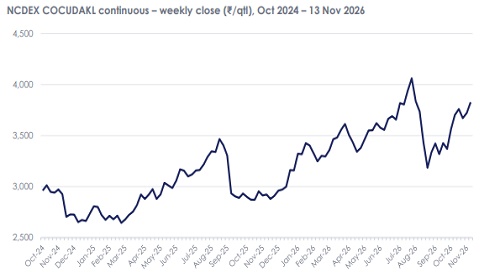
11–12 November: December futures jumped from Rs 3,705 to rs 3,869 on 21,600 and 22,600 lots – double October's daily volume – the confirmation we were waiting for.
One boll, two economies: lint goes to the spinning mill, the seed goes to the crusher – and the cake goes to the cow
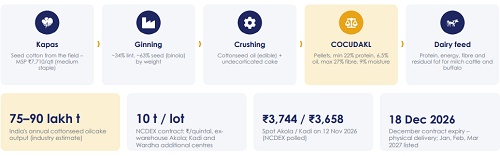
Lint and cake can move in opposite directions – a weak textile market does not stop a scarce seed and a hungry dairy herd from lifting the cake.
From the 2022 spike to a three-year bear market – and a 2026 rebound that took ICE cotton from 61 to 93 cents
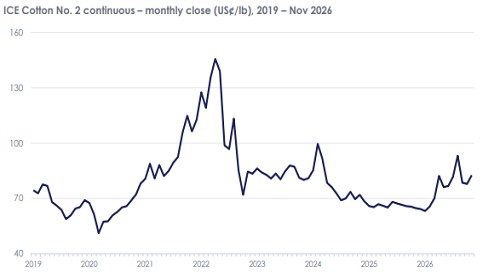
Three years of falling cotton prices pushed Indian farmers out of cotton – area fell 18 lakh hectares – and that is the seed shortage the cake market is pricing now.
Polyester is made from oil: the 2026 war lifted crude 51% and gave cotton its first demand tailwind in years
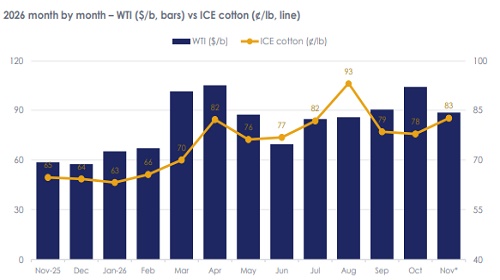
Crude does not feed cows – but it decides whether a cotton farmer plants cotton next June, and therefore how much seed the crusher gets in 2027-28.
November WASDE: world use exceeds output by 5.3 million bales – but 70.6 million bales of stocks remain
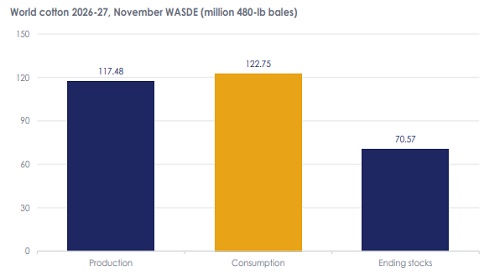
The world is short of cotton at the margin but not short of stocks – supportive for Indian lint parity, but it is India's own seed balance, not the global one, that drives the cake.
Output −17% and area −18 lakh ha since 2020-21 – raw-cotton imports have jumped 80% to fill the gap
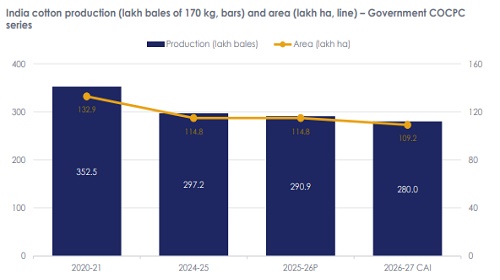
Imported lint keeps the spinning mills running – but an imported bale brings no cottonseed to an Indian crusher. The textile fix is not a feed fix.
Above views are of the author and not of the website kindly read disclaimer