AI Gadgets in 2026: The Rise of Intelligent, Personalized, and Autonomous Technology
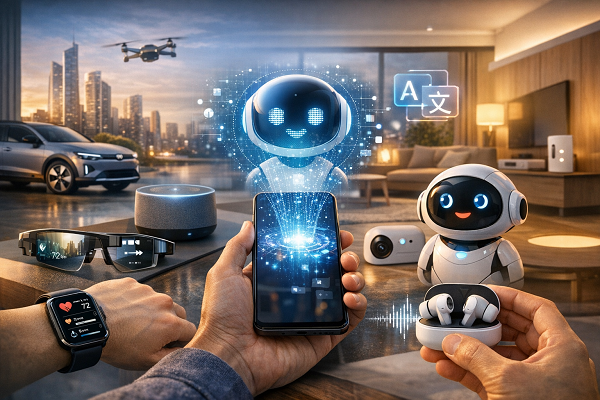
The year 2026 marks a significant leap in the evolution of artificial intelligence, especially in the world of consumer gadgets. AI is no longer limited to software or virtual assistants—it is now deeply integrated into physical devices that people use every day. From smart wearables to intelligent home systems, AI gadgets are becoming more personal, predictive, and autonomous. This shift is transforming how humans interact with technology.
1. Rise of Truly Personal AI Devices
One of the biggest innovations in 2026 is the emergence of highly personalized AI gadgets.
- Devices now learn user habits, preferences, and routines
- AI adapts in real time rather than relying on fixed programming
- Gadgets can anticipate needs instead of just responding to commands
For example, AI assistants in devices can now suggest actions before the user even asks, making interactions smoother and more natural.
2. AI-Powered Wearables Beyond Fitness
Wearable technology has moved far beyond step counting and heart rate monitoring.
- Smartwatches and bands now provide advanced health insights
- AI can detect early signs of stress, fatigue, or illness
- Wearables offer real-time suggestions for improving lifestyle
These devices act like personal health companions, continuously analyzing data and offering guidance.
3. Smart Home Gadgets Becoming Autonomous
Smart homes in 2026 are no longer just connected—they are intelligent and self-managing.
- AI systems control lighting, temperature, and security automatically
- Devices communicate with each other to optimize energy usage
- Homes learn routines and adjust settings without manual input
This level of automation creates a living environment that is both efficient and highly responsive.
4. AI in Everyday Consumer Electronics
AI is now embedded in common gadgets like:
- Smartphones with advanced on-device AI processing
- Smart cameras that recognize people and objects
- Earbuds that translate languages in real time
These innovations make everyday devices smarter and more useful, reducing the need for multiple tools.
5. Growth of AI Companions and Assistants
A new category of gadgets in 2026 is AI companions.
- Devices designed to interact emotionally and socially
- Used for productivity, mental support, and companionship
- Capable of natural conversations and contextual understanding
These gadgets are especially useful for individuals seeking assistance, learning, or engagement in daily life.
6. Edge AI and Privacy Improvements
Another major innovation is the shift toward on-device AI (Edge AI).
- Data is processed directly on the gadget instead of the cloud
- Faster performance with reduced latency
- Improved privacy and data security
This development addresses one of the biggest concerns users had about AI technology.
7. Integration with Augmented Reality (AR)
AI is increasingly being combined with AR technologies.
- Smart glasses provide real-time information overlays
- AI helps recognize surroundings and offer guidance
- Useful for navigation, education, and professional tasks
This combination enhances how users perceive and interact with the real world.
8. Challenges and Concerns
Despite rapid innovation, some challenges remain:
- Data privacy and ethical concerns
- High cost of advanced AI gadgets
- Dependence on technology for daily tasks
- Risk of reduced human interaction
These issues highlight the need for responsible development and usage.
9. Overall Impact
The innovation of AI gadgets in 2026 can be summarized as:
Key Advancements
- Smarter and more personalized devices
- Increased automation in daily life
- Better health monitoring and assistance
- Stronger focus on privacy and efficiency
Conclusion
AI gadgets in 2026 are redefining the relationship between humans and technology. They are no longer just tools but intelligent partners that assist, learn, and adapt. As innovation continues, these devices will become even more integrated into everyday life, shaping a future where technology is not just smart—but truly intuitive and human-centered.