Accessible Wellness Tourism: Inclusive Health Retreats, Spa Experiences and Relaxing Holidays for Everyone
Accessible Wellness Tourism: Inclusive Health Retreats for All Travellers
Health Tourism 2026 Travel Trends Wellness & Accessibility
Introduction
Accessible Wellness Tourism is emerging as an important part of the tourism industry, focusing on making wellness holidays comfortable, inclusive and accessible to travellers with different needs. From wheelchair-accessible spa resorts and inclusive yoga retreats to accessible meditation centres and nature-based wellness holidays, this approach allows more people to enjoy relaxing travel experiences.
Modern wellness tourism is expanding beyond traditional spa treatments and luxury retreats. Travellers are increasingly interested in personalised wellness experiences, peaceful environments, accessible facilities and activities that accommodate different physical and sensory needs.
Accessible wellness retreats aim to provide a welcoming environment for people with disabilities, older adults, families, solo travellers and anyone who benefits from additional accessibility support.
What Is Accessible Wellness Tourism?
Accessible wellness tourism refers to wellness-focused travel designed to accommodate people with different mobility, sensory, cognitive and other accessibility requirements.
It includes accessible accommodation, spa facilities, yoga spaces, meditation areas, fitness centres, transportation and wellness activities.
The objective is to help travellers participate in wellness experiences with greater comfort, independence and dignity. Accessibility should be considered throughout the travel journey, from online booking and transportation to accommodation and activities.
Why Accessible Wellness Tourism Is Growing
Travellers increasingly expect tourism services to accommodate different needs. Accessible wellness tourism responds to this demand by combining relaxation, personal comfort and inclusive facilities.
Wellness resorts and retreat operators can make their services more accessible through thoughtful design, trained staff and clear information about available facilities.
International accessible-tourism guidance also emphasises improving accommodation, transportation, tourism activities and information so that people with different accessibility requirements can enjoy travel.
accessibletourism.org
+1
Wheelchair-Accessible Wellness Retreats
Wheelchair accessibility is an important consideration when choosing a wellness retreat. Travellers may look for step-free entrances, accessible lifts, spacious pathways, suitable bathrooms and accessible treatment rooms.
Wellness facilities such as spas, yoga spaces and traditional therapy centres can benefit from layouts that provide sufficient manoeuvring space for wheelchairs.
India's Accessible Tourism Guidelines include recommendations for wheelchair manoeuvrability in wellness spaces and accessible alternatives for therapeutic activities.
Tourism India
When booking a retreat, visitors should confirm the exact dimensions and features of accessible rooms and facilities rather than relying only on general accessibility labels.
Inclusive Yoga and Meditation Retreats
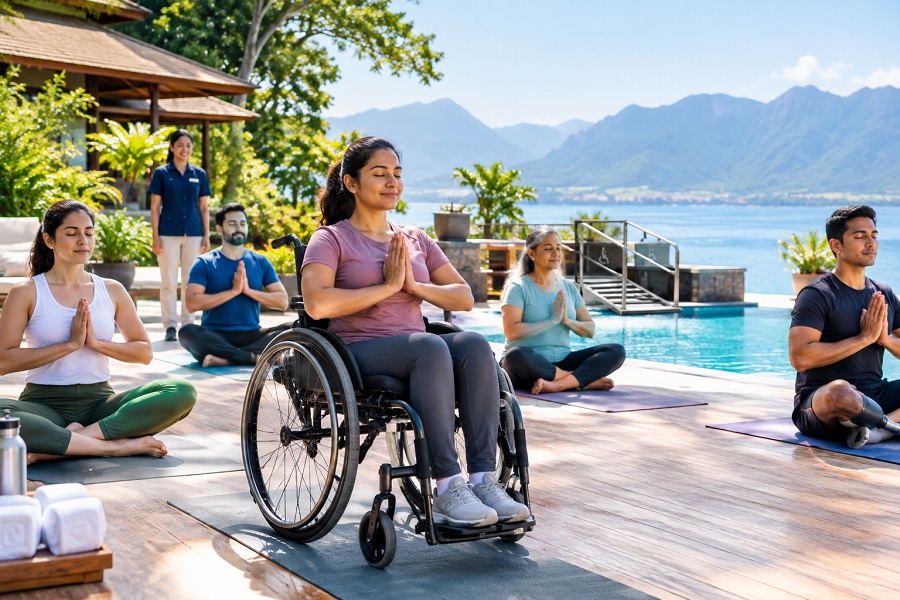
Yoga and meditation are important components of wellness tourism. Accessible retreats can offer different ways to participate, depending on individual requirements.
These may include chair-based yoga, modified movement sessions, guided breathing, seated meditation and accessible relaxation spaces. Qualified instructors can help participants understand the available options and choose activities appropriate to their preferences.
Meditation retreats can also provide quiet rooms, clear instructions, flexible schedules and alternative ways to participate.
Accessible Spa and Wellness Experiences
Spa and wellness facilities can make holidays more comfortable when they consider a wide range of accessibility needs.
Useful facilities may include accessible changing rooms, suitable shower areas, non-slip flooring, supportive seating, accessible treatment rooms and clear signs.
Hotels offering spa treatments should communicate their facilities and service arrangements before booking. Travellers may also wish to discuss accessibility requirements directly with the wellness team.
Sensory-Friendly Wellness Retreats
Some travellers prefer environments with lower noise levels, softer lighting and fewer sensory distractions. Sensory-friendly wellness retreats can offer quiet areas, flexible activity schedules and clear information about the environment.
Accessible information may include visual signs, audio descriptions, written instructions and alternative ways to participate in activities.
Well-planned sensory experiences can also help travellers with different sensory requirements enjoy nature, relaxation and cultural activities.
Accessible Nature and Forest Wellness Tourism
Nature-based wellness holidays can combine relaxation with outdoor experiences. Accessible gardens, walking routes, viewing platforms and quiet outdoor spaces can make nature retreats more inclusive.
Some properties may offer accessible paths through landscaped gardens, adapted nature activities and convenient seating areas.
Travellers should check the terrain, path surfaces, gradients, transport arrangements and availability of accessible toilets before booking outdoor wellness experiences.
Accessible Wellness Tourism for Senior Travellers
Older travellers may value wellness holidays that offer comfortable accommodation, convenient transportation, accessible bathrooms and activities at a flexible pace.
Senior-friendly retreats can include gentle movement sessions, relaxation areas, nutritious meal options and convenient access to essential services.
The most suitable facilities will depend on each traveller's preferences and accessibility requirements. Clear information about walking distances, stairs and available assistance can make trip planning easier.
Inclusive Wellness Holidays for Families
Accessible wellness tourism can also support families travelling with people of different ages and requirements.
Family-friendly wellness resorts may offer spacious accommodation, accessible swimming-pool areas, suitable dining facilities and flexible activities.
Families can look for destinations that combine relaxation with accessible gardens, nature experiences and leisure activities. Checking the availability of suitable family rooms and facilities before booking can help avoid difficulties during the trip.
Accessible Wellness Tourism for Solo Travellers
Solo travellers may prefer wellness retreats that provide reliable assistance, accessible accommodation and convenient transportation.
Clearly communicated facilities, flexible activity schedules and accessible booking services can help independent travellers plan their holidays.
Before travelling, visitors should check whether staff are available to assist with specific requirements and whether the destination offers convenient access to nearby transport and essential services.
Accessible Medical and Wellness Tourism in India
India offers a variety of wellness experiences, including Ayurveda, yoga, meditation and traditional wellness retreats. The Ministry of Tourism has established a National Strategy and Roadmap for Medical and Wellness Tourism, which includes improving accessibility as one of its priorities.
Press Information Bureau
Travellers considering wellness experiences in India can explore accommodation and services based on their accessibility requirements. They should confirm that specific facilities, including treatment areas and transportation, meet their needs.
Wellness activities and traditional therapies should be selected according to individual circumstances. Travellers seeking medical treatment should consult appropriately qualified healthcare professionals.
Technology and Accessible Wellness Tourism
Digital technology can make accessible wellness holidays easier to plan. Online booking platforms can provide detailed information about entrances, bathrooms, room layouts, transport and wellness facilities.
Accessible websites, screen-reader-compatible booking forms, captions, clear visual information and communication options can help more people access travel services.
Digital tools can also help guests communicate requirements to accommodation providers before arrival. However, clear information and direct assistance from staff remain important.
Benefits of Accessible Wellness Tourism
Accessible wellness tourism can offer benefits to travellers and tourism businesses.
Greater independence: Thoughtfully designed facilities can help travellers participate in activities with greater independence.
Comfortable experiences: Accessible rooms, convenient pathways and suitable facilities can make wellness holidays more comfortable.
Inclusive participation: Alternative activities and accessible environments can help more travellers take part in wellness experiences.
Improved service quality: Clear information and trained staff can improve the overall guest experience.
Wider tourism opportunities: Inclusive wellness facilities can make destinations accessible to a broader range of travellers.
Community development: Inclusive tourism can create opportunities for local businesses, wellness professionals and accommodation providers.
How to Choose an Accessible Wellness Retreat
Before booking an accessible wellness holiday, travellers should consider the following factors.
Check whether the accommodation provides suitable accessible rooms and bathrooms.
Confirm wheelchair access to reception, restaurants, spas and wellness areas.
Ask about suitable alternatives for yoga, meditation and other activities.
Check transportation options and accessibility at the destination.
Review recent guest feedback about the facilities and service.
Ask about accessible menus and available dietary options.
Confirm whether trained staff can assist with specific requirements.
Check the availability of quiet spaces and sensory-friendly facilities.
Request photographs or measurements of important accessible features.
Confirm the cancellation policy and any additional service charges.
Sustainable and Inclusive Wellness Retreats
Sustainable wellness tourism can complement accessibility through thoughtful facility design, responsible resource use and support for local communities.
Retreat operators can consider energy-efficient buildings, waste reduction, locally sourced food and accessible outdoor spaces.
Inclusive planning should also involve people with disabilities in the design and evaluation of wellness services. Their feedback can help businesses identify practical barriers and improve the experiences they provide.
The Future of Accessible Wellness Tourism
The future of accessible wellness tourism is likely to involve greater attention to inclusive design, personalised services, accessible digital information and adaptable wellness activities.
Wellness resorts may increasingly explore flexible programmes, accessible nature experiences, sensory-friendly environments and technology-assisted guest services.
As awareness grows, accessible wellness facilities may become an increasingly important consideration for travellers choosing accommodation and wellness experiences in India and internationally.
Conclusion
Accessible Wellness Tourism is helping expand wellness travel beyond traditional luxury retreats by focusing on inclusion, comfort and personal choice. Wheelchair-accessible spas, inclusive yoga sessions, sensory-friendly environments and accessible nature experiences can offer a wider range of travellers opportunities to enjoy wellness holidays.
By investing in accessible facilities, reliable information and inclusive hospitality, tourism businesses can create more welcoming experiences for travellers with different needs. With thoughtful planning, accessible wellness holidays can combine relaxation, cultural discovery and comfortable travel for a wider community.

.jpg)