Warli Art Tourism
Warli Art Tourism: Discovering Maharashtra's Ancient Tribal Art and Culture
Warli Art Tourism offers travelers a unique opportunity to explore the artistic traditions, lifestyle, stories, and cultural heritage of the Warli community in Maharashtra. Unlike conventional sightseeing, this form of cultural tourism allows visitors to connect with local traditions through art, village experiences, artisan interactions, and hands-on workshops.
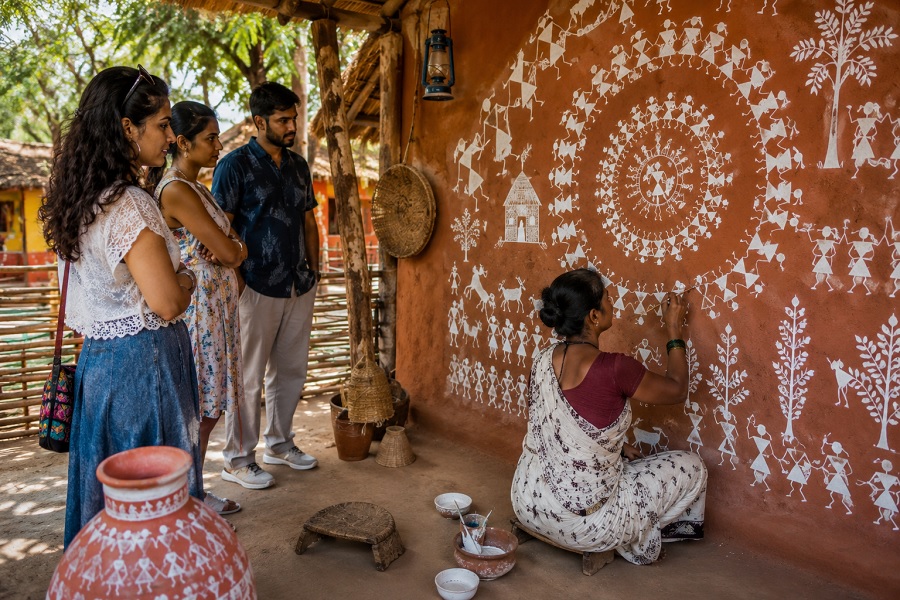
Warli painting is traditionally associated with the Warli tribal communities of the northern Sahyadri region, particularly areas around Palghar, Jawhar, Dahanu, Talasari, Mokhada, and Vikramgad. The art is recognized for its distinctive visual language of geometric shapes, including circles, triangles, and lines, often used to portray people, animals, nature, farming, festivals, dances, weddings, and everyday village life.
Exploring Warli Art in Jawhar and Palghar
For travelers interested in experiencing Warli culture, Jawhar in Palghar district is an important destination. Visitors can explore villages where artists continue to practice the traditional art form and, where available, interact with artisans to understand the creative process. Maharashtra Tourism also highlights opportunities to see artists at work and purchase Warli paintings and handicrafts that represent the region's tribal heritage.
A cultural trip to the region can be combined with exploration of Jawhar's natural landscapes, historic attractions, waterfalls, and tribal communities. This combination of nature and culture makes the destination particularly appealing to travelers looking for immersive and less conventional tourism experiences.
The Cultural Meaning Behind Warli Paintings
Warli art is more than a decorative painting style. Traditionally, it has been connected with important aspects of community life, including marriage ceremonies, harvests, festivals, rituals, and relationships with nature. The paintings provide a visual representation of the community's traditions and everyday experiences.
Traditional Warli painting techniques use natural materials. The background may be prepared with an earth-based coating, while white pigment is traditionally created using rice-based material. Bamboo or similar simple tools can be used to create the characteristic lines and figures.
The art's simple geometric vocabulary gives it a distinctive identity. Circular forms, triangular figures, and rhythmic arrangements of human characters can create scenes that communicate movement, celebration, community, and connection with the natural world.
A More Immersive Cultural Tourism Experience
One of the most valuable aspects of Warli Art Tourism is the possibility of learning directly from artisans. Instead of simply purchasing a finished painting, travelers can look for experiences that include demonstrations, storytelling, workshops, and conversations about the cultural background of the art.
A responsible Warli-focused itinerary could include:
Visiting local artisan communities
Observing traditional painting techniques
Participating in a beginner-friendly art workshop
Learning about Warli symbols and storytelling
Exploring local handicrafts
Visiting nearby cultural and heritage attractions
Experiencing regional food and village life
Purchasing artwork directly from local artists where possible
Such experiences can help travelers better understand the connection between art, community, and place.
Supporting Local Artisans Through Tourism
Cultural tourism can play an important role in creating visibility and economic opportunities for traditional artists when tourism is managed responsibly. Buying authentic artwork directly from artists or community-supported initiatives can help contribute to local livelihoods.
Travelers should also approach cultural experiences respectfully. Visitors should ask before photographing people, homes, ceremonies, or private cultural activities. When purchasing art, it is useful to ask about the artist, materials, and whether the artwork is handmade. Supporting genuine artisans rather than mass-produced imitations can help preserve the cultural value of the tradition.
Warli paintings have also moved beyond traditional wall murals and are now found on materials such as paper, canvas, textiles, furniture, and other products. The art form received a Geographical Indication (GI) registration in 2014, recognizing its connection to the cultural heritage of the Warli community.
The Future of Warli Art Tourism
The future of Warli Art Tourism lies in creating meaningful experiences while protecting the authenticity of the tradition. Workshops, cultural trails, artisan-led tours, village visits, and educational programs can introduce new generations of travelers to this heritage.
At the same time, commercialization needs to be balanced with cultural sensitivity. Tourism should ideally create benefits for local communities without reducing a living cultural tradition to a simple souvenir or photo opportunity.
For travelers interested in India's diverse cultural heritage, Warli Art Tourism provides an opportunity to discover Maharashtra through the eyes of its artistic traditions. A journey through Warli communities can combine art, storytelling, nature, village life, history, and responsible tourism, creating a richer travel experience than conventional sightseeing alone.
600-400.jpg)