Top Financial Books Everyone Should Read for Better Money Management and Wealth Creation
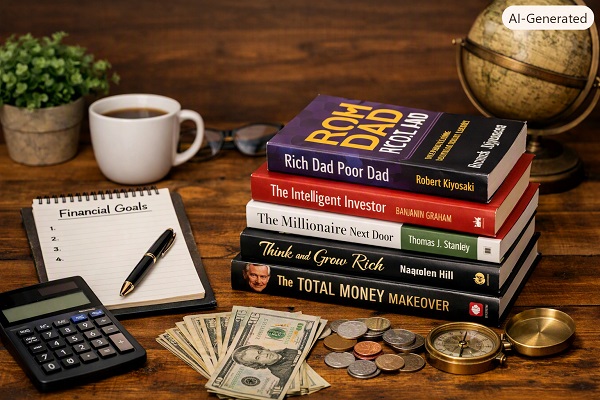
Building wealth is not only about earning more money; it is also about understanding how money works, making smart financial decisions, and developing the right mindset. Many successful investors and entrepreneurs believe that financial education plays a major role in long-term wealth creation.
Books written by experienced investors, financial experts, and entrepreneurs can help beginners understand investing, saving, budgeting, and building financial independence. Here are some of the top financial books everyone should consider reading.
1. Rich Dad Poor Dad – Robert Kiyosaki
Rich Dad Poor Dad is one of the most popular personal finance books worldwide. The book explains the difference between assets and liabilities and highlights why financial education is important.
Key lessons:
Understand how money works
Focus on building assets
Develop an investor mindset
Avoid depending only on salary income
The book is especially useful for beginners who want to change their approach toward money.
2. The Intelligent Investor – Benjamin Graham
The Intelligent Investor is considered one of the best books on value investing. Legendary investor Warren Buffett has also praised its principles.
Key lessons:
Invest with a long-term mindset
Avoid emotional decisions
Understand market volatility
Focus on company fundamentals
This book is ideal for people who want to understand stock market investing.
3. The Psychology of Money – Morgan Housel
The Psychology of Money explains how human behaviour affects financial decisions.
The book teaches that wealth creation is not only about knowledge but also about habits, patience, and discipline.
Important ideas:
Saving habits matter
Time is a powerful wealth-building tool
Emotions can influence investment decisions
Financial success depends on behaviour
4. Think and Grow Rich – Napoleon Hill
Think and Grow Rich focuses on mindset, goal setting, and personal growth.
The book highlights how successful people develop strong beliefs, persistence, and clear financial goals.
Key takeaways:
Create a clear vision
Develop discipline
Take consistent action
Build confidence
5. Your Money or Your Life – Vicki Robin
This book focuses on achieving financial independence by understanding your relationship with money.
It helps readers:
Track spending habits
Reduce unnecessary expenses
Build financial freedom
Create a meaningful lifestyle
6. One Up On Wall Street – Peter Lynch
One Up On Wall Street explains how individual investors can identify good investment opportunities.
Key lessons:
Invest in businesses you understand
Research before investing
Look beyond market trends
Think like a long-term investor
7. The Richest Man in Babylon – George S. Clason
This classic financial book uses simple stories to explain money management principles.
Major lessons:
Save a portion of your income
Control expenses
Invest wisely
Protect your wealth
Its simple approach makes it suitable for beginners.
8. The Millionaire Next Door – Thomas J. Stanley and William D. Danko
This book reveals the habits of wealthy people and explains that many millionaires build wealth through discipline rather than luxury spending.
Key ideas:
Live below your means
Avoid unnecessary debt
Build consistent savings habits
Focus on long-term growth
9. Common Stocks and Uncommon Profits – Philip Fisher
This book focuses on researching companies and identifying high-quality businesses.
It teaches investors:
How to analyse companies
Importance of management quality
Long-term investment thinking
10. A Random Walk Down Wall Street – Burton Malkiel
This book explains investment strategies and market behaviour.
Readers can learn about:
Index investing
Portfolio diversification
Market efficiency
Risk management
Why Reading Financial Books Matters
Financial books can help individuals develop better money habits and make informed decisions. They provide knowledge about investing, saving, and managing wealth effectively.
However, reading alone is not enough. Applying these lessons through consistent saving, disciplined investing, and proper financial planning is what creates long-term results.
Final Thoughts
Whether you are a beginner starting your investment journey or an experienced investor looking to improve your knowledge, financial books can provide valuable insights. The right book can change the way you think about money and help you move closer to financial independence.
Start with one book, apply the lessons, and gradually build your financial knowledge for a stronger future.