Sell GBPINR MAY @ 130 SL 130.3 TGT 129.7-129.4 - Kedia Advisory

USDINR
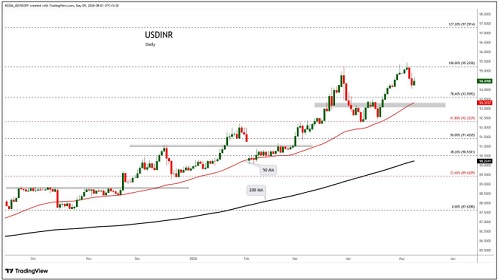
SELL USDINR MAY @ 95.5 SL 95.8 TGT 95.2-95.
Observations
USDINR trading range for the day is 94.56-95.8.
Rupee weaken hit by a spike in oil prices on fading optimism over a quick resolution to the U.S.-Iran conflict.
Prime Minister Modi called on citizens and businesses to conserve fuel and revive work-from-home to curb fuel use.
India's foreign exchange reserves fell to $690.69 billion as of May 1, compared with $698.49 billion a week earlier
EURINR
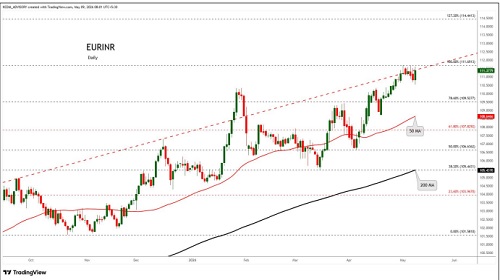
SELL EURINR MAY @ 112.6 SL 112.9 TGT 112.3-112.
Observations
EURINR trading range for the day is 110.55-113.23.
Euro gains amid weak Rupee as tensions in the Middle East persisted, with no signs of a swift resolution to the conflict.
US President Trump rejected Iran’s counterproposal aimed at ending the 10-week conflict, calling it “totally unacceptable,” while Tehran vowed to “never bow.”
Eurozone Manufacturing PMI climbed to 52.2 in April 2026, its highest in nearly four years, up from 51.6 in March and matching initial estimates
GBPINR
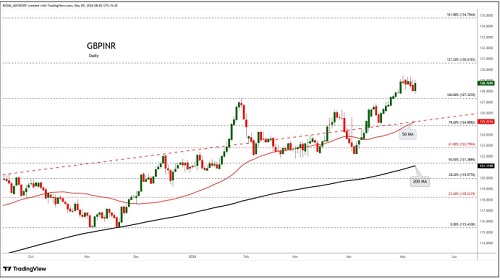
SELL GBPINR MAY @ 130 SL 130.3 TGT 129.7-129.4.
Observations
GBPINR trading range for the day is 128.75-130.21.
GBP gains as Prime Minister Keir Starmer vowed to stay in office despite early election results showing significant losses for his Labour Party.
Britain's jobs market lost momentum in April after recruiters turned more cautious about hiring as the Iran war heightened cost pressures.
Financial markets continue to anticipate two Bank of England rate hikes by year-end.
JPYINR
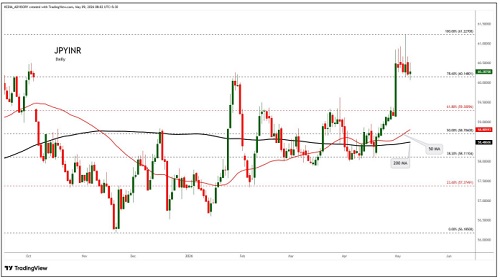
SELL JPYINR MAY @ 60.5 SL 60.75 TGT 60.2-60.
Observations
JPYINR trading range for the day is 60.48-61.02.
JPY gains amid weakness Rupee despite dollar strengthened on safe-haven demand after President
Donald Trump rejected Iran’s response to his peace proposal.
Traders remain on alert after multiple rounds of suspected intervention by Japanese authorities starting April 30, which reportedly totaled about 10 trillion yen.
Officials are prepared to respond on all fronts to speculative moves, noting that the IMF places no strict limits on the frequency of intervention