Power Sector Update : Transforming coal price discovery in India by PL Capital
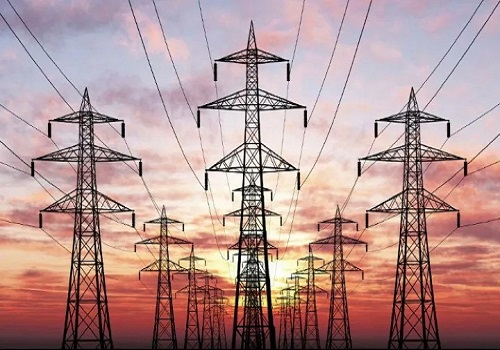
Coal Exchange: Transforming coal price discovery in India
The Ministry of Coal has notified the Coal Trading Exchange Rules, 2026, marking a significant step towards the development of an organized, transparent and marketdriven coal trading ecosystem in India. The framework seeks to transition coal trading from the current auction-based mechanism towards an exchange-led model, akin to power trading on exchanges such as IEX, enabling transparent price discovery, standardized contracts, independent quality certification, robust clearing and settlement mechanisms, and enhanced market surveillance. The regulations have attracted interest from major exchange operators including NSE, MCX and IEX, while ownership and governance provisions ensure that no single coal producer, trader or consumer can control the platform. We view the development as strategically positive for Coal India and the broader coal sector, as it can deepen market liquidity, improve pricing transparency (particularly for E-auction volume) and create benchmark coal prices for India. Based on our estimates, the initial exchangeable coal market could represent a total addressable market (TAM) of ~46mt, equivalent to transaction value of ~INR 150bn, with substantial scope for expansion as market participation and liquidity improve over time.
Ministry of Coal has issued notification of the Coal Trading Exchange Rules, 2026. The government’s new Coal Exchange Rules are intended to move India from the current auction model (MSTC/mjunction) toward an exchange model, similar to how power is traded on IEX
The Coal Trading Exchange Rules, 2026 establish a regulated electronic coal exchange (for coal and Lignite) with transparent price discovery, standardized contracts, independent quality certification, clearing and settlement mechanisms, and market surveillance to prevent manipulation and cartelization.
Three major entities have emerged as potential operators of coal exchanges in India: NSE, which has proposed a National Coal Exchange; MCX, which has received approval to invest in a coal exchange subsidiary; and IEX, which has incorporated Indian Coal Exchange Ltd (ICX) as a wholly owned subsidiary.
Ownership rules are designed to prevent any coal producer, buyer or trader from controlling the exchange: Maximum 5% stake for any member / customer, Maximum 49% aggregate stake for all members / customers combined, Maximum 25% stake for any non-member shareholder after five years.
Governance is modelled on financial exchanges: independent directors must be at least equal to shareholder directors, exchange members/customers cannot sit on the Board, and no single industry participant (including Coal India) can control the exchange. Therefore, the most likely structure is a consortium-led exchange rather than one dominated by a single coal company
For Coal India, the exchange is strategically positive because it creates a new market-linked sales channel, improves transparency in coal pricing, broadens the buyer base, and can eventually create benchmark coal prices for India.b
Though it’s little early, but potentially, The exchange can improve Coal India’s realizations, but primarily on the market-linked (auction/exchange which is 10% of its volume) portion of sales rather than regulated power-sector FSA volumes. The benefit depends on liquidity, buyer participation, and the share of Coal India coal traded through the exchange. Current rating Accumulate, TP 515 (at 5.5x EV EBITDA, upside to INR556 (at 6x EV/EBITDA)
Please refer disclaimer at Report
SEBI Registration number is INH000000933










More News

Consumer Sector Update : Q4FY26 Quarterly Results Review by Choice Institutional Equities Ltd