Oil prices surge up to 3 pc as Strait of Hormuz disruption fuels supply concerns

Crude oil prices climbed nearly 3 per cent on Tuesday, rebounding from the previous session’s losses as renewed concerns over supply emerged amid disruptions in the Strait of Hormuz.
Brent crude futures were trading at $103.20 per barrel, up 2.98 per cent, while US West Texas Intermediate (WTI) crude rose 3.05 per cent to $96.36 per barrel around 9:45 am.
In the previous session, Brent had settled 2.8 per cent lower, while WTI declined nearly 5 per cent, despite both benchmarks rising close to 4 per cent earlier in the day.
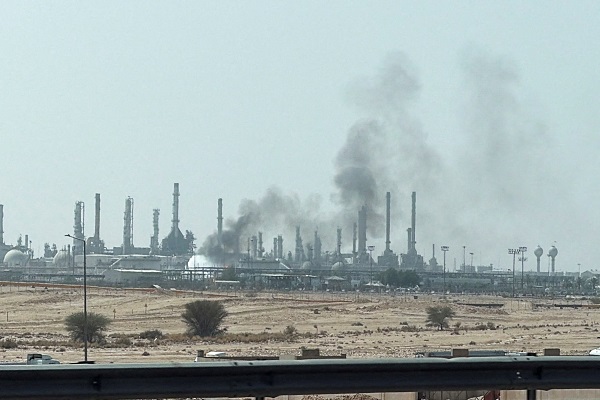
The Strait of Hormuz -- a key chokepoint handling about 20 per cent of global oil and liquefied natural gas trade -- has seen significant disruption due to the ongoing US-Israel-Iran conflict, now in its third week.
The situation has heightened fears of supply shortages, elevated energy prices and rising inflation.
However, on a weekly basis, oil prices remained largely stable. Brent crude was broadly flat compared to last Friday’s close, while WTI traded over 1 per cent lower during the same period.
Meanwhile, the United States has secured energy agreements worth about $56–57 billion with Indo-Pacific partners, Interior Secretary Doug Burgum said, describing the move as part of efforts to strengthen energy security among allies.
The agreements were finalised during the Indo-Pacific energy security conference led by the US, with participation from countries across the region.
Separately, US Treasury Secretary Scott Bessent said Iranian oil tankers have been allowed passage through the Strait of Hormuz despite the ongoing conflict, in a bid to stabilise global energy supplies.
The Strait of Hormuz remains a critical artery for global energy trade, and any disruption poses significant risks to markets.
Asian economies, including India, remain particularly vulnerable due to their heavy dependence on crude imports from the Gulf region, according to analysts.
Additionally, domestic equity benchmarks Sensex and Nifty show high volatility in Tuesday’s session.