Mumbai housing redevelopment sales consistently outpace new launches
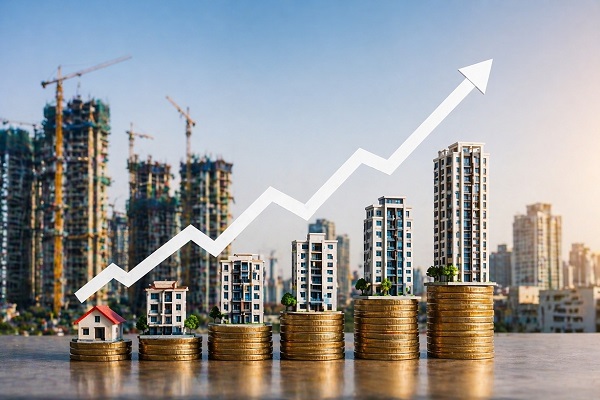
Mumbai's housing redevelopment market has crossed a critical milestone, with sales consistently exceeding new project launches for the first time, a report said on Thursday.
The report from JLL and NAREDCO said that over 1,000 redevelopment projects have been launched since 2020, comprising 13 per cent of Mumbai's overall residential supply.
Redevelopment’s share of total housing sales surged to 15 per cent in 2025-H1 2026, up from 6 per cent recorded over 2016-2021.
The trend confirmed that homebuyers are currently choosing redevelopment over greenfield alternatives.
“Mumbai faces a fundamental constraint that no regulatory framework can resolve: an absolute scarcity of developable land. Redevelopment has transitioned from a commercial opportunity into an urban survival imperative,” said Karan Singh Sodi, Senior Managing Director - Mumbai MMR & Gujarat and Alternatives, India, JLL.
The market has graduated from fragmented, single-plot reconstructions to a systemic transformation, with 850 projects launched since 2020.
Nearly 2,156 acres are in the slum pipeline representing four times all activity over the previous 30 years, and sales now outpacing launches for the first time.
“With virtually no vacant land left and 13,500 cessed buildings requiring urgent replacement, the question is not whether redevelopment will dominate Mumbai’s supply, but how quickly we can safely execute this essential transformation,” Karan Singh added.
Kamlesh Thakur, President, NAREDCO Maharashtra, said that this structural demonstrates how progressive policy interventions like DCPR 2034, reduced consent thresholds, and cluster-focused reforms are streamlining execution and restoring market momentum.
The report noted a huge scale of opportunity as approximately 13,500 cessed buildings require urgent replacement across the city.
The transition from launch surge to absorption confirms redevelopment as a sustainable supply mechanism rather than a policy-driven bubble.
Hence, developers gain confidence for long-term capital deployment, while buyers can access new constructions in established locations without the 5–7-year infrastructure lag of peripheral developments.





 2.jpg)