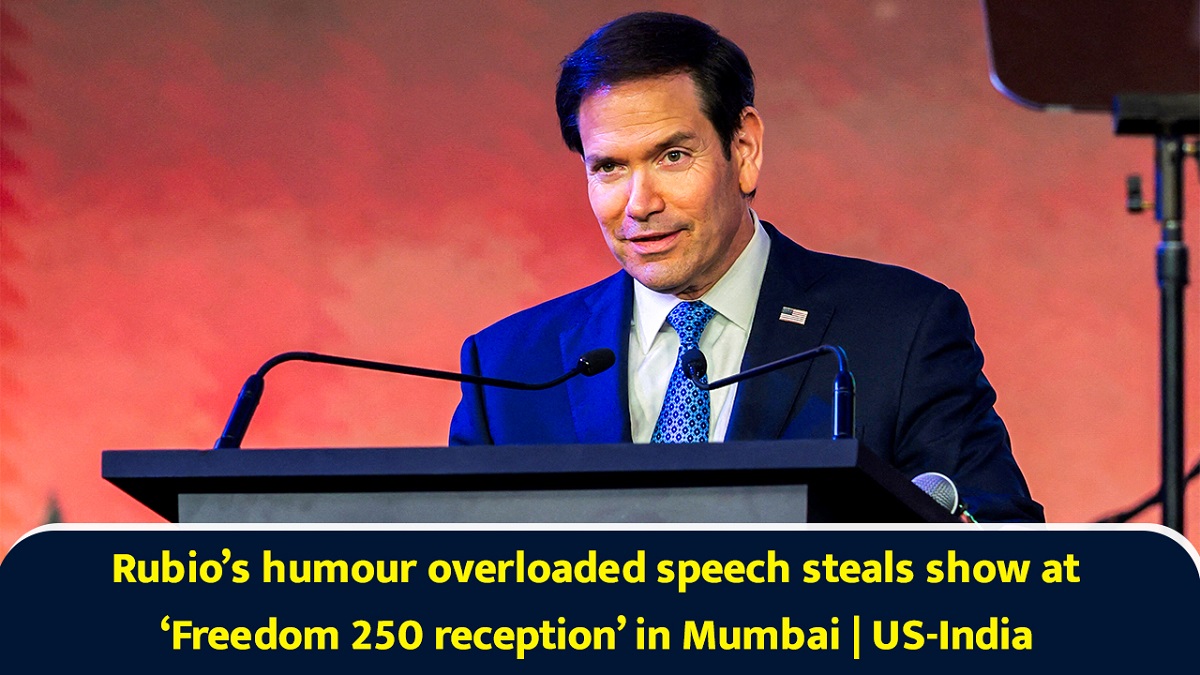
Marco Rubio openly admits, ``India is a refining superpower`` ahead of meeting with Mukesh Ambani
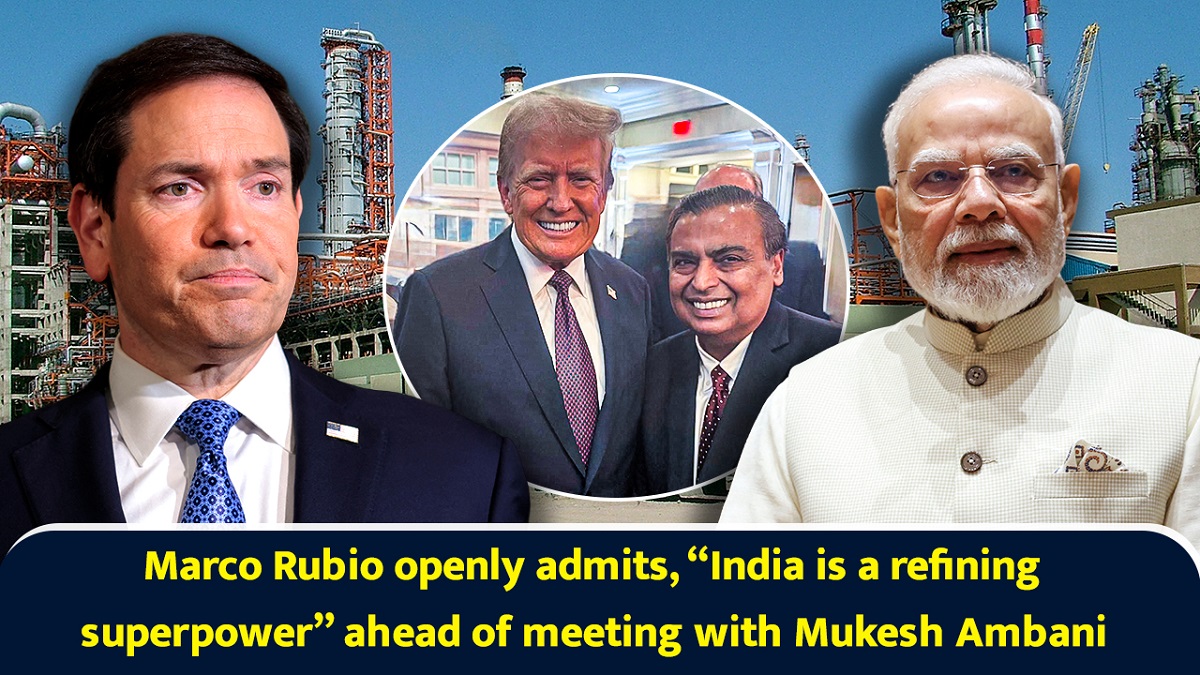
Speaker 4: A lot of people have become experts in the energy field over the last few months, just learning to sort of define conflicts, refining capabilities and key parts and and India is refining superpower. They have the ability to do that, they have companies that know how to do that. They also by the way have great existing oil concessions in Venezuela that can produce more of themselves. So all these are positive things and
Speaker 3: So, Mr. Secretary, this is your second visit to India in a couple of months, which is pretty remarkable. Um, what are your intentions here? What is your goal? And if I may ask a second side question, do you have any hope of concluding the
Speaker 4: trade deal with India, between India. First of all, I will point out that the foreign minister of India has been to the United States four times. This is one. So, this is the most populous country in the world. It's the largest democracy in the world. It's a important commercial partner and business partner in the United States. We also do a lot of immense cooperation. They're a key member of the Quad. They're strong with the two partners. So I actually don't think it's coming up. And I think we need to have more. We we have, we've had the copper secretaries meet me, right? That's right. That's the eye director, the vice
Speaker 4: Presidents come, uh, the Attorney General. So this is a very important partner for us. As far as the trade agreement is concerned, obviously the State Department doesn't negotiate trade agreements, but we are very much involved and we'll tap the, I think my personal security advisor, we hear a lot about it. We're very, very close. I would say we're about as close as you can be with that agreement. I think there's a small number of items left to wrap up. So I think that will happen shortly. We're hoping, which we should. And hopefully have some good news to announce to.
Speaker 0: Sorry
Speaker 4: interesting and signed it there after. So, um, we're we're we're so very optimistic that we will have something in place for us.
Speaker 5: You said that ski recently, um, and, uh, is there any way for the US and Ukraine to repair its ties?
Speaker 4: I spoke to him today, we had a 45 minute conversation. Look, I'm seeing a lot of things in the media that are not accurate. So let me flare those up and as I did in my conversation with him, number one is the department war, everything they've been doing, leading train, remains the same, that has not changed.
Speaker 5: including Pearl
Speaker 4: Everything nothing has changed. I mean, pro is a program in which when things are available for sale, they're sold to the Europeans who in turn transfer into them. But I'll get to munitions in a moment. The second is intelligence sharing. President made it very clear he's ordered no such changes. So none of that has changed much. And I see a recording that it has, but it's just not accurate. It's not true. And so that was important to understand something. Now you asked about sales. I know one of the things that President Zelensky has been talking about is that he's been trying to buy intercepts.
Speaker 4: And I understand. So there's every other country in the world. I also talked to Saudi Arabia, they like interceptors. Israel would like interceptors. We would like interceptors. Every country in the world would like interceptors, but as many parts of the world are asking for that, it's probably the most in demand product right now on a defense league. So when a country doesn't get interceptors in the United States, it's not because we deny it, we have our own leads too. We have minimum standards that we have to meet internally in our base presence all over the world. That includes in our bases in Europe, it's a league that we're in.
Speaker 4: standards that our defense department or requires to protect these facilities and obviously in the Middle East. So all this is being managed. I know if we if you view Ukraine, if you view any issue in sort of a, you know, a straw and say I'm only focused on this one issue, we can't do that. It's not how foreign policy and defense policies may it has to all be balanced in conjunction with one another. We have we have a global that's put to mind and many of our installations around the world require the air defense. So,
Speaker 4: There's nothing being deliberately denied to Ukraine. It's simply, it's a balance between our obligations to other partners and frankly our own standards and requirements for our own facilities as well.
Speaker 1: Just to put, just to put these in aspirin receptors, are you in a position, is the US in a position to provide intraceptors for every country in the world that need them or do you naturally need them?
Speaker 4: No, we've never been, no, no, we've never been, these interceptions are expensive to make. They're the best in the world, they're working incredibly well, but they're expensive. They take time to make. Now the good news is that our production rate is increasing rapidly. Uh, you've seen that now and I think we feel very good about our stock called Metabolinus, including interceptors. But it, you know, it takes time to build these things up. It takes time to make. These are highly sophisticated machinery, which obviously makes them so good, but also so hard to name. So, um, in the case of Saudi Arabia in particular,
Speaker 4: obviously have a near present presents there. So we would defend that presents from doing other things to help of other countries are as well. I'm just using that I'm not pointing to Saudi Arabia as a vulnerability. I'm pointing it to you as an example that virtually every conversation I have today with some counterpart around the world revolves in one run and two things. Number one is the desire for air interceptors and opportunist trade. I can help them a little bit on the interceptors on the trade that's not my portfolio, but I obviously know our bilateral relations are multiple counterparts.
Speaker 6: Just to put a fine point on that, Mr. Secretary, what what Zensky said and what's been reported in some media outlets is that there was a batch of uh interceptors that was purchased by European pardon me by Pearl that was awaiting that is awaiting the final signature from Secretary Hekset and it has not received that signature and as such it hasn't gone to Ukraine. Is that inaccurate?
Speaker 4: No, it's probably I mean it could be the case because these things are always reviewed through the context of whether they're needed somewhere else or whether they need to remain in Europe. We do have bases in Europe, our partners do as well. you recently saw for example, and I'm not just pointing to this as something that emerged, but you saw a threat against that airfield in the UK. we have other large air presences in the region. And and then we have minimum requirements. not only that, but it's part of that. So all these things are balanced on a daily basis. I think the important takeaway for you is that there has not been some deliberate
Speaker 4: ever temporarily and directed to go out and harm Ukraine. This this is just not accurate. Even this talk about I think on the 13th and again on the 18th there were air strikes in Ukraine that were not detected. That is not because America did not provide information. I saw somebody associated with the Ukrainian government say the people in Ukraine are dying because the US is denying them information. That's scandalous, that's outrageous, that's just simply not true, that's not accurate. Now that there was a problem identifying that perhaps it was a big an internal issue in terms of them being
Speaker 4: being able to take the information that was being provided and systematize it and react to it. That's possible. We're looking at it. Our understanding is that to the extent that happened on the 13th of August, it's a technical matter. It was not the result of any sort of US directive not to provide advance warning or a strike. And we are providing the same warnings to that now that we always have.
Speaker 0: And so what's going on with the USD trade relationship? I mean, Intel sharing, Starlink, interceptors, I mean, it seems like
Speaker 4: It's strongly like a private commercial company.
Speaker 0: Right, right, but it seems like there's some serious tensions between you and single grain. What is at the core of that? Why is this happening now?
Speaker 4: Oh, and single grain, that's why we got it.
Speaker 4: we had a call for that. I think at its poorest the president is frustrated because he first of all he doesn't like to be lent to things that are true including accusations that somehow he get ordered until until then sharing to be shut off. That's not he said that repeatedly. All that said, I think the president understands and has said that he's stupid from their beginning that the way this war needs to end is with a negotiated deal and he wants to make one. And and he wants both sides to come to an agreement. And so I I certainly but I think the president more than anything is responding to the
Speaker 4: situation and somehow he is doing things to deliberate and which is not fair and not true. So but but he but he's most certainly angry and frustrated at the lack of progress in those negotiations after having dedicated almost 2 years to it.
Speaker 0: So, but
Speaker 0: So it's not about the energy strikes, Ukraine strikes on energy. Oh, well, that's
Speaker 4: Oh, well, that's it. There's no doubt we've expressed, but we've openly expressed to you, witheatedly, that we don't think the energy strikes shouldn't happen on shipping in the Black Sea. It goes back much, like complaining about that. We had American companies call them. What are we supposed to do when American company calls and says we've had our target struggle, and it's happened multiple times. So that was an irritant, there's no doubt about it. I think there's no, there's also the reality that the combination is not just what happened. No, the strengths and forms. There are nights where as much oil gets stuck there as pre-conflict, and most nights it's 70.
Speaker 4: 30% of it. But it's not just the straits of Hormuz anymore. It's pipelines in Saudi Arabia that are targeted by the Muslims, and it is the war between Russia and Ukraine, and the attacks on refining capabilities that's putting pressure not on the United States alone. You travel to any country in the world, and they will tell you that they're having a diesel problem, that there's a diesel problem in terms of access to affordable diesel that so much of their economies are powered by. There are multiple countries around the world that are facing a very dangerous situation there. So, of course, we're concerned about what those right
Speaker 4: which is one of the reasons why this war needs to end, among others. One of the reasons why this war needs to end is because too many people are dying. One of the reasons why this war needs to end is because Ukraine's electric grid is being devastated. One of the reasons this war needs to end is because every month 20 or 25,000 Russians are slaughtered by in in as they try to advance in Ukraine. All these are bad things. Mass death, the destruction, the death of civilians in Kyiv, as we've seen with some of these ballistic missile strikes. This is a terrible
Speaker 4: bloody, nasty war that needs to come to an end. I don't know anyone in the world who disagrees with what I'm saying. And we're trying to do the best we can to sort of bring both parties to a place to where this war can end in a negotiated way because right now, as it currently stands, not only will more people continue to die and more things continue to be destroyed, but there's a very real risk, there's a real risk here of escalation of it spreading to some other place.
Speaker 2: On the on the subject of energy, what role can the Indian company play in terms of re-making the world's energy demand? Can Indian companies refine more than is already increasing?
Speaker 4: they can and we'll talk about that tomorrow at 11:00. They've done so in the past. They have the capability to refine heavy fruit. Uh, they've done so in in the past and I think as more and more Venezuelan oil comes online, it's something they can refine capacity. It's not just being able to produce oil a week with a lot of people have become experts in the energy field over the last few months, just learning to these conflicts, refining capabilities and keep artists and and India is a refining so you know, have the ability to do that. They have companies that know how to do that. They also by the way have very existing oil
Speaker 4: processions in Venezuela that can produce more themselves. So all these are positive things and I'm not claiming to you that Venezuela only to fulfill all like can be cons by some of the things that Apple Rob oil. But I think all the time a searcher can and in the short term and consider what so that's one of the things we talked about. And then yeah we talked about it in the past they South Britain they they have they are really ready to do it. They're willing to do it. There might be a few pediments that stand in the way as much as of sanctions safe for the undorks pre-existing.
Speaker 4: sanctions out with a throw.
Speaker 2: Sir.
Speaker 5: President Trump and suggested he was open to a summit with Xi and Putin. Talked not only about Ukraine, he said, but also in increasing issues. Do you have indications that China is open to discussion on house control issues?
Speaker 4: Well, it's not what you're going to find out, it's to try. You know, I mean, I know what they historically said, but I don't know why it would need to I I think we I think it's time for, I'm not saying you individually, but people need to grow up when it comes to foreign policy and until the case. It is I don't think it's unusual, fractive force or three most powerful interior animations that are their leaders to communicate with one another. I think makes all the sense in the world. They may have strong disagreements about me. We also have a president, right?
Speaker 4: so who does not consider talking to someone to be a concession. I hear people on the TV, oh you're rewarding so and so by talking to them. Well that's absurd. For example, how are you going to reach a peace agreement between Russia and Ukraine if you don't talk to Russia and Ukraine? You have to talk to them, right? So, I mean that that's the the bottom line of diplomacy, negotiation, you have to be able to speak to the other side. So, I don't think it's a frankly, I think if there's an opportunity in the present to press Alpens to be in the United States, Russia and China at the leader level to have a conversation about things like arms control.
Speaker 4: That'd be a very positive thing for the world. That should be something more wholesome than fiscal. Now, I imagine there's a lot of differences and disagreements between these three countries that are probably not going to be resolved through summit like that, but there are a lot of important topics. And I think the world is a safer place when the leaders of the most powerful nuclear arsenals in the world are at least communicating with one another. So, I don't know if China's willing to discuss it. I know what they historically said that they'll talk about it when they catch up with everybody else. But I think the fact we have a president that's willing to try is a good thing, something Americans should be proud of.
Speaker 4: and and I'm happy about it.
Speaker 3: Mr. Secretary, tomorrow you're going to Jamnagar or a near sea where the Reliance are down in their refinery and the
Speaker 3: the CEO or if I were to be right, why is the US secondary state willing to see the CEOs resign with?
Speaker 4: Well, we're just, somebody just asked me a question about whether, I think you just asked me, whether as well as to refine it. I just answered to you that in order to for energy to become usable, you have to refine it. And so you have a company with a massive amount of refining capability. I think I should go talk to them, especially when it involves nation states, you know, oil from another country and secretary of state. I'm also here in my capacity as an active security advisor. So I have a bulletin for one and that is that energy is related to national security. You know, countries fight wars over energy, as that makes sense.
Speaker 4: Economies collapse over lack of energy. So, we're going to go see a company that has a tremendous amount of refining capabilities, so it makes all the sense in the world to talk to them about it. And again, it's it's very difficult to
Speaker 3: And whether that's well if they're
Speaker 3: Jai
Speaker 3: Yeah
Speaker 3: First
Speaker 3: Down
Speaker 4: understand someone or see what the possibilities are, you're not going to speak to them.
Speaker 6: to jump in on on the oil. the Trump administration said last year they were upset with the amount of Russian oil that India was purchasing. India obviously buys less oil than it did, but it's still the number two purchaser in the world. Are you satisfied with the degree which India has reduced its Russian Yeah, I mean
Speaker 4: Yeah, I mean India, first of all, I think what India has expressed repeatedly is their desire to diversify their energy portfolio, which is a smart thing to do. Um, obviously it's not easy to do that from one day to the next, you know. So I think they've made substantial progress in that regard and we're happy to see that. Um, but in the end it's not just about Russian oil or it's about their desire to diversify. And obviously we think they can be a source of some of their energy inputs. Uh, obviously we we've discussed Venezuela and other countries and uh I think it's in our interest to have a
Speaker 4: strong allies is that has a diverse energy portfolio.
Speaker 6: And and you you are going just to clarify, you are going to talk to Reliance, encourage them to enter production in Venezuela.
Speaker 4: Well, we're going to, I mean, we've talked to them about it in the past. We're going to go see what the hold up is and what opportunities exist. Obviously, I'm not going to, I, we'll see how the conversation goes, but it is, you know, this is a company that has had a presence in Venezuela like in the past and its refining capabilities are substantial.




More News
``It's effectively double gold...`` Esha Singh's father hails daughter's Asian Games silver win