Indian equities are currently trading at fair valuations relative to global peers: Emkay Global Financial Services Ltd

Mumbai, 24th March 2026 According to Emkay Global Financial Services, Indian equities are currently trading at fair valuations relative to global peers, with the Nifty 50 at approximately 20x P/E—below its recent historical averages. The valuation comfort is supported by robust macroeconomic fundamentals, including expected GDP growth of 7.3–7.5% and steady earnings expansion.
After a significant correction, the Nifty 50 is currently trading at approximately 20.23x TTM P/E—well below its 1-year median of 22.30x and 10-year median of ~23.50x. This places India at a reasonable valuation relative to global peers such as NASDAQ (33.23x), Nikkei225 (22.14x), and DAX (16.49x).
Emkay Global Highlights that India’s valuation premium relative to emerging markets is underpinned by strong structural fundamentals. The economy is expected to grow at ~7.3–7.5% in FY26 (as per Fitch, MOSPI and consensus estimates), while Nifty earnings are projected to deliver a low-to-mid-teens CAGR over FY26–FY28. This growth visibility is further reinforced by political and policy stability, which enhances investment predictability, along with robust domestic capital flows through SIPs, EPFO, and insurance channels.
“India is at the cusp of a new investment upcycle, driven by healthier corporate balance sheets, policy support, and a more pragmatic approach from promoters. There is a clear pivot towards sectors like manufacturing, infrastructure, and energy, where rising capex and global realignment are creating long-term opportunities. Promoters today are more open to partnering with institutional capital to accelerate growth and build scale. With capital available but increasingly selective, businesses with strong governance and execution capabilities will stand out. We see this as a defining phase for sustained, investment-led growth in India.” said Mr. Yatin Singh, CEO, Investment Banking, Emkay Global Financial Services.
Manufacturing, Infra and Energy driving the next Investment Cycle
India is entering a new, long-duration investment cycle led by three mutually reinforcing sectors like Manufacturing, Infrastructure, and Energy. It highlights that the three sectors together are expected to define India’s next decade of investment-led growth, offering scale, visibility, and compounding opportunities for long-term capital.
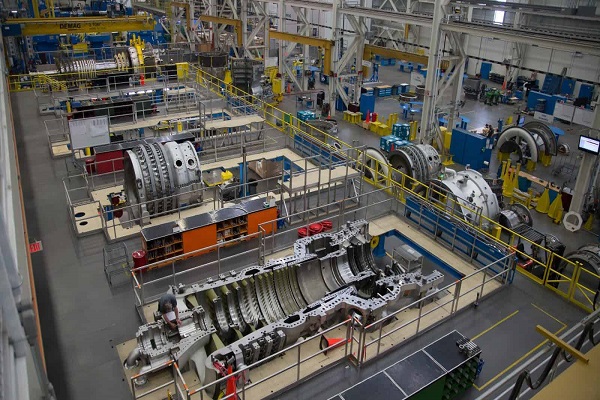
Emkay Global notes that manufacturing is gaining momentum on the back of China+1 supply chain diversification and policy support such as the Production Linked Incentive (PLI) scheme, defence indigenization, and localization efforts—enhancing project IRRs and creating export opportunities.
Infrastructure continues to see sustained public capital expenditure across roads, railways, ports, airports, and digital assets, with increasing private sector participation; asset monetization through InvITs and TOT models is further improving capital efficiency and returns.
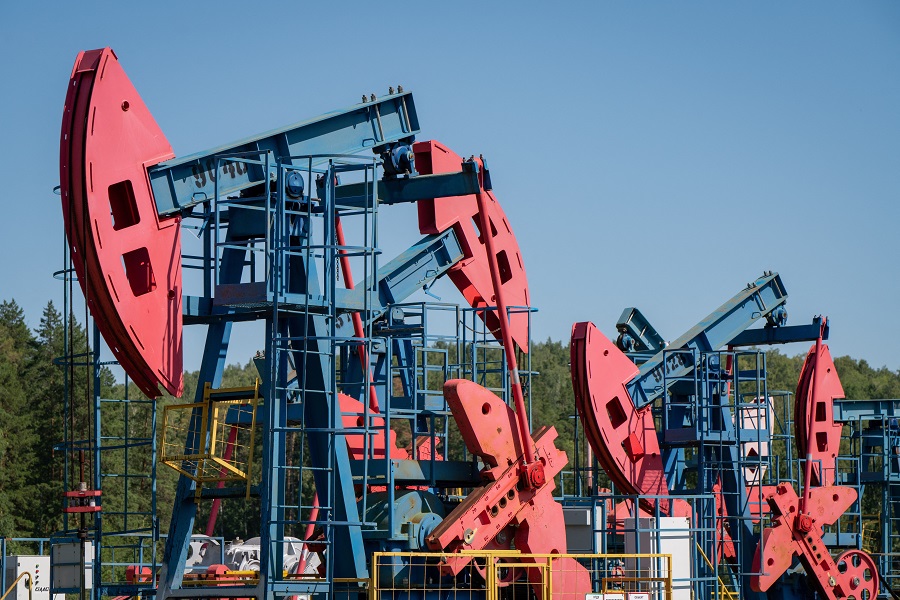
Meanwhile, the energy sector is entering a decade-long capex cycle, driven by investments in renewables, grid expansion, storage, and green hydrogen, alongside rising power demand from manufacturing, electric vehicles, and data centres—marking a transition from a yield-driven sector to a capex-led compounding story.
The report underscores that policy support, improved corporate balance sheets, and an evolving promoter mindset are converging to create a capex-led growth cycle that marks a clear departure from past consumption-driven expansions.
“Modern warfare is increasingly technology-led, with innovation becoming a critical differentiator in defence capabilities. As this evolution accelerates, we expect advanced technologies to play a central role in shaping India’s defence manufacturing ecosystem. This shift presents a significant opportunity for the sector to scale, innovate, and become globally competitive.” added Mr. Yatin Singh, CEO, Investment Banking, Emkay Global Financial Services.
Structural hotspots for deals & capital raising
Emkay Global highlights five key sectors attracting significant deal activity and capital deployment:
Automobiles & EVs: Transition from ICEs to EVs and CNG-based vehicles, supported by FAME and PLI schemes. Tax reforms allowing 100% FDI via automatic route are further boosting investment.
Electronics & Semiconductors: PLI and the SEMICON India Program are driving growth. Leading global players including Micron Technologies, Foxconn, Samsung, and Tata Group are establishing manufacturing facilities in India.
Renewable Energy: India reached 106 GW installed RE capacity in FY25, with an annual tendering target of 50 GW. The government’s target of ~300 GW by CY30 places India at a watershed moment in its energy transition.
Real Estate: India’s real estate market is projected to grow from ~USD 0.3 trillion in 2025 to USD 1 trillion by 2030 and USD 5 trillion by 2047. Commercial real estate, particularly office space, continues to attract significant long-term institutional capital.
Agro & Food Processing: Supported by PLI for the Food Processing Industry, Pradhan Mantri Kisan Sampada Yojana, and 100% FDI via both automatic and government approval routes
Above views are of the author and not of the website kindly read disclaimer