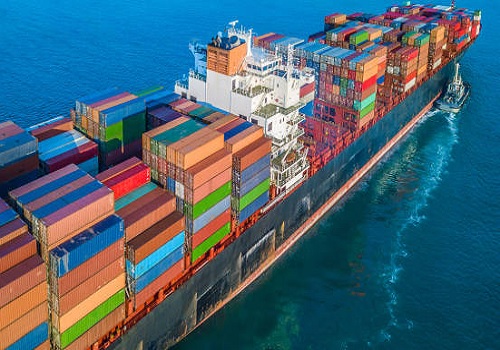
India-US trade deal to help stabilise rupee, boost FDI inflows

The India-US trade deal should help narrow the current account deficit, stabilise the rupee, and reduce India’s vulnerability to global shocks over time, a report showed on Tuesday.
The US has decided to reduce the reciprocal tariff on Indian goods to 18 per cent from the earlier 50 per cent.
The trade deal is structurally positive for India’s medium-term growth and external stability. Improved market access and tariff certainty are likely to boost exports, support manufacturing investment, and strengthen inflows of foreign direct investment (FDI), Axis Securities said in its report.
It is particularly positive for export-oriented sectors with meaningful exposure to the US market. Sectors such as textiles, chemicals, pharmaceuticals, auto ancillaries, IT services and select industrials stand to benefit from improved market access, tariff rationalisation and greater supply-chain certainty.
Over time, higher order inflows, better capacity utilisation and improved earnings visibility could support sustained growth and valuation re-rating for these sectors, said the report.
“India–US trade relations are entering a constructive phase after a period marked by tariff disputes, regulatory frictions, and global supply-chain realignments. With both economies seeking to de-risk supply chains, counter China-centric dependencies, and deepen strategic ties, the proposed US–India trade deal is shaping up as a pivotal catalyst,” it noted.
For India, the deal aligns well with its manufacturing push (PLI schemes), export diversification strategy, and ambition to move up the global value chain.
For the US, India offers a large, reliable market and a strategic manufacturing alternative in critical sectors.
According to the report, for equity markets, the deal enhances earnings visibility, supports valuation re-rating — particularly for export-oriented and capex-linked sectors — and reinforces India’s positioning as a relatively safe haven among emerging markets.
“The US–India trade deal should be seen as a medium-term structural positive rather than a short-term trigger. Sustained execution could meaningfully enhance India’s export competitiveness, manufacturing depth, and global integration. Investors should focus on companies with strong US exposure, scalable manufacturing capabilities, regulatory compliance strength, and balance-sheet resilience to fully capture the opportunity,” the report suggested.













600-400.jpg)