India's Kharif Sowing Lags Last Year Despite Strong Oilseed Progress by Amit Gupta, Kedia Advisory
India's kharif crop sowing reached 658.19 lakh hectares as of July 17, 2026, compared with 700.47 lakh hectares during the same period last year, reflecting a decline of 42.28 lakh hectares. The shortfall has been led by lower acreage under pulses, coarse cereals, cotton and oilseeds, while sugarcane and jute & mesta registered modest gains. Soybean, the largest oilseed crop, remained below last year's coverage despite steady planting progress. Delayed monsoon distribution in several growing regions continues to influence sowing decisions. Market participants are closely monitoring rainfall patterns, as acreage trends will significantly shape production prospects and future agricultural commodity prices.
Key Highlights
- Total kharif sowing declined by 42.28 lakh hectares year-on-year to 658.19 lakh hectares.
- Pulses recorded the sharpest acreage decline, falling 12.29 lakh hectares from last year.
- Soybean sowing reached 106.02 lakh hectares, down 5.02 lakh hectares year-on-year.
- Cotton acreage declined by 5.87 lakh hectares despite continued planting activity.
- Sugarcane and jute & mesta were the only major crops reporting higher sowing than last year.
Agricultural commodity markets remain focused on India's kharif sowing progress, as acreage developments are expected to influence production estimates and price trends during the upcoming harvest season. Concerns over delayed and uneven monsoon rainfall in several key producing states have supported sentiment across oilseeds, pulses and selected agricultural commodities, with traders closely assessing the pace of field operations.
According to the Ministry of Agriculture & Farmers Welfare, kharif crop sowing stood at 658.19 lakh hectares as of July 17, 2026, compared with 700.47 lakh hectares during the corresponding period last year, representing a decline of 42.28 lakh hectares. Oilseed acreage reached 147.09 lakh hectares, down 8.63 lakh hectares, while soybean planting totaled 106.02 lakh hectares, lower by 5.02 lakh hectares from a year earlier. Pulses recorded the steepest reduction, with acreage falling to 69.23 lakh hectares from 81.52 lakh hectares, while coarse cereals also witnessed a notable decline of 15.06 lakh hectares.
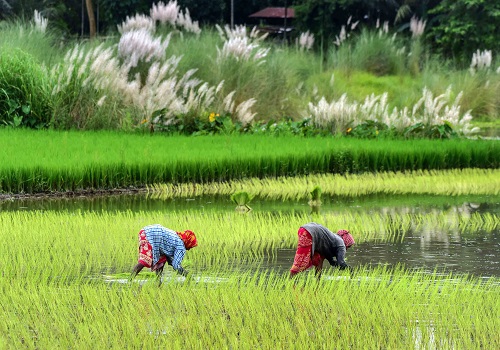
Rice sowing was reported at 166.41 lakh hectares, marginally below last year's 167.83 lakh hectares, indicating relatively stable planting despite weather-related challenges. Cotton acreage declined to 92.53 lakh hectares from 98.40 lakh hectares, reflecting slower field activity in some producing regions. Meanwhile, sugarcane and jute & mesta were the only major crops to register year-on-year gains, highlighting uneven crop-wise sowing trends.
The pace of monsoon advancement over the coming weeks will remain crucial for late-season planting, crop establishment and yield potential. Any sustained improvement in rainfall could accelerate sowing and narrow the acreage gap, while continued weather uncertainty may strengthen price expectations for several agricultural commodities.
India's kharif sowing remains behind last year's pace, keeping weather and acreage developments central to production expectations and agricultural commodity price direction in the months ahead.
Above views are of the author and not of the website kindly read disclaimer











Tag News
Daily Commodity Insights October 15, 2026 by Religare Broking