How to Choose a Tripod
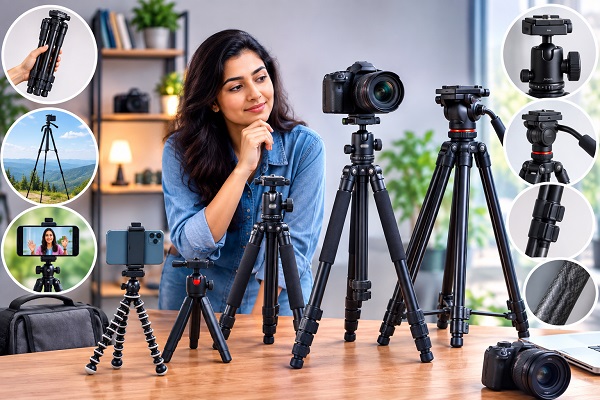
A tripod is one of the most useful accessories for photographers, videographers and content creators. It provides stability, reduces camera shake and makes it easier to capture sharp photos, smooth videos and well-composed shots. However, with so many tripod options available, choosing the right one can be confusing.
Here are some important factors to consider before buying a tripod.
1. Consider Your Camera or Device
The first step is to determine what you plan to use with the tripod. A lightweight tripod may be sufficient for a smartphone or compact camera, while a heavier DSLR or mirrorless camera with a large lens may require a stronger tripod.
Always check the tripod's maximum load capacity and make sure it can safely support your complete setup.
2. Choose the Right Tripod Height
Tripod height is another important consideration. A tripod that is too short can force you to bend or crouch while shooting, whereas an extremely tall tripod may be heavier and less convenient to carry.
Ideally, choose a tripod that can reach a comfortable shooting height while still being easy to transport.
3. Look at the Weight
If you frequently travel, hike or shoot outdoors, portability should be a priority. Lightweight tripods made from aluminium or carbon fibre are easier to carry.
Carbon-fibre tripods are generally lighter and can offer excellent strength, but they are often more expensive than aluminium models.
4. Check the Tripod Head
The tripod head controls how your camera moves and is extremely important for usability.
A **ball head** allows quick adjustments and is popular for photography. A **pan-and-tilt head** provides more controlled movement and can be useful for video or precise framing. Some tripods also come with specialised video heads designed for smooth panning.
Choose the head based on the type of photography or videography you do.
5. Check the Leg Lock System
Tripod legs usually use either twist locks or lever locks. Twist locks provide a clean design and are common on travel tripods, while lever locks can be quick and easy to operate.
Neither system is automatically better; the best option depends on your personal preference and how quickly you need to set up.
6. Consider Stability
A good tripod should remain stable in different shooting conditions. Look for sturdy legs, a strong centre column and a reliable locking system.
For outdoor photography, a tripod with a hook for adding weight can provide additional stability in windy conditions.
7. Think About Portability
If you plan to carry the tripod regularly, check its folded length and weight before purchasing. A compact travel tripod can be easier to fit into a backpack or luggage.
For studio or home use, portability may be less important, allowing you to choose a larger and more stable model.
8. Check Compatibility
Make sure the tripod has a suitable mounting system for your camera or smartphone. Many tripods use a standard camera mounting screw, while smartphone users may need a separate phone holder.
If you frequently switch between a camera and smartphone, consider a tripod system that supports both.
9. Set a Realistic Budget
Tripods are available at a wide range of prices. Beginners do not necessarily need the most expensive model, but extremely cheap tripods may compromise on stability, durability and build quality.
Choose a model that provides the features you actually need rather than paying extra for features you are unlikely to use.
10. Match the Tripod to Your Purpose
Your shooting style should ultimately determine your choice.
* Smartphone photography:** Compact and lightweight tripod
* Travel photography:** Lightweight, foldable tripod
* Landscape photography:** Stable tripod with adjustable height
* Studio photography:** Heavy-duty tripod
* Video creation:** Tripod with a smooth video head
* Content creation:** Portable tripod with smartphone and camera compatibility
Final Thoughts
Choosing the right tripod is about finding a balance between stability, weight, height, portability, compatibility and price. Before buying, consider your camera equipment, shooting style and where you are most likely to use the tripod.
A well-chosen tripod can become a long-term investment, helping you capture sharper photographs, steadier videos and more creative shots with greater confidence.