How Humanoid Robots Could Change Everyday Life
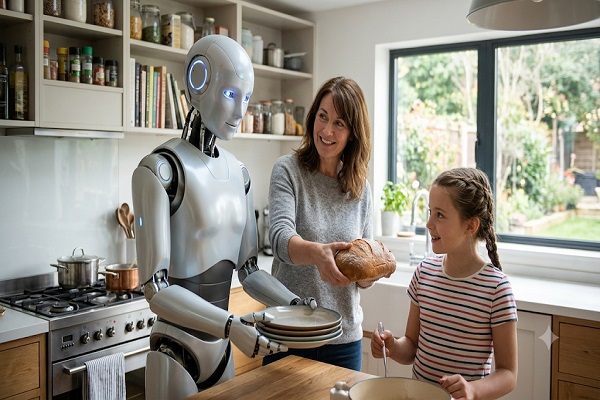
Humanoid robots are gradually moving from science fiction into the real world. Designed to resemble the human body and perform tasks using human-like movements, these robots are attracting attention across industries, research institutions and technology companies. With advancements in artificial intelligence (AI), machine learning, sensors and robotics, humanoid robots are becoming increasingly capable of interacting with people and performing practical tasks.
From helping with household activities to supporting healthcare professionals and working in factories, humanoid robots could transform how people live and work in the coming years. As technology continues to develop, these machines may become an important part of everyday life.
What Are Humanoid Robots?
Humanoid robots are machines designed with a human-like appearance and physical structure. They generally have a head, torso, arms and legs, allowing them to perform movements similar to humans.
Unlike traditional industrial robots that are designed for specific tasks, humanoid robots are being developed to operate in environments created for people, such as homes, offices, hospitals and warehouses.
These robots use a combination of technologies, including:
Artificial intelligence for decision-making and understanding instructions.
Computer vision to recognise objects, people and surroundings.
Sensors to detect movement, distance and physical contact.
Machine learning to improve performance through experience and training.
Advanced mechanical systems to support walking, lifting and object handling.
The combination of these technologies allows humanoid robots to interact with their surroundings and perform different tasks.
1. Making Household Activities Easier
One of the biggest potential applications of humanoid robots is household assistance. Everyday activities such as cleaning, organising objects, carrying groceries and preparing simple meals can require considerable time and effort.
Future humanoid robots could help with several household responsibilities, including:
Picking up and organising household items.
Carrying laundry and other lightweight objects.
Cleaning selected areas of the home.
Assisting with grocery organisation.
Helping prepare simple meals.
Performing repetitive household tasks.
Such capabilities could be particularly useful for elderly people, individuals with mobility limitations and busy working families.
However, reliable household assistance requires robots to understand different objects, recognise unexpected situations and operate safely around people.
2. Transforming Healthcare and Elderly Care
Healthcare is another area where humanoid robots could make a significant difference. Hospitals, nursing homes and care facilities often require support with repetitive activities and patient assistance.
Humanoid robots could potentially help healthcare professionals by performing tasks such as delivering medical supplies, transporting equipment and providing basic information to patients.
In elderly care, these robots may assist with reminders for daily routines, communication and simple mobility-related activities under appropriate supervision.
Some potential applications include:
Reminding patients about scheduled appointments.
Helping patients communicate with healthcare staff.
Supporting basic monitoring and routine assistance.
Delivering medicines and supplies within healthcare facilities.
Providing companionship through conversation and interaction.
Humanoid robots are not intended to replace doctors, nurses or trained caregivers. Instead, their role could be to support healthcare teams and reduce the burden of repetitive tasks.
3. Changing the Future of Manufacturing
Manufacturing is among the industries where humanoid robots could have a major impact. Factories already use industrial robots for welding, assembling, packaging and other repetitive activities.
Humanoid robots could offer additional flexibility because they are designed to work in spaces and use equipment originally built for human workers.
They may eventually perform activities such as:
Moving materials between production areas.
Handling repetitive assembly operations.
Inspecting products for visible defects.
Supporting warehouse operations.
Performing selected tasks in potentially hazardous environments.
Companies are exploring humanoid robots to improve operational efficiency, workplace safety and productivity.
However, their adoption will depend on factors such as operating costs, reliability, maintenance requirements and the ability to perform tasks consistently.
4. Improving Customer Service and Hospitality
Humanoid robots could also change how businesses interact with customers. Hotels, shopping centres, airports and restaurants may use these machines to provide basic assistance and information.
For example, humanoid robots could welcome visitors, answer frequently asked questions, guide customers towards different sections and provide information about available services.
In the hospitality industry, potential applications include:
Greeting hotel guests.
Providing directions inside large buildings.
Helping customers locate products.
Sharing information about services and facilities.
Supporting basic restaurant and reception activities.
Their human-like appearance and ability to communicate could make customer interactions more engaging.
Nevertheless, human employees will remain important for situations that require emotional understanding, complex problem-solving and personalised customer service.
5. Supporting Education and Learning
Education could become another important application area for humanoid robots. These machines may support teachers by providing interactive learning experiences and assisting students with selected educational activities.
Humanoid robots could help children practise communication, learn basic concepts and participate in interactive demonstrations.
Some possible applications include:
Teaching basic mathematics and science concepts.
Supporting language-learning activities.
Conducting interactive educational demonstrations.
Helping students practise communication skills.
Providing additional learning support under teacher supervision.
For students with certain learning needs, carefully designed robotic tools could offer more interactive ways to engage with educational content.
However, humanoid robots should complement teachers rather than replace the human connection that is essential to education.
6. Making Public Services More Efficient
Humanoid robots could eventually support selected public services by helping people access information and navigate large facilities.
Airports, railway stations, museums, government offices and other public spaces may use robots to guide visitors and answer routine questions.
For example, a robot could provide directions, explain service procedures or help visitors locate a particular department.
In emergency situations, specially designed robotic systems could also be explored for tasks in environments that may be dangerous for human responders.
Their effectiveness would depend on reliable navigation, communication systems and appropriate safety measures.
7. Creating New Job Opportunities and Changing Existing Jobs
The growing development of humanoid robots could influence employment patterns across different industries.
Some repetitive and physically demanding tasks may increasingly be performed by robots. This could change the nature of certain jobs, particularly in manufacturing, logistics and other operational sectors.
At the same time, wider adoption of robotics could create demand for new skills and employment opportunities in areas such as:
Robotics engineering.
Artificial intelligence development.
Robot maintenance and repair.
Automation management.
Robotics safety testing.
Human-robot interaction design.
Workers may need to develop technical and digital skills to adapt to changing workplace requirements.
Businesses and educational institutions will also have an important role in preparing people for a future where humans and robots increasingly work together.
8. Improving Safety in Dangerous Environments
Humanoid robots could help perform selected tasks in environments where human workers face physical risks.
For example, they may be developed to assist in industrial facilities, disaster-affected locations and hazardous work areas.
Potential applications include:
Inspecting dangerous industrial locations.
Handling selected materials in high-risk environments.
Supporting search-and-rescue operations.
Collecting information from difficult-to-access areas.
Performing repetitive tasks in unsafe working conditions.
Their human-like structure could make it easier to operate equipment and navigate spaces designed for people.
However, robots must be carefully tested before being used in dangerous environments, as technical failures could create additional risks.
9. Making Human-Robot Interaction More Natural
One of the important developments in humanoid robotics is the ability to communicate with people more naturally.
Earlier robots generally followed predefined instructions and performed limited movements. Modern AI technologies are helping researchers develop systems that can recognise speech, understand certain instructions and respond to changing situations.
Future humanoid robots could use conversational AI to interact with people, understand basic requests and provide more personalised assistance.
For example, a household robot might respond to spoken instructions, identify commonly used objects and perform tasks based on the user's requirements.
Improvements in speech recognition, computer vision and machine learning could make these interactions more natural over time.
10. Challenges and Concerns Surrounding Humanoid Robots
Despite their potential benefits, humanoid robots still face several technological, financial and ethical challenges.
High development costs: Designing, manufacturing and maintaining advanced humanoid robots can be expensive, which may limit their availability.
Safety concerns: Robots must be capable of operating safely around children, elderly people and other individuals.
Privacy and data security: Robots equipped with cameras, microphones and connected AI systems may collect sensitive information from homes and workplaces.
Technical limitations: Walking, balancing, handling delicate objects and responding to unexpected situations remain challenging tasks.
Employment concerns: Increased automation may affect certain job roles, making reskilling and workforce preparation important.
Ethical considerations: Questions surrounding accountability, human supervision and responsible AI use will become increasingly important as robots gain more capabilities.
Addressing these challenges will be essential before humanoid robots can become widely accepted in everyday environments.
What Does the Future Hold for Humanoid Robots?
The future of humanoid robotics will depend on continued improvements in artificial intelligence, hardware, battery technology, sensors and manufacturing processes.
As these technologies develop, humanoid robots may become more capable of performing practical tasks in homes, hospitals, factories and public spaces.
Their adoption is likely to happen gradually, beginning with controlled environments and specific commercial applications before expanding into more complex everyday activities.
Companies and researchers are already exploring ways to make humanoid robots more affordable, energy-efficient and adaptable to different working conditions.
However, widespread household adoption will require significant progress in affordability, reliability, safety and ease of use.
Conclusion
Humanoid robots have the potential to transform everyday life by assisting with household activities, supporting healthcare professionals, improving manufacturing operations and providing services in public spaces.
Although the technology is still developing, advancements in artificial intelligence and robotics are bringing human-like machines closer to practical applications.
The future will not necessarily involve robots replacing humans. Instead, humanoid robots could become useful assistants that work alongside people, handle selected repetitive tasks and support activities that require physical assistance.
As technology advances, the biggest challenge will be ensuring that humanoid robots are safe, affordable, reliable and developed responsibly for the benefit of society.