Fertiliser sector set for a capex revival, return band tightened under NIPU-2026 but remains comfortable: ICRA

ICRA expects the domestic urea sector to enter a fresh capex phase, with Rs. 80,000-90,000 crore of capex likely to be committed by the industry over the next six months and the plants are likely to be commissioned in 3.5-4.0 years. This follows from the notification by the Government of India (GoI) of the New Investment Policy for Urea-2026 (NIPU-2026). The new investments are expected to materially improve self-sufficiency from 2030-31 by reducing the dependence on urea imports. However, domestic urea production remains heavily reliant on imported natural gas, and diversification of gas sourcing contracts will be critical to avoid disruptions similar to those seen during the West Asia crisis.
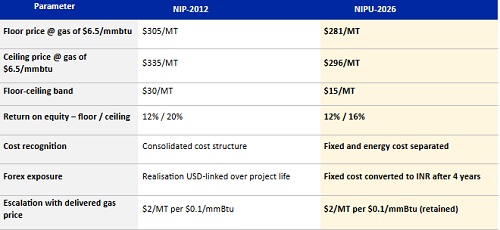
The new policy tightens project economics primarily through lower notified realisations. At a delivered gas price of up to $6.5/mmBtu, the floor and ceiling realisations for a greenfield/revival unit under NIPU-2026 stand at $281/MT and $296/MT against $305/MT and $335/MT under NIP-2012, lower by 8% and 12%, respectively, although the escalation of $2/MT for every $0.1/mmBtu change in delivered gas price has been retained.
India’s import dependence on urea has continued to rise (the country imported ~27% of its requirement in 2025-26) as there has been no capacity addition over the last couple of years while consumption has grown at a steady pace and a few capacities have retired. With domestic capacity of 30.6 MMTPA against demand of ~39.9 MMT in 2025-26, the new investments are expected to materially improve self-sufficiency from 2030-31.
Girishkumar Kadam, Senior Vice President & Group Head, ICRA said: “NIPU-2026 has tightened the return window to 12-16% RoE against 12-20% under NIP-2012, and the floor and ceiling realisations have also been reduced, which will impact the EBITDA level by Rs. 250-280 crore for a standard 1.27-MMTPA unit vis-à-vis NIP-2012. Despite this, the debt coverage and return metrics are expected to remain comfortable for the project proponents. Nonetheless, the ability of these entities to control the capex outlay and to consistently run plants at more than 95% capacity utilisation will be crucial. The cumulative debt service coverage ratio (DSCR) is expected to remain comfortable at 1.26 times for a greenfield project over the 8-year policy period, indicating healthy cushion in debt servicing.”
Domestic urea production remains heavily reliant on imported natural gas, with the share of imported LNG in the fertiliser sector’s consumption mix having risen to ~85% in 2025-26 from 64% in 2020-21, even though domestic gas availability has moderated. Each new 1.27-MMTPA plant is expected to add ~2.2 mmscmd of gas demand, equivalent to ~0.6 MMT of LNG. With term portfolios currently skewed towards West Asia, diversification of gas sourcing contracts will be critical to avoid disruptions similar to the recent West Asia crisis, during which the fertiliser pool gas price rose to ~$19/mmBtu in April 2026 from ~$13/mmBtu earlier. The upcoming capacity additions are, however, expected to give gas suppliers greater visibility to deploy long-term sourcing contracts towards urea plants.
With the sizeable capex cycle expected to be underway, gas transmission players stand to benefit from the commissioning of gas-based urea plants, with transmission volumes of ~2.2 mmscmd to be added per plant. Gas trading firms will benefit from the sale of natural gas to these plants and LNG terminals will see higher utilisation, with ~0.6 MMT of LNG consumption added per plant. Engineering, Procurement and Construction (EPC) contractors engaged in project execution and manufacturers of critical piping systems are likely to witness increased order inflows, given the sizeable amount of piping involved. Capital goods manufacturers capable of producing high-pressure/high-temperature process vessels, heat exchangers, reactors and ammonia converters are similarly positioned to benefit from the order pipeline.
Exhibit 1: Trend in urea consumption and indigenous production, MMT
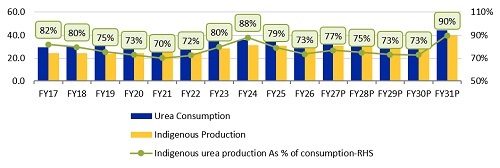
Exhibit 2: Key differences between NIP-2012 and NIPU-2026
Above views are of the author and not of the website kindly read disclaimer