Economy Macro-Cap : Rural demand: Down, but not outPrices that make the story whole: Why is RBI turning dovish? by Motilal Oswal Financial Services Ltd

Manufacturing inflation doubled in three months, and the RBI did not blink
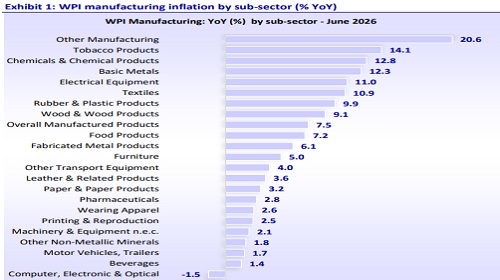
WPI manufacturing inflation doubled in three months, from 4.8% in March to 7.5% in June. But the headline number hides that out of 22 NIC subgroups (957 sub-series), only five are running double-digit year-on-year gains. The rest of the index, which is over half the basket, has barely moved. If we strip out gold, silver, and oil, there is no broad-based price pressure visible (exactly what the RBI governor mentioned!).
The current inflation shock is primarily cost-driven, not demand-driven. Higher crude oil prices and the rally in industrial metals have pushed up input costs across chemicals, textiles, rubber & plastics, basic metals, and allied sectors. However, most consumer-facing industries have largely absorbed these higher input costs instead of passing them on to retail prices.
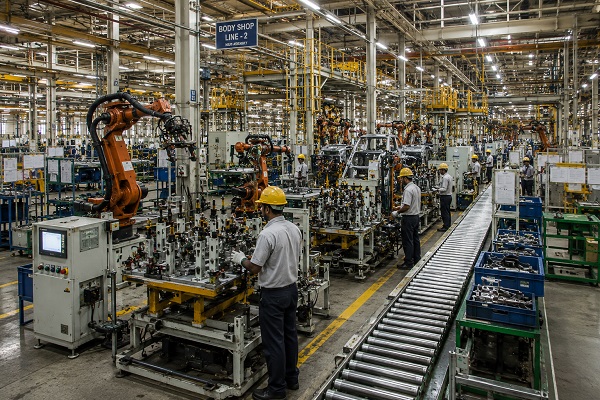
Capex-related industries are the notable exception. Sectors such as electrical equipment, transformers, machine tools, railways, and aerospace components continue to record sustained price increases, reflecting strong investment demand rather than merely higher input costs. This reinforces the ongoing infrastructure and capital expenditure cycle.
This is why the RBI has paused in three meetings, keeping the repo rate unchanged at 5.25%. Inflation exists but is concentrated, which buys room to hold rather than tighten. While overall the stance is positive for consumption through the credit channel, the rate-sensitive sectors such as auto, realty, consumer durables, and NBFCs are likely to benefit more.
We expect the RBI to remain on hold through CY26; the window for policy tightening is likely to open next year (El Niño impact, manufacturing cost passthrough, high credit growth feeding into inflation, and global interest rate hike cycle). The RBI is expected to deliver a cumulative 75–100bp rate hike depending on data, implemented through calibrated 25bp increases at successive MPC meetings.
Price gains are concentrated in the following five sectors:
* Basic metals, at 12.3% YoY in Jun’26, is the largest sector after food, with a weight of 8.4%. However, the MoM print turned negative, down 1%. Whether July confirms a plateau or the start of a reversal will matter.
* Chemicals picked up sharply over the last three months (13% YoY in Q1FY27). This sector is a part of the value chain for many specialty chemicals and cable insulation.
* Textiles and rubber & plastics are the two groups still accelerating. Textiles has one of the steepest increases outside chemicals and basic metals. Rubber & plastics posted the fastest single-month gain in June, up 1.1% MoM. Both point to cotton, synthetic-fiber, and crude-linked input costs working through the chain, with a lag.
* Electrical equipment increased by 11% YoY, its sixth consecutive month of gains. This looks like sustained demand pull rather than an input spike, which explains the capital-goods and data center capex story.
For More Research Reports : Click Here
For More Motilal Oswal Securities Ltd Disclaimer
http://www.motilaloswal.com/MOSLdisclaimer/disclaimer.html
SEBI Registration number is INH000000412