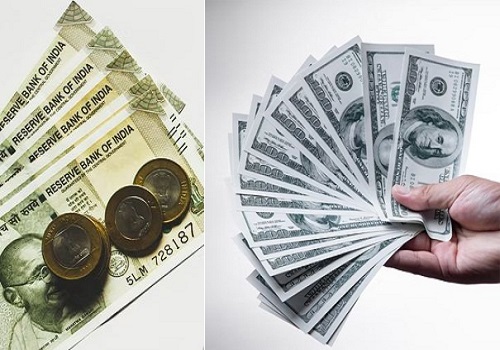
Dollar retains safe-haven status: IMF
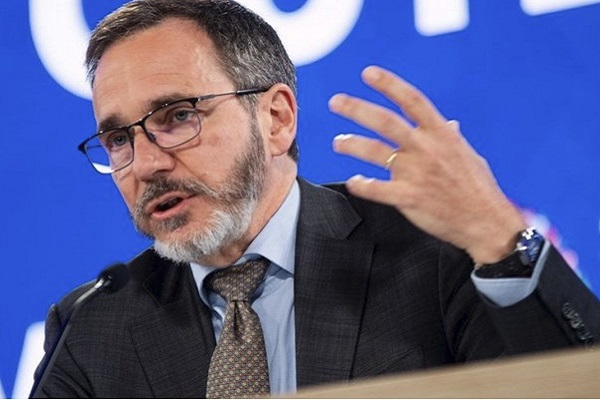
The US dollar has retained its role as a global safe-haven currency despite recent volatility, the International Monetary Fund (IMF) has said, even as central banks worldwide remain on high alert to contain inflation risks triggered by the Middle East conflict.
Speaking during a group interview with reporters from India, Japan, the UAE, the Netherlands and Chile, IMF Chief Economist Pierre-Olivier Gourinchas said recent market movements indicate a return to more traditional patterns after earlier uncertainty.
“In this big shock… we’ve had movements that are more associated with the traditional response of the dollar as playing the role of a safe asset,” he said.
The dollar’s behaviour raised concerns last year, as it weakened despite rising global uncertainty and trade tensions.
“We saw the dollar depreciating… a departure from what you would expect,” Gourinchas said, noting that investors had not moved into US treasuries as typically seen during periods of stress.
However, the latest developments linked to the Middle East crisis have reversed that trend.
“Since the beginning of hostilities… the dollar has appreciated,” he said, adding that “capital has been flowing out of emerging markets.”
He noted that several emerging market currencies have come under pressure. “We’ve seen currencies… depreciated by sometimes a huge amount,” he said.
While U.S. Treasury yields have risen, Gourinchas said the increase has been more moderate compared to other major economies. “They’ve been increasing less than other countries’ yields,” he said.
Overall, he said, concerns about the dollar losing its dominant role have eased. “I don’t think that there is a lot of questioning about the… place of the dollar in the international monetary system,” he said.
At the same time, central banks are facing a complex policy environment as they respond to the inflationary impact of higher energy prices.
Gourinchas described the current situation as a “negative supply shock” that is simultaneously pushing up inflation and slowing economic activity.
In such conditions, he said, central banks must tread carefully. “If we are in a reference forecast where the shock is relatively short-lived… You can afford to wait, and you don’t need to do much,” he said.
However, the risk lies in inflation becoming entrenched through rising wages and broader price increases.
“The worry… is that… it starts moving into a general inflation problem, when all prices and wages start going up,” he said.
If inflation expectations begin to shift, central banks may have to act decisively. “They have to communicate very clearly… we’re gonna step on the brakes… this is going to be painful,” he said.
Gourinchas stressed that monetary policy cannot directly address energy price shocks. “You raise your policy rate, it’s not gonna change the price of oil,” he said.
Instead, central banks must focus on preventing second-round effects, particularly the risk of a wage-price spiral.
“They have to be super vigilant… on the lookout for signs,” he said.
The IMF’s assessment comes amid heightened volatility in global financial markets following the escalation of tensions in the Middle East, which has disrupted energy supplies and pushed up commodity prices