Contactless Hotel Services: How Smart Technology Is Transforming the Guest Experience
Smart Hotel Reviews: Digital Check-In, Mobile Keys and Contactless Services
Introduction
Smart hotel technology is transforming the hospitality industry by making hotel stays more convenient, efficient and personalised. Digital check-in, mobile room keys, contactless payments and online guest services are becoming important features of modern accommodation.
Today's travellers increasingly expect convenient ways to manage their hotel bookings and access services through smartphones. From completing check-in before arrival to unlocking hotel rooms with mobile keys, smart hotel facilities are changing the traditional guest experience.
Smart hotel reviews help travellers understand how these technologies work, what facilities hotels offer and whether digital services provide genuine convenience during their stay.
What Is a Smart Hotel?
A smart hotel uses digital technology, connected devices and automated systems to improve guest experiences and hotel operations. These facilities can include digital check-in, smartphone-based room access, smart room controls, online payments and digital concierge services.
Depending on the hotel, guests may be able to manage several aspects of their stay through a mobile application or a web-based platform.
Smart hotel facilities are available in different accommodation categories, including luxury hotels, business hotels, boutique properties and selected budget hotels.
Digital Check-In: A More Convenient Hotel Arrival
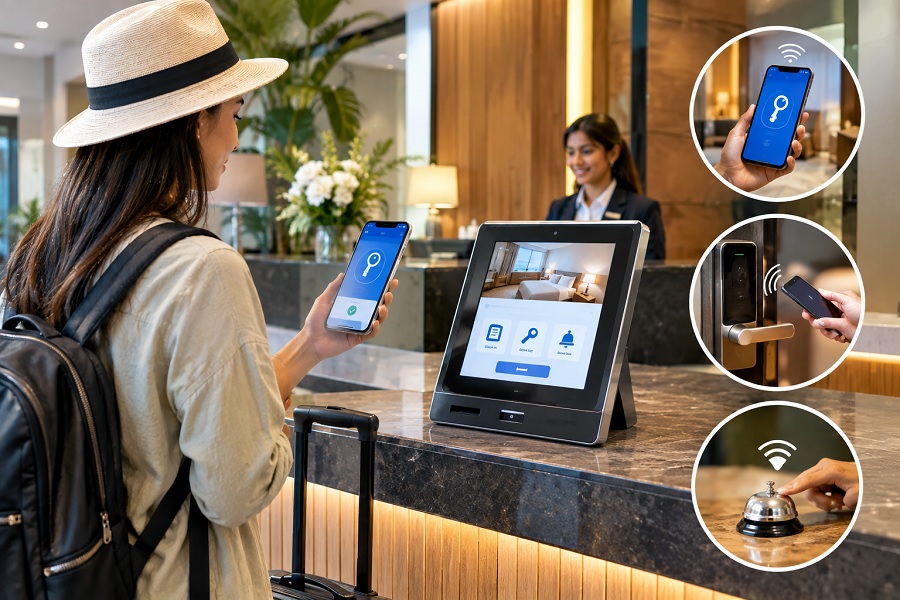
Digital check-in allows guests to complete some or all of their arrival formalities online, often before reaching the property. Depending on the hotel's system, guests may be able to confirm their reservation, submit identification details, complete registration and make payments digitally.
This technology can reduce paperwork and help guests avoid unnecessary waiting at reception. Some hotels also provide self-service kiosks for visitors who prefer to complete check-in at the property.
However, guests may still need to visit reception for identity verification, payment authorisation or other formalities, depending on the hotel's policies.
Mobile Keys and Smartphone Room Access
Mobile room keys are among the most noticeable features of smart hotels. They allow guests to use a compatible smartphone to unlock their rooms instead of relying entirely on traditional key cards.
Depending on the property, mobile keys may work through Bluetooth, near-field communication (NFC) or other secure access systems. Some hotels deliver digital keys through their mobile applications, while others use browser-based services.
Mobile keys can reduce the inconvenience of misplaced key cards and make room access easier. Some systems also support access to selected hotel facilities, such as elevators, gyms and parking areas.
The actual availability and functionality of mobile keys vary by hotel and its door-lock system.
Hotel Tech Report
+1
Contactless Hotel Services
Contactless hotel services allow guests to access selected facilities and manage their stay with fewer physical interactions. These services can cover several stages of the guest journey, including arrival, room access, dining, payments and departure.
Common contactless hotel facilities include:
Mobile check-in and check-out
Digital room keys
Online payments
QR-code menus
Digital concierge services
Online housekeeping requests
Mobile room-service ordering
Electronic bills and receipts
These options can make hotel services easier to access, particularly for travellers who prefer managing their bookings and requests through their smartphones.
RoomMaster
+1
Smart Hotel Room Reviews: Digital Amenities and Comfort
Modern smart hotel rooms may feature automated lighting, digital temperature controls, smart televisions and app-based service requests.
Some properties allow guests to control room lighting or air conditioning through wall panels or mobile applications. Other hotels offer connected entertainment systems and voice-assisted services.
When reviewing a smart hotel room, travellers should consider whether its technology is easy to use, whether the controls work reliably and whether traditional controls are available as an alternative.
A comfortable bed, good ventilation, cleanliness and noise control remain important factors alongside digital features.
Digital Concierge and Online Guest Assistance
Digital concierge services help guests access hotel information and request assistance through mobile applications, websites or messaging platforms.
Depending on the property, these services may provide information about restaurant timings, nearby attractions, transportation, housekeeping and other hotel facilities.
Some hotels also use chatbots to answer routine questions and direct guests to the appropriate department. However, access to hotel staff remains important when guests need assistance with complex requests or urgent problems.
Hotel Tech Report
Contactless Payments and Digital Billing
Digital payments are an important part of the smart hotel experience. Depending on the property, travellers may be able to pay through cards, digital wallets, online payment gateways or supported QR-based payment systems.
Digital billing can also help guests review room charges, restaurant expenses and additional services without relying entirely on printed statements.
Before booking, travellers should check which payment methods the hotel accepts and whether additional deposits, pre-authorisations or service charges apply.
Smart Hotel Reviews for Business Travellers
Business travellers often value efficient check-in, reliable internet connectivity and convenient access to hotel services.
Smart hotel facilities can help reduce time spent on routine administrative tasks. Mobile room access and digital billing may also make short business trips easier to manage.
When reviewing business hotels, guests should pay particular attention to Wi-Fi reliability, workspace availability, mobile check-in performance, business facilities and access to staff assistance.
Smart Hotels for Families and Couples
Smart hotel services can also appeal to families and couples. Mobile check-in can simplify arrival, while digital service requests may make it easier to arrange housekeeping, dining or additional amenities.
Families should check whether the hotel provides suitable room configurations, child-friendly facilities and convenient access to staff.
Couples may prefer properties offering private accommodation, flexible dining arrangements, comfortable rooms and convenient digital services.
Benefits of Digital Check-In and Contactless Hotel Services
Smart hotel facilities offer several potential benefits for guests and hotel operators.
Convenience: Guests can manage selected hotel services through their smartphones instead of depending entirely on reception.
Time savings: Online check-in and self-service options may reduce waiting during busy arrival periods.
Flexible access: Mobile keys can provide an alternative to traditional room key cards.
Simpler communication: Digital concierge systems can make it easier to submit routine service requests.
Paper reduction: Digital receipts and electronic registration can reduce the need for some printed documents.
Operational efficiency: Connected hotel systems can help staff manage reservations, room access and guest requests more efficiently.
The benefits depend on the quality of the technology and how well it is integrated with the hotel's everyday operations.
RoomMaster
+1
Common Problems with Smart Hotel Technology
Although digital services can improve convenience, they may also create challenges for guests.
Mobile keys may not work when a phone runs out of battery or loses connectivity, depending on the system. Digital check-in may also be difficult for travellers who are unfamiliar with the technology.
Other potential concerns include application compatibility, login difficulties, privacy, payment errors and technical interruptions.
Hotels should provide reliable alternatives, such as physical key cards, reception assistance and clear instructions, so that guests are not left without access to essential services.
Privacy and Security in Smart Hotels
Privacy is an important consideration when reviewing hotels that collect guest information through digital platforms.
Travellers should check how personal information is collected, stored and used. Hotels should provide clear privacy policies and apply appropriate safeguards to guest accounts, mobile keys and payment systems.
Guests should download hotel applications from trusted sources and avoid sharing passwords or sensitive payment details through unverified links.
Smart technology should make a stay more convenient without compromising the protection of personal information.
How to Review a Smart Hotel Before Booking
Before choosing a smart hotel, travellers can evaluate several important factors.
Review factor
What to check
Digital check-in
Ease of registration and arrival
Mobile keys
Reliability and smartphone compatibility
Contactless payments
Available payment methods
Smart room controls
Ease of use and functionality
Wi-Fi
Speed, coverage and reliability
Digital concierge
Availability and response time
Customer support
Access to hotel staff
Privacy
Personal data protection
Cleanliness
Room and common-area hygiene
Guest reviews
Recent feedback about technology and service
Online guest reviews should be checked alongside the hotel's official website. Travellers should also look for recent feedback about technical problems and whether hotel staff resolve them promptly.
The Future of Smart Hotels in India
Smart hotel technology is becoming an important area of hospitality development in India. Digital check-in, mobile room keys, connected services and AI-assisted guest communication are among the technologies hotels can adopt to modernise their operations.
In 2026, hospitality technology discussions increasingly focus on mobile-first guest experiences, automated services and better integration between hotel management systems and guest-facing applications.
Canary
+1
The pace of adoption is likely to vary across luxury hotels, business properties, boutique accommodation and budget hotels. As technology develops, hotels may offer more personalised services and additional digital options while retaining traditional assistance for guests who prefer it.
Conclusion
Smart Hotel Reviews help travellers understand how digital check-in, mobile keys and contactless services influence their overall accommodation experience. These technologies can make hotel stays more convenient by simplifying arrival, room access, payments and communication.
However, reliable technology, comfortable accommodation, privacy protection and helpful staff remain essential elements of a satisfying hotel experience.
Whether choosing a luxury resort, business hotel, boutique property or budget accommodation, travellers should consider both digital facilities and traditional hospitality before making a booking. A well-managed smart hotel combines convenient technology with dependable personal service.