Commodity Research- Daily Evening Track - 09-Mar-2026 by Kotak Securities
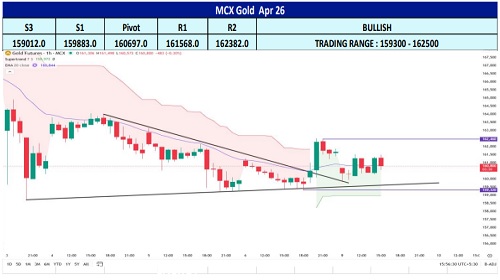
Bullion pressured as dollar strengthens while Crude Oil surges above $100 on Middle East supply disruptions
Spot gold prices initially declined to around $5,014 per ounce on Monday as a firmer U.S. dollar and fading expectations of near-term Federal Reserve rate cuts weighed on sentiment. However, prices later recovered to above $5,110, supported by renewed safe-haven demand amid intensifying geopolitical tensions in the Middle East. The conflict has disrupted energy infrastructure and shipping routes through the Strait of Hormuz, one of the world’s most critical oil transit corridors. Silver also displayed volatility, briefly falling to $79.6 during the session before rebounding toward $84, mirroring the broader uncertainty across financial markets. Persistent geopolitical risks and heightened global trade tensions continue to support demand for defensive assets. At the same time, ongoing central-bank purchases, particularly by the People’s Bank of China, remain an important underlying pillar for bullion markets. Oil prices surged towards $120 per barrel amid production curbs from major regional producers such as Kuwait, Iraq, and the UAE have amplified concerns over tightening global supply. From a macro perspective, the sharp rise in energy prices is rekindling inflation risks and complicating the Federal Reserve’s policy outlook. Due to higher crude prices, policymakers may be forced to maintain restrictive monetary conditions for longer, increasing the risk of stagflation. Thus, bullion markets are likely to remain highly sensitive to shifts in the U.S. dollar, energy prices, and evolving geopolitical developments.
WTI crude oil surged to nearly $119 per barrel due to escalating tensions in the Middle East triggered supply disruptions. The rally was driven by production cuts from Kuwait, Iraq, and the UAE after shipping through the Strait of Hormuz, which normally handles about a fifth of global oil trade, was effectively halted. Storage capacity in several producing countries rapidly filled, forcing output curtailments. Iraq’s production from its key southern fields has reportedly dropped by around 70%, while Kuwait Petroleum Corporation declared force majeure on shipments and began scaling back output. Refinery disruptions and attacks on energy infrastructure across the region, including incidents in the UAE and Bahrain, have further tightened supply. Qatar has also halted LNG production following attacks on critical facilities. However, prices later retreated toward $100 per barrel after comments from Trump suggested that oil prices could fall quickly once the Iran nuclear threat is neutralized. In parallel, G7 finance ministers are discussing a coordinated strategic reserve release, potentially alongside the IEA, to stabilize markets. The oil market remains highly sensitive to geopolitical developments. Supply disruptions across the Gulf have tightened near-term balances, but potential reserve releases and diplomatic signals could cap extreme price spikes. Market direction will depend largely on whether the Hormuz corridor reopens and how long regional production outages persist.
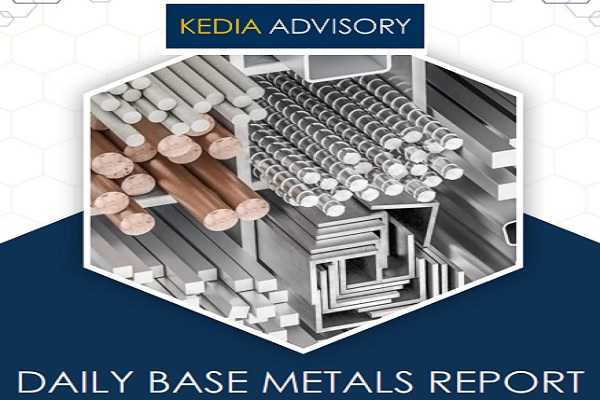
Base metals are trading on a mixed footing, with zinc emerging as the sole gainer while the rest of the complex is witnessing a mild pullback. Aluminium, despite easing about 0.5% to around $3,431/ton, continues to remain supported after recently touching its highest level in nearly four years. The rally has been largely driven by escalating geopolitical tensions in the Middle East, which have disrupted shipping through the Strait of Hormuz, a key trade route for the Gulf region that accounts for roughly 9% of global aluminium supply. Supply concerns intensified after Qatalum in Qatar began curtailing production and Aluminium Bahrain declared force majeure on shipments, prompting buyers to seek alternative cargoes. Meanwhile, copper has retreated to multi-week lows, as a stronger U.S. dollar and surging oil prices above $100/barrel heightened fears of persistent inflation and slower global growth, dampening risk appetite across industrial metals.
U.S. natural gas futures climbed over 5% toward $3.3 per MMBtu, reaching a one-month high as escalating Middle East tensions raised concerns over potential disruptions to global LNG flows. Markets are closely monitoring the risk of prolonged shipping interruptions through the Strait of Hormuz, which could tighten global supply and redirect demand toward U.S. exports. Additional uncertainty surrounding the restart timeline of QatarEnergy’s Ras Laffan LNG facility has amplified supply concerns. If geopolitical risks persist, the U.S. gas market could see firmer demand dynamics and stronger export-led support in the near term.
Please refer disclaimer at https://www.kotaksecurities.com/disclaimer
SEBI Registration No. INZ000200137