AI Robots for Home Use: How Smart Robots Are Transforming Everyday Living
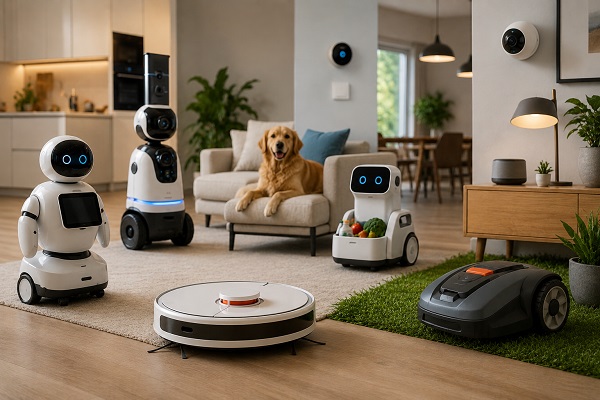
Artificial Intelligence (AI) is reshaping the way people live, work, and manage their homes. Among the most exciting innovations are AI-powered home robots, which are designed to make daily life easier, more efficient, and more convenient. From cleaning floors and monitoring home security to assisting with household tasks and providing companionship, these intelligent robots are becoming valuable additions to modern homes.
As AI technology continues to evolve, home robots are becoming smarter, more capable, and easier to use. Whether you're looking to save time, improve home security, or simplify everyday chores, AI robots offer practical solutions for households of all sizes.
What Are AI Home Robots?
AI home robots are intelligent machines equipped with technologies such as artificial intelligence, machine learning, computer vision, sensors, and voice recognition. These features allow them to understand their surroundings, learn from user preferences, avoid obstacles, and perform tasks with minimal human intervention.
Many AI robots can also connect to smartphones and smart home ecosystems, enabling users to monitor and control them remotely.
Popular Types of AI Robots for Home Use
1. Robot Vacuum Cleaners
Robot vacuum cleaners are among the most popular AI-powered home devices. Using cameras, sensors, and intelligent mapping technology, they navigate around furniture, avoid obstacles, and clean floors automatically. Many advanced models can vacuum and mop simultaneously, creating efficient cleaning schedules for different rooms.
2. Robot Lawn Mowers
AI-powered lawn mowers automatically trim grass while avoiding obstacles and staying within designated boundaries. These robots help homeowners maintain neat lawns with minimal effort.
3. Home Security Robots
Security robots patrol indoor or outdoor spaces using cameras, motion sensors, and AI-based detection systems. They can identify unusual activity, send real-time alerts to smartphones, and integrate with existing home security systems.
4. Personal Assistant Robots
Some AI robots act as interactive personal assistants. They can answer questions, provide reminders, play music, manage calendars, control smart home devices, and even hold basic conversations using advanced language processing.
5. Educational Robots
Educational robots help children learn programming, mathematics, science, languages, and problem-solving skills through interactive games and activities. They make learning engaging while introducing young users to technology and robotics.
6. Companion Robots
Designed primarily for older adults or individuals living alone, companion robots provide conversation, reminders for medication, entertainment, and emotional support. While they do not replace human interaction, they can help reduce feelings of loneliness for some users.
Benefits of AI Robots at Home
Save Time
AI robots automate repetitive household tasks such as vacuuming, mopping, lawn care, and monitoring the home, allowing homeowners to spend more time on family, work, or hobbies.
Improve Home Security
Smart security robots provide continuous surveillance and can quickly notify homeowners of unusual activity through mobile alerts.
Increase Convenience
Many AI robots operate independently and can be scheduled through mobile apps or controlled using voice assistants, making home management more convenient.
Personalized Performance
Using machine learning, many AI robots adapt to household routines, cleaning preferences, and frequently used areas, improving their performance over time.
Energy Efficiency
Some AI devices optimize cleaning routes and charging schedules, helping reduce unnecessary energy consumption.
Key Features to Consider
When choosing an AI robot for home use, consider the following features:
AI-powered navigation and obstacle avoidance
Voice assistant compatibility
Smartphone app control
Smart mapping and room recognition
Automatic charging and resume function
Long battery life
Scheduled task automation
Security and privacy controls
Regular software updates
Reliable customer support
AI and Smart Home Integration
Many AI robots can connect with smart home platforms, allowing users to control multiple devices through a single ecosystem. For example, a robot vacuum may begin cleaning automatically after everyone leaves the house, while security robots can work alongside smart cameras and door sensors to provide additional monitoring.
Challenges and Considerations
Despite their advantages, AI home robots have some limitations:
Initial purchase costs can be high.
Performance may vary depending on the home's layout.
Some robots require regular maintenance, such as cleaning brushes or replacing filters.
Internet connectivity may be needed for advanced features.
Privacy and data security should be considered when using connected devices.
Carefully reviewing a product's privacy policies and software support can help users make informed decisions.
The Future of AI Home Robots
Advances in artificial intelligence are expected to make home robots even more capable. Future robots may better understand natural conversations, recognize individual family members, assist with cooking, organize household items, monitor health, and perform a wider variety of daily tasks. Improvements in computer vision, robotics, and machine learning are likely to make these systems more efficient, adaptable, and accessible.
Final Thoughts
AI robots are changing modern households by making routine tasks easier, enhancing convenience, and supporting smarter home management. From robot vacuum cleaners and security systems to educational and companion robots, these intelligent devices offer practical solutions for everyday living.
As technology continues to advance, AI home robots are likely to become even more versatile and integrated into daily life. Choosing a robot that matches your household's needs, budget, and privacy preferences can help you make the most of this rapidly evolving technology.