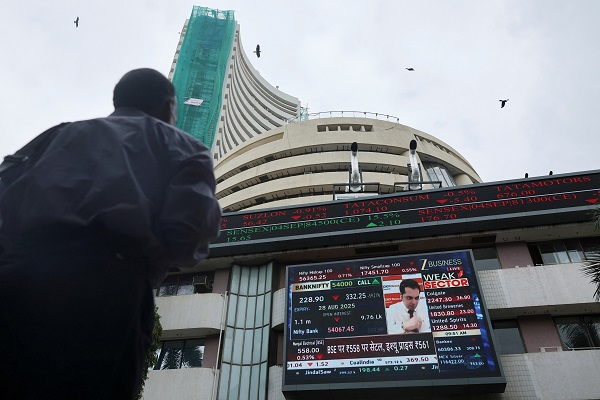
Gold trading range for the day is 140880-146440 - Kedia Advisory

Gold
Gold prices declined sharply by 1.96%, settling at Rs 142,821, as rising geopolitical tensions in the Middle East strengthened inflation expectations and increased the likelihood of tighter U.S. monetary policy. The Iran-backed Houthis claimed attacks on two Saudi oil tankers, while the United States conducted a twelfth consecutive night of strikes on Iran, heightening concerns over potential disruptions to Gulf energy supplies. The resulting surge in crude oil prices reinforced expectations that inflation could remain elevated, prompting markets to price in nearly a 78% probability of a Federal Reserve rate hike in September, reducing the appeal of non-yielding assets such as gold. On the physical market front, Swiss gold exports declined 3% in June as weaker shipments to the United Kingdom and China outweighed stronger deliveries to India and Saudi Arabia. Exports to the UK fell to 27.4 tonnes from 39.4 tonnes, while shipments to China eased to 27.9 tonnes from 31.6 tonnes. In contrast, exports to India rebounded to 7.4 tonnes from just 955 kg in May, and deliveries to Saudi Arabia quadrupled to 10.3 tonnes. Russia's official gold reserves stood at 2,282 metric tonnes at the beginning of July, although holdings have declined by 43.5 tonnes since the start of the year. Meanwhile, Indian gold discounts widened to a one-month high amid subdued jewellery demand, while premiums across major Asian markets remained largely stable. London vault holdings increased 0.77% month-on-month to 9,464 tonnes. Technically, the market witnessed long liquidation, with open interest declining 9.06%, reflecting profit booking after recent gains. Gold is holding immediate support at Rs 141,850, with a break below likely to expose Rs 140,880. On the upside, resistance is placed at Rs 144,630, and sustained buying above this level could extend gains toward Rs 146,440.
Trading Ideas:
* Gold trading range for the day is 140880-146440.
* Gold prices fell as escalating tensions in the Middle East lifted oil prices
* Rising oil prices fueled expectations that the US Federal Reserve could raise interest rates later this year.
* Money markets are currently pricing in roughly a 78% probability of a Fed rate hike in September.
Silver
Silver prices declined sharply by 3.36%, settling at Rs 219,375, as escalating geopolitical tensions in the Middle East strengthened inflation concerns and reinforced expectations of tighter U.S. monetary policy. Rising crude oil prices, driven by fears of prolonged disruptions to Gulf energy supplies following continued U.S. strikes on Iran and retaliatory actions, increased market expectations that the Federal Reserve may keep interest rates higher for longer. Money markets are now pricing in nearly a 78% probability of a Fed rate hike in September, while several Federal Reserve officials, including Beth Hammack, Lorie Logan, Philip Jefferson, and Chair Kevin Warsh, maintained a hawkish stance, emphasizing the need to control inflation despite recent moderation in U.S. consumer and producer prices. On the fundamental side, ANZ expects silver to remain closely linked to gold in the near term, although improving supply-demand dynamics could provide medium- to long-term support. London vault holdings increased 1.7% month-on-month to 28,082 tonnes, valued at approximately $53.1 billion, reflecting healthy global inventories. In India, silver imports plunged 87% year-on-year in May to $75.57 million, while import volumes declined 94% to just 33 metric tonnes, the lowest level since February 2023. The sharp decline followed the government's decision to tighten import restrictions across nearly all forms of silver and raise import duties to 15% from 6% in an effort to reduce precious metals imports and ease pressure on foreign exchange reserves. Technically, silver remains under fresh selling pressure, with open interest rising 1.37%, indicating the addition of new short positions. Immediate support is seen at Rs 216,280, with a break below likely to extend losses toward Rs 213,190. On the upside, resistance is placed at Rs 224,580, and sustained strength above this level could trigger a recovery toward Rs 229,790.
Trading Ideas:
* Silver trading range for the day is 213190-229790.
* Silver retreated as the intensifying Middle East conflict drove up oil prices.
* US launched a 12th consecutive night of strikes on Iran, prompting further retaliation.
* Fed’s Hammack joined a growing chorus of policymakers suggesting further rate hikes may be needed to contain persistent inflation.
Crude oil
Crude oil prices surged 7.30%, settling at Rs 9,024, as escalating geopolitical tensions in the Middle East heightened concerns over global supply security. The rally was triggered after Yemen's Houthis claimed attacks on two Saudi oil tankers in the Bab el-Mandeb Strait, expanding supply risks beyond the Strait of Hormuz. The renewed threat to two critical maritime trade routes raised fears of disruptions to nearly 9 million barrels per day of oil flows, including around 4 million barrels per day that could be difficult to reroute. Despite the current tensions, Goldman Sachs maintained its Brent crude forecast of $80 per barrel for the fourth quarter of 2026, expecting geopolitical risks to ease later in the year while balancing lower Middle East production against softer demand from China, South Korea, and the Middle East. Fundamentally, the U.S. Strategic Petroleum Reserve declined by 5.1 million barrels to 311.4 million barrels, the lowest level since March 1983, as part of the ongoing government release program. The International Energy Agency stated that member countries have collectively released around 290 million barrels from strategic reserves since March. Meanwhile, U.S. weekly inventory data remained mixed, with crude oil stocks rising 2.011 million barrels against expectations of a draw, while gasoline and distillate inventories also increased, indicating relatively comfortable fuel supplies despite geopolitical uncertainties. OPEC+ also announced an additional 188,000 barrels per day production increase from August, although actual supply recovery continues to be constrained by regional disruptions. Technically, crude oil remains under fresh buying interest, with open interest rising 21.81%, indicating strong participation by new long positions. Immediate support is placed at Rs 8,652, followed by Rs 8,281, while resistance is seen at Rs 9,226. A sustained move above this level could extend the rally towards Rs 9,429.
Trading Ideas:
* Crudeoil trading range for the day is 8281-9429.
* Crude oil rose after Yemen's Houthis said they struck two Saudi oil tankers, raising fears of disruption to global oil supplies.
* Two Chinese supertankers with Saudi oil head to Bab el-Mandeb for Red Sea exit
* Goldman Sachs said that oil flows through the Bab el-Mandeb strait have averaged nearly 9 mbpd over the past month.
Natural gas
Natural gas prices ended unchanged at Rs 283.40, as bullish weather-driven demand expectations were offset by comfortable supply conditions and profit booking. Prices found support from a sharp rally in crude oil and updated forecasts pointing to warmer-than-normal temperatures across the United States through early August, which are expected to increase electricity demand for air conditioning. Around 40% of U.S. electricity generation comes from gas-fired power plants, supporting consumption during the peak summer season. LSEG estimates total U.S. gas demand, including exports, will average 111.0 billion cubic feet per day (bcfd) over the next two weeks, slightly higher than previous forecasts. On the supply side, U.S. Lower 48 dry gas production averaged 110.4 bcfd so far in July, up from 110.0 bcfd in June but still below the record 110.6 bcfd reached in December 2025. Average gas flows to major U.S. LNG export terminals eased to 17.2 bcfd due to maintenance at the Freeport LNG facility, compared with 17.4 bcfd in June. According to the U.S. Energy Information Administration, storage increased by 32 billion cubic feet (bcf) during the latest reporting week, slightly below market expectations of a 35 bcf build. Total working gas inventories rose to 3.056 trillion cubic feet, remaining 0.5% below last year's level but 6.4% above the five-year seasonal average, indicating adequate supply availability. The EIA also expects both U.S. natural gas production and consumption to reach record highs in 2026, while LNG exports are projected to continue expanding. Technically, the market witnessed long liquidation, with open interest declining 34.82%, reflecting the unwinding of existing long positions. Immediate support is seen at Rs 279.20, followed by Rs 274.90, while resistance is placed at Rs 288.60. A sustained move above this level could push prices towards Rs 293.70.
Trading Ideas:
* Naturalgas trading range for the day is 274.9-293.7.
* Natural gas settled flat amid forecasts for hotter weather and higher demand.
* Limiting gains, however, gas inventories were 6.4% above their five-year seasonal average as of July 10, signaling comfortable supply conditions.
* Average gas output rose to 110.4 billion cubic feet per day (bcfd) so far in July, up from 110.0 bcfd in June
Copper
Copper prices declined 1.31%, settling at Rs 1,319.25, as traders booked profits following the recent rally, while heightened geopolitical tensions in the Middle East pushed crude oil prices to their highest level in more than seven weeks. Despite the correction, the broader market continues to receive support from tight global supply conditions. Available inventories on the London Metal Exchange remained at 107,850 tonnes, the lowest level since January, while the LME cash contract traded at a $4.70 per tonne premium over the three-month contract, reflecting firm near-term demand. The Yangshan copper premium also climbed to $109 per tonne, its highest level since December 2023, indicating strong import demand in China. Supply fundamentals remain supportive as Chile raised its 2026 average copper price forecast to $5.90 per pound from $5.46 per pound. Copper inventories monitored by the Shanghai Futures Exchange declined 20.3% during the week to 79,909 tonnes, the lowest since August last year and more than 80% below mid-March levels. Production also remained under pressure, with Codelco's output falling 18.3%, while production at Escondida and Collahuasi declined 17.6% and 19.3%, respectively. However, the International Copper Study Group reported a 18,000-tonne global refined copper surplus in May, while China's refined copper imports rose to a nine-month high of 281,307 tonnes in June amid strong domestic demand. Investors also await additional Chinese economic stimulus measures following softer second-quarter GDP growth. Technically, copper is witnessing long liquidation, with open interest declining 8.95%, indicating profit booking after recent gains. Immediate support is placed at Rs 1,307.70, followed by Rs 1,296.10, while resistance is seen at Rs 1,338.70. A sustained breakout above this level could extend the rally towards Rs 1,358.10.
Trading Ideas:
* Copper trading range for the day is 1296.1-1358.1.
* Copper dropped on profit booking after oil prices hit their highest in more than seven weeks on escalating hostilities in the ME.
* Thin inventories were supporting copper prices, however, with available LME stocks of 107,850 tons the lowest since January.
* The cash LME copper contract was trading at a $4.70 premium over the three-month forward, indicating tight near-term supply.
Zinc
Zinc prices edged lower by 0.07%, settling at Rs 382.50, as traders booked profits following recent gains supported by tightening near-term supply conditions. Despite the marginal decline, the overall market sentiment remained constructive amid resilient global manufacturing activity and supply disruptions at several major production facilities. Although China's economic growth slowed to a three-and-a-half-year low due to weak domestic demand, manufacturing data from China, Europe, and the United States continued to indicate stable industrial activity, providing support to base metal demand. China's refined zinc production increased 9.4% year-on-year in May, while inventories in Shanghai Futures Exchange warehouses declined 0.28%, reflecting steady domestic consumption. Supply-side fundamentals also remained supportive after operational disruptions at key global producers. Glencore's Kazzinc facility in Kazakhstan continued operating at reduced capacity following an explosion, while Nexa's Cajamarquilla smelter in Peru was temporarily affected by fire damage, although production is gradually recovering. Concerns also persist over lower output from Boliden's Garpenberg mine following earlier seismic activity. The International Lead and Zinc Study Group reported that the global refined zinc market surplus narrowed significantly to 8,700 tonnes in May from 43,400 tonnes in April, highlighting improving market balance. Meanwhile, Goldman Sachs expects a modest global surplus in 2026 supported by higher mine supply, but anticipates supply growth to slow sharply from 2027, potentially pushing markets outside China into deficit. Global zinc demand is projected to grow around 2% annually over the next two years. Technically, zinc is witnessing long liquidation, with open interest declining 17.98%, indicating profit booking after recent advances. Immediate support is seen at Rs 380.30, followed by Rs 378.20, while resistance is placed at Rs 385.70. A sustained move above this level could extend gains towards Rs 389.00.
Trading Ideas:
* Zinc trading range for the day is 378.2-389.
* Zinc pared gains on profit booking after prices gained supported by signs of strength in the manufacturing sector.
* GDP growth in China cooled to a 3.5-year low, missing forecasts on weak domestic demand, official data showed.
* China's zinc production in May rose 9.40% year-on-year to 64,000 metric tons.
Aluminium
Aluminium prices ended almost unchanged, slipping 0.01% to settle at Rs 346.45, as profit booking emerged after recent gains amid a stronger U.S. dollar and rising expectations of tighter Federal Reserve policy. The U.S. dollar index climbed to a three-week high as escalating Middle East tensions pushed oil prices higher, prompting markets to increase the probability of a U.S. interest rate hike. Despite the mild correction, downside remained limited due to persistent supply concerns and declining global inventories. Visible aluminium stocks in London Metal Exchange warehouses remained at their lowest levels since 2022, while inventories in Shanghai Futures Exchange warehouses fell 1.12% during the week, reflecting steady physical demand. Supply-side fundamentals remained supportive after Alcoa lowered its 2026 alumina production guidance by 200,000–300,000 tonnes following operational disruptions at its Pinjarra refinery in Australia. Japanese buyers also agreed to pay a record quarterly premium of $395 per tonne for July-September shipments, highlighting firm regional demand. According to the International Aluminium Institute, global primary aluminium production declined 1.5% year-on-year in June to 5.98 million tonnes, largely due to significantly lower Gulf output. Meanwhile, aluminium stocks at major Japanese ports fell 7.8% in June. China continued to show strong export activity, with unwrought aluminium exports reaching a record 711,000 tonnes in June, while imports declined 17.4% year-on-year. Morgan Stanley expects the aluminium market deficit to narrow in 2026 before shifting into surplus from 2027, although demand from expanding data centre construction is expected to provide long-term support. Technically, aluminium is witnessing long liquidation, with open interest declining 20.78%, indicating profit booking after recent gains. Immediate support is placed at Rs 344.20, followed by Rs 341.90, while resistance is seen at Rs 349.00. A sustained move above this level could extend gains towards Rs 351.50.
Trading Ideas:
* Aluminium trading range for the day is 341.9-351.5.
* Aluminium dropped on profit booking after prices as dollar index appreciated to 101.3 on, the highest level in about three weeks.
* However downside seen limited amid supply concerns and LME stocks were at their lowest levels since 2022.
* Alcoa lowered its 2026 alumina production guidance by 200,000–300,000 tonnes to 9.5–9.6 million tonnes.
Turmeric
Turmeric prices declined 0.66%, settling at Rs 21,018, as improved monsoon rainfall across key producing regions eased concerns over the upcoming crop and encouraged profit booking. Good rainfall over the past week is expected to accelerate Kharif sowing, with higher prices likely to encourage farmers to expand acreage. However, market participants remain cautious as the progress of sowing will largely depend on the distribution of rainfall in the coming weeks, especially amid concerns over a possible El Niño impact. Despite the recent correction, downside remained limited due to lower arrivals, tight spot availability, and steady export demand. Fundamentally, arrivals were estimated at around 8,500 bags, significantly lower than 18,000 bags in the previous session, mainly due to the closure of major markets in Maharashtra. Overall supplies continue to remain structurally tight because of lower production and reduced carry-forward stocks, which are estimated at around 15 lakh bags, compared with more than 20 lakh bags last season. However, increased selling by farmers during the peak harvest period, faster arrivals in major mandis, and quality issues such as rhizome rot have created short-term pressure on prices. Export demand remained supportive, with India's turmeric exports declining only 1% year-on-year to 18,960 tonnes in May 2026, while cumulative exports during April-May remained broadly stable at 33,999 tonnes. Strong growth in exports to China, Oman, Yemen, and Italy helped offset weaker shipments to other destinations. In the Nizamabad spot market, turmeric prices declined 1.1% to Rs 20,150.35. Technically, turmeric is witnessing fresh selling, with open interest rising 0.37%, indicating the addition of new short positions. Immediate support is placed at Rs 20,768, followed by Rs 20,518, while resistance is seen at Rs 21,284. A sustained move above this level could extend gains towards Rs 21,550.
Trading Ideas:
* Turmeric trading range for the day is 20518-21550.
* Turmeric dropped as recent improvements in monsoon rains have slightly eased concerns regarding the upcoming crop.
* Traders are closely monitoring whether the improved weather will translate into sustained production.
* However, downside seen limited due to lower arrivals, tight spot supplies, steady export demand.
* In Nizamabad, a major spot market, the price ended at 20150.35 Rupees dropped by -1.1 percent.
Jeera
Jeera prices declined 0.40%, settling at Rs 21,045, as aggressive selling by farmers and weak buying interest from domestic processors weighed on market sentiment. Farmers continued to liquidate stocks to generate cash for Kharif sowing, while favourable weather across north-west India accelerated harvesting, drying, and market arrivals. Rising NCDEX warehouse stocks also reduced the urgency for spot purchases, with traders and industrial spice processors preferring hand-to-mouth buying instead of building inventories. However, the downside remained limited by tightening availability of premium-quality bold seeds, as export-grade supplies are declining faster than overall crop availability. Fundamentally, daily arrivals at major trading centres such as Unjha and Rajasthan have started to decline, while quality concerns due to blight disease in parts of Gujarat have reduced the availability of superior-grade produce. Production for the current season is estimated at 90–92 lakh bags, lower than 1.10 crore bags last year, reflecting reduced sowing area. Gujarat's output is estimated at 42–45 lakh bags, while Rajasthan is expected to produce 48–50 lakh bags. Globally, production estimates have also been revised lower in China due to adverse weather, although improved crop prospects in Turkey and Syria continue to pressure Indian export premiums. India's jeera exports declined 26% year-on-year to 17,177 tonnes in May 2026, while cumulative exports during April-May fell 22% to 33,431 tonnes. Despite the overall decline, exports to emerging markets such as Singapore, Mexico, Yemen, and Kenya recorded strong growth. In the Unjha spot market, jeera prices declined 0.35% to Rs 20,755.35. Technically, jeera is witnessing long liquidation, with open interest declining 2.20%, indicating profit booking by existing long positions. Immediate support is placed at Rs 20,960, followed by Rs 20,880, while resistance is seen at Rs 21,160. A sustained move above this level could extend gains towards Rs 21,280.
Trading Ideas:
* Jeera trading range for the day is 20880-21280.
* Jeera dropped as farmers are aggressively liquidating Jeera stocks to generate immediate cash flow for the Kharif sowing season.
* Favorable weather in North-West India allowed farmers to complete harvesting and drying faster than expected, accelerating the delivery timeline.
* NCDEX warehouse stocks have shown a steady build-up, reducing the urgency for spot procurement by traders.
* In Unjha, a major spot market, the price ended at 20755.35 Rupees dropped by -0.35 percent.
Views express by all participants are for information & academic purpose only. Kindly read disclaimer before referring below views




.jpg)