What Is ABS and Why Is It Important?
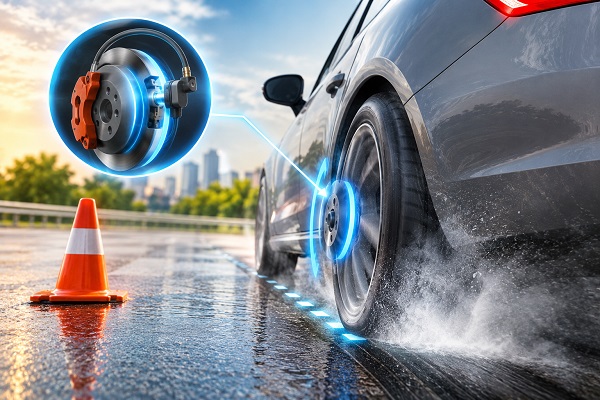
When it comes to vehicle safety, braking is one of the most important systems in a car or motorcycle. Modern vehicles come with several technologies designed to help drivers and riders maintain control during emergency situations. One of the most important of these technologies is **ABS, or Anti-lock Braking System**.
ABS helps prevent the wheels from locking up during hard braking. This can make it easier for the driver or rider to maintain steering control and potentially avoid an obstacle.
What Is ABS?
ABS stands for **Anti-lock Braking System**.
It is an electronic safety system designed to prevent the wheels of a vehicle from completely locking when the brakes are applied forcefully.
When a wheel locks, it stops rotating while the vehicle may continue moving. This can reduce the driver's ability to steer and may cause the vehicle to skid.
ABS continuously monitors wheel speed and can automatically adjust braking pressure when it detects that a wheel is about to lock.
How Does ABS Work?
ABS uses sensors to monitor the rotational speed of individual wheels.
When you apply the brakes suddenly, the system checks whether one or more wheels are slowing down much faster than the others. If it detects a potential wheel lock, the ABS system temporarily reduces braking pressure to that wheel.
It can then increase the pressure again when the wheel starts rotating normally.
This process happens very quickly and can occur multiple times in a short period.
The result is that the wheels continue rotating while the vehicle is braking heavily.
Why Is ABS Important?
The main advantage of ABS is that it can help maintain steering control during hard braking.
Imagine a car suddenly encounters an obstacle on the road. The driver may need to brake heavily while also steering around the obstacle.
Without ABS, the wheels could lock, making steering difficult.
With ABS, the wheels can continue rotating, allowing the driver to retain greater control over the direction of the vehicle.
ABS Can Help Prevent Wheel Lock
Wheel lock is one of the biggest problems that ABS is designed to address.
When a wheel locks during heavy braking, it stops rotating and begins sliding across the road surface.
A sliding tyre generally provides less directional control than a rotating tyre.
ABS reduces the likelihood of this happening by automatically adjusting brake pressure.
ABS and Wet Roads
Wet roads can make braking more challenging because the available grip between tyres and road surface can be reduced.
ABS can be particularly useful during sudden braking on slippery surfaces because it helps prevent the wheels from locking.
However, ABS does not eliminate the risks associated with wet roads.
Drivers and riders should still maintain a safe speed and adequate following distance.
ABS Does Not Mean You Can Stop Instantly
One common misconception is that ABS guarantees a shorter stopping distance in every situation.
That's not necessarily true.
ABS is primarily designed to help prevent wheel lock and preserve steering control during hard braking. Actual stopping distance can depend on factors such as:
* Road conditions
* Tyre quality
* Vehicle speed
* Brake condition
* Weather
* Vehicle weight
* Driver or rider reaction time
ABS is an important safety feature, but it cannot overcome the basic limits of tyre grip and road conditions.
What Does ABS Feel Like?
During an emergency braking situation, you may feel a rapid pulsing or vibration through the brake pedal in a car.
On a motorcycle, the rider may notice a pulsing sensation through the brake controls.
You may also hear mechanical sounds from the system.
These sensations can be normal when ABS is actively working.
Drivers and riders should generally maintain firm braking pressure rather than repeatedly pumping the brakes.
ABS in Cars
ABS has become a common safety feature in modern cars.
A typical car ABS system uses wheel-speed sensors, an electronic control unit and hydraulic components to regulate braking pressure.
If the system detects that a wheel is about to lock, it can adjust the brake pressure to that wheel.
This allows the vehicle to continue braking while helping maintain directional control.
ABS in Motorcycles
ABS is also important for motorcycles.
Motorcycles can become difficult to control if a wheel locks during hard braking. A locked front wheel, in particular, can be extremely dangerous because it can affect the rider's ability to maintain stability and steering control.
Motorcycle ABS is designed to reduce the likelihood of wheel lock during heavy braking.
Some advanced motorcycles also use systems that take lean angle into account, helping manage braking when the motorcycle is cornering.
Single-Channel vs Dual-Channel ABS
Motorcycles and scooters may use different types of ABS configurations.
**Single-channel ABS** generally monitors braking at one wheel, typically the front wheel.
**Dual-channel ABS** monitors both the front and rear wheels.
The exact configuration depends on the vehicle and its braking system.
For riders, understanding which type of ABS their motorcycle or scooter has can be useful when comparing models.
What Happens When the ABS Warning Light Comes On?
Most vehicles have an ABS warning light on the dashboard.
If this light remains illuminated after starting the vehicle, it may indicate a problem with the ABS system.
In such a situation, the conventional braking system may still function depending on the nature of the fault, but the ABS function may not be available.
It is important to have the vehicle inspected rather than ignoring the warning light.
How to Maintain an ABS System
ABS generally does not require special daily maintenance, but the components that support it should be kept in good condition.
Regular vehicle servicing can help identify potential problems with:
* Wheel-speed sensors
* Brake components
* Wiring
* Brake fluid
* ABS control systems
* Tyres
Keeping tyres properly inflated and replacing worn tyres is also important because ABS cannot compensate for severely reduced tyre grip.
ABS vs Traditional Braking
With traditional braking, applying excessive force can cause the wheels to lock.
With ABS, the system can automatically regulate brake pressure when it detects an approaching wheel lock.
The key difference is that ABS provides an electronic layer of braking control during hard braking.
This can be especially valuable in emergency situations where the driver or rider has little time to react.
Does ABS Replace Safe Driving?
No.
ABS is a safety aid, not a replacement for responsible driving or riding.
Drivers and riders should still:
* Maintain a safe speed
* Keep a safe following distance
* Use appropriate tyres
* Maintain the braking system
* Adjust driving for weather conditions
* Avoid distracted driving
* Follow traffic rules
Good driving habits and vehicle safety technology work best together.
Final Thoughts
ABS is one of the most important safety technologies used in modern cars, motorcycles and other vehicles. Its primary purpose is to help prevent wheel lock during hard braking while allowing the driver or rider to maintain better steering control.
It is particularly valuable during emergency braking situations, but it does not eliminate the need for careful driving, good tyres and proper vehicle maintenance.
Understanding how ABS works can help drivers and riders use their vehicles more safely and confidently.