What Car Safety Features Should You Prioritise?
When buying a car, buyers often focus on design, mileage, performance and features such as a large touchscreen or sunroof. However, safety should be one of the most important factors when choosing a vehicle.
A car with strong safety equipment can help reduce the risk of injuries and provide better protection during an accident. Here are some key safety features worth prioritising.
1. Electronic Stability Control
Electronic Stability Control (ESC) helps a vehicle maintain stability when the driver loses control, particularly during sudden steering movements or slippery road conditions.
It can automatically apply braking to individual wheels and adjust engine power when necessary. For everyday driving, ESC is one of the most valuable active-safety features to have.
2. Multiple Airbags
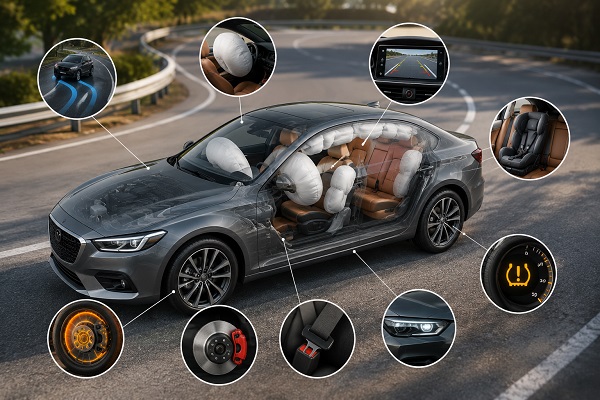
Airbags provide additional protection during a collision. Modern cars may offer front, side, curtain and other airbags depending on the model and variant.
Instead of looking only at the number of airbags, buyers should also consider the vehicle's overall crash-protection performance.
3. Anti-Lock Braking System
ABS prevents the wheels from locking during hard braking. This helps the driver maintain steering control while braking suddenly.
ABS is particularly useful in emergency situations where avoiding an obstacle may be necessary while bringing the car to a stop.
4. Electronic Brakeforce Distribution
Electronic Brakeforce Distribution, or EBD, helps distribute braking force between the wheels according to driving conditions.
It works alongside ABS to improve braking stability, particularly when the vehicle is carrying different loads.
5. Strong Crash Protection
Safety equipment is important, but the structure of the vehicle itself matters too. A strong passenger compartment can help protect occupants during a crash.
Before buying a car, check its independent crash-test results where reliable ratings are available. A vehicle's structural performance should be considered alongside its safety features.
6. Seat-Belt Reminders
Seat belts remain one of the most important safety systems in any car. Seat-belt reminders encourage occupants to buckle up before and during a journey.
Some modern vehicles also provide reminders for rear passengers, which can be particularly useful for families.
7. ISOFIX Child-Seat Mounts
Families with young children should look for ISOFIX-compatible child-seat mounting points.
ISOFIX can make installing compatible child seats easier and helps provide a secure connection between the child seat and vehicle.
8. Tyre Pressure Monitoring System
Incorrect tyre pressure can affect handling, braking and fuel efficiency. A Tyre Pressure Monitoring System (TPMS) alerts the driver when tyre pressure falls below an appropriate level.
This can be especially useful before long highway journeys.
9. Rear Parking Sensors and Camera
Parking sensors and a rear-view camera can make low-speed manoeuvring easier and help the driver detect obstacles that may not be visible through the windows.
These systems should be considered convenience and assistance features rather than substitutes for checking mirrors and surroundings.
10. ADAS Features
Advanced Driver Assistance Systems (ADAS) are becoming increasingly common. Depending on the vehicle, these systems can include features such as lane-departure warnings, adaptive cruise control, automatic emergency braking and blind-spot monitoring.
ADAS can assist the driver, but it should not be treated as autonomous driving. The driver must remain attentive and in control.
11. Good Visibility
Safety is not limited to electronic systems. A car with good visibility, appropriately positioned mirrors, effective headlights and useful rear visibility can make everyday driving easier and safer.
Before buying, sit in the driver's seat and check whether you can comfortably see the surroundings.
12. Reliable Braking and Tyres
Good brakes and quality tyres are fundamental to vehicle safety. Even a car with advanced electronic safety features cannot compensate for badly maintained tyres or brakes.
Check tyre quality, tread condition and braking performance during a test drive.
What Should You Prioritise?
If you are comparing multiple cars, start with **crash protection and essential active-safety systems** rather than cosmetic features.
A sensible priority list is:
1. Strong crash-test performance and structural protection
2. ESC
3. ABS and EBD
4. Appropriate airbag protection
5. Seat-belt systems
6. ISOFIX for families with young children
7. TPMS
8. Rear parking sensors/camera
9. Useful ADAS features
10. Good tyres, brakes and visibility
Final Thoughts
A safe car is not defined by one feature alone. Safety comes from a combination of vehicle structure, restraint systems, active safety technology, driver assistance features, tyres, brakes and responsible driving.
When choosing your next car, compare safety equipment across variants and check independent crash-test results where available. Features such as a sunroof or larger touchscreen can improve convenience, but safety should come first.