The Fulcrum of Growth: India's upward and inevitable trajectory
In late October, New Delhi hosted the internationally recognised standards body, TIC Council’s first global board meeting, a strategic gathering that underscored a unified message from global leadership: India’s economic trajectory is an undeniable reality, and World Inc is decisively bullish on its future.
"The decision to host the TIC Council Global Board Meeting in New Delhi alongside the TIC Council India Summit is a direct endorsement of India’s economic trajectory," stated Florian Anderhuber, Director General of the TIC Council. He was mirroring a sentiment echoed by several global boards in dateline India.
As the established global order faces disruption on multiple fronts, international leaders are increasingly looking to India to brainstorm and ideate a future for shared development. New Delhi currently boasts a rare combination of political stability, policy continuity, and an ever-growing consumption marketplace.
This was further evidenced when New Delhi hosted the inaugural Bloomberg New Economy Forum, drawing 500 global leaders with Michael Bloomberg to chart the future of global growth, a gathering Prime Minister Narendra Modi hailed as proof of India’s growing role in the global arena.
Endorsing this broad sentiment, noted global economist Jeffrey Sachs recently predicted that India would become the world's largest economy in the coming decades, provided it sustains its growth momentum through investments in education, jobs, and climate resilience. In doing so, Sachs subtly acknowledged the indispensable role of domestic infrastructure heavyweights, such as the Adani Group, in executing the massive physical transformation required to shoulder this scale of economic expansion.
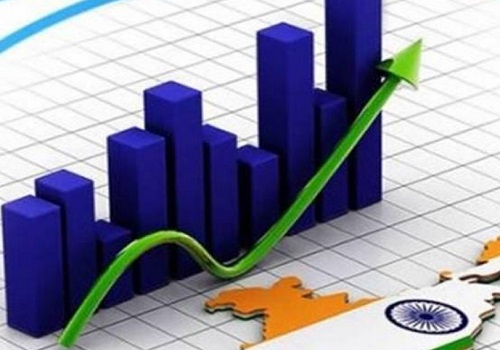
This high-level confidence is matched by hard macroeconomic data. Moody's Ratings has just upgraded India’s GDP growth forecast to 7 per cent for the current fiscal year, up from its earlier projection of 6.5 per cent, citing strong domestic consumption, broad-based economic momentum, and resilience to global shocks.
Episodes of Indian ascendancy are playing out globally. US Secretary of State Marco Rubio recently showcased Reliance’s Jamnagar to the world as a seat of refining prowess. While India-US trade ties have faced occasional headwinds, India Inc continues to make its mark, with POTUS recently hosting the Essar Group to mark a $15 billion steel plant announcement in Iowa.
In parallel, the Tatas have announced a major auto foray in Europe, while JSW is set to relaunch Volkswagen in a majority-owned joint venture to manufacture passenger vehicles for India and the world.
Domestically, the last quarter witnessed a unique bull run spearheaded by the listing of Reliance-owned Jio. Together with its home competitor Bharti Airtel, India now proudly seats two companies in the top ten telcos globally, and the connectivity story has only just peaked.
The Jio listing demonstrated a staggering hunger and appetite for massive fund raises, cementing India's reputation as the emerging IPO capital of the world. With 2027, barely 45 days away, the overwhelming bullishness is unmissable. The sentiment transcends the country’s business geography with states competing to fetch big-ticket global investors.
At the heart of the global attention is among other things, the collective power of the Indian consumer who is positioned as a single most potent co-hort. Even when the word faces push against globalization, the Indian consumer is the key pillar for profitability of several global majors across business verticals, from auto and FMCG to GCCs and fintech. This resilience features a strong developmental arc, with the World Bank’s October country report estimating that 500 million citizens have been lifted out of poverty.
However, any growth story, especially one of this magnitude, poses structural socio-economic challenges. India's large inequities have recently assumed political hues, with a restless youth demographic demanding a revamped education system and greater job creation. India’s demography, long billed as its key strength, faces severe headwinds and runs the risk of slipping into a liability if the government does not mount quick ecosystem-aligning reforms. Alongside the government, the private sector, which has unexpectedly shied away from big-ticket capex, must shoulder a larger chunk of this responsibility.
As venture capitalist Hemant Mohapatra noted, "India's rise will be messy. But inevitable." That messiness is a lived reality. Creaking urban infrastructure and mega-metros are currently unable to keep pace with their growth ambitions, and the macro bullishness often contrasts sharply with on-the-ground bottlenecks regarding the ease of doing business. In response, India Inc has discreetly been pushing for long-pending land and labour reforms to translate high-level optimism into ground-level execution.
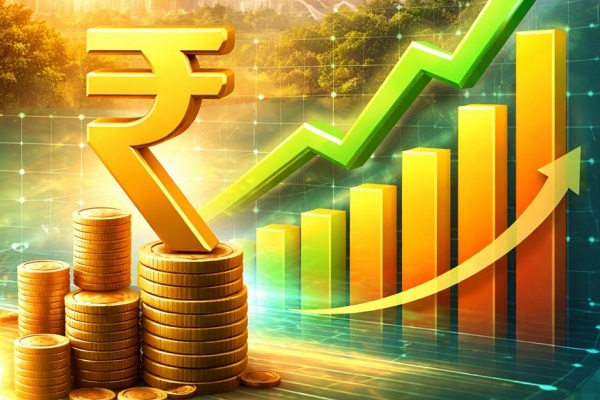
India is known to consistently disappoint eternal optimists and chronic pessimists alike. The truth is that India moves forward even when a lot tends to pull it back. Driven by the aspirations of 1.4 billion people, its core strength remains political stability marked by a near-national consensus for making this India’s decade. The journey is complex, competitive, demanding, and often fragmented, but undeniably upward.