Textiles Sector Report : On your mark, get set By Emkay Global Financial Services Ltd

The resilient performance of Indian textile companies—despite several headwinds (US tariffs, ME tensions, etc) in the past 6M—only strengthens our bullish stance on the space. Above mentioned unfavorable macros could cause just a 140/200bps loss in market share in apparels/home textiles, respectively, in CY26TD, in the US market. Meanwhile, India has protected its turf in EU-27 over CY26TD, in both the segments. We believe key factors such as 1) US tariff normalization (the potential deal could be a gamechanger), 2) implementation of EU FTA by 1HCY27, 3) narrowing wage gap with Bangladesh, 4) benign PTA prices, etc will amplify India’s global competitiveness and place the country on the same start-line as peers, going ahead. The Sep/Oct-26 trade data validate our argument, as Indian apparel exports have grown at a scorching pace of ~14%/20% yoy in Sep/Oct-26, outpacing Bangladesh. Among our coverage, we favor Arvind, Kusumgar, and Sanathan Textiles, basis valuations. Though we do not have active coverage on the domestic Home Textiles space, we believe EU-27 countries will see rapid market-share gain – here, India’s immediate competition is with Pakistan, which has a 12% duty advantage and is grappling with higher retail inflation. Caveat Emptor: Extension of the RoSCTL/RoDTEP incentive schemes and cotton import duty waiver beyond 31- Dec-26 is a key monitorable and we expect status quo in at least one abovestated policy.
Worst seems to be behind for apparel exporters; India better placed vs peers
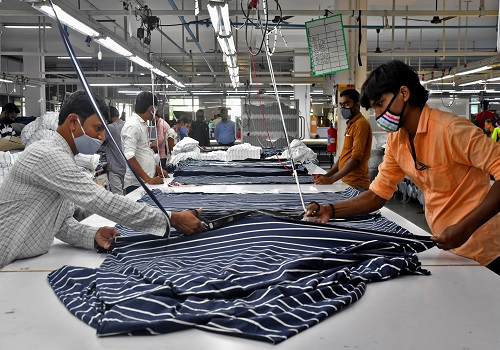
India RMG exports saw market-share loss of ~140bps to 5.4% (gained by Vietnam, Indonesia, and Bangladesh) in the US, while share was maintained in the EU-27 (at ~5%) over CY26TD. We believe this loss is due to levy of US penal tariffs (till 1HCY26) and logistics-related challenges (ME tensions). However, with normalization of US tariffs, ramp-up of UK FTA, implementation of EU FTA (1HCY27), and the likely narrowing of wage gap with Bangladesh, we see Indian exports outpacing peers’ over coming 1Y. The Sep/Oct-26 trade data validate our argument, as Indian apparel exports have seen rapid growth of ~14/20% yoy in Sep/Oct-26 vs Bangladesh’s export growth at ~9/5% yoy. US apparel demand is stable and reported growth of ~5% yoy in 9MCY26, while retailers still choose to maintain a lean inventory (Exhibit 7) owing to assumptions on inflation.
Home textiles – Picture similar to Apparels; EU FTA, the game-changer
Basis aforementioned factors, Indian home textiles companies faced market-share loss (of ~2pps to 25%) in US markets due to 8% yoy lower exports in 8MCY26. Meanwhile, China continues to witness market-share erosion in US, with share now at 34% (in 8MCY26) vs 43% in CY24. India’s exports to the EU have seen 5% yoy growth, with the country having protected its turf (market share: ~10%); China improved its share by ~3pps to 41%, while that for Pakistan stood at ~19%. We believe the EU FTA will put Indian home textiles companies on the same footing as Pakistan (immediate competitor) and expect market-share gains in the mid-term. In the domestic home textiles space, Welspun Living has the highest exposure, at 15-20% of overall revenue.
Cotton prices to be firm; better days ahead for polyester yarn
As highlighted in our June report, ‘Time to Light the Cannons’, global cotton production for Cotton Season-27 (CS27) should be lower owing to unfavorable climatic conditions. The US Department of Agriculture (USDA) sees global cotton production falling ~4% yoy to ~118mn bales vs consumption of ~123 bales. Also, per Cotton Association of India (CAI)’s latest estimate, India’s total cotton production should be ~7% lower yoy at ~35mn bales against consumption of 36.5mn bales (flat yoy). Hence, we reiterate our stance of firm cotton prices and elevated yarn spreads (which is above >Rs100/kg since 2 quarters) for CS27. Further, given the production shortfall, we expect the cotton import duty waiver to be extended beyond 31-Dec-26, despite Indian cotton being at par with international prices. We believe any supply-related issues in cotton would be compensated by higher usage of polyester yarn. Further, with crude oil price turning benign, we expect moderation in polyester yarn prices but believe spreads will be strong.
For More Emkay Global Financial Services Ltd Disclaimer http://www.emkayglobal.com/Uploads/disclaimer.pdf & SEBI Registration number is INH000000354













More News

Energy Sector Update : Scheme Delay Impacts Near-Term Revenue Visibility Choice Institutiona...