South Korean economy grows 1 pc in 2025; Q4 GDP contracts 0.3 pc
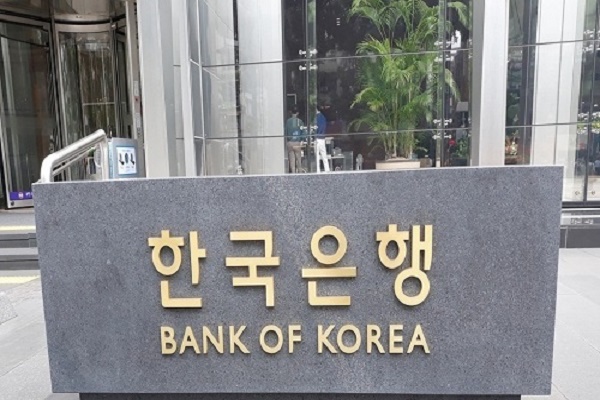
The South Korean economy expanded 1 per cent last year, driven by robust exports, but posted negative on-quarter growth in the fourth quarter amid a slump in the construction sector, central bank data showed on Thursday.
The country's real gross domestic product (GDP) -- a key measure of economic growth -- for 2025 matched the Bank of Korea's (BOK) earlier forecast, though the growth rate slowed from a 2 per cent expansion in the previous year, according to the preliminary data by the central bank, reports Yonhap news agency.
It marked the slowest growth since 2020, when the economy contracted 0.7 per cent amid the COVID-19 pandemic and fell below the country's potential growth rate of around 1.8 per cent.
In the October-December period, Asia's fourth-largest economy unexpectedly contracted 0.3 per cent from the previous quarter, marking its first contraction in six months and the weakest quarterly performance since the fourth quarter of 2022.
The central bank earlier forecast the fourth-quarter GDP to expand 0.2 per cent.
"The slowdown was due mainly to base effects stemming from robust third-quarter growth and weakness in construction investment," BOK official Lee Dong-won told a press briefing. "High construction costs, along with disruptions to administrative procedures caused by a fire at the state data center, appeared to have negatively affected construction investment."
On an on-year basis, GDP grew 1.5 per cent in the fourth quarter, down from a 1.8 per cent expansion in the prior quarter.
The economy had earlier unexpectedly shrunk 0.2 percent in the first quarter from the previous quarter as a domestic political crisis triggered by then President Yoon Suk Yeol's martial law declaration, along with uncertainties stemming from U.S. President Donald Trump's sweeping tariff measures, weighed on consumer spending and dampened export growth.
But the economy rebounded in the second and third quarters, posting growth of 0.7 percent and 1.3 percent, respectively, on the back of government stimulus measures and robust exports, especially in the buoyant semiconductor sector.
For all of 2025, exports increased 4.1 percent from a year earlier, slowing from a 6.8 percent on-year increase in 2024.
Semiconductor exports were estimated to have contributed as much as 0.9 percentage point to economic growth last year, the BOK said.
Private spending rose 1.3 percent, accelerating from 1.1 percent growth the previous year.
But construction investment sank 9.9 percent, compared with a 3.3 percent contraction in 2024, while facility investment logged a 2 percent on-year expansion.
"The economy would have posted a 2.4 percent annual growth rate if construction were excluded," Lee noted.
In the fourth quarter, exports fell 2.1 percent from the previous quarter due mainly to the sagging auto and machinery demand, while imports retreated 1.7 percent.
Construction investment plunged 3.9 percent, logging the sharpest on-quarter fall since the fourth quarter of 2024, while facilities investment slipped 1.8 percent, driven largely by declines in transport equipment, including automobiles.
Private consumption edged up 0.3 percent, while government spending gained 0.6 percent, the data showed.
The BOK said the domestic demand reduced fourth-quarter GDP growth by 0.1 percentage point, while net exports contributed to a 0.2 percentage-point contraction.
By industry, the manufacturing sector fell 1.5 percent due to weakness in transport equipment, machinery and equipment, while the electricity, gas and water supply sector plunged 9.2 percent.
Construction also contracted 5 percent, while agriculture, forestry and fisheries rose 4.6 percent, and the services sector grew 0.6 percent.
Going forward, the BOK projects the economy to grow 1.8 percent this year, citing the ongoing semiconductor upcycle and continued export strength.
"The economy is expected to grow at a faster pace in 2026 than last year, led by continued increases in private consumption and exports, as well as higher government spending due to an expanded budget," Lee said.
"Increased government social overhead capital investment and the construction of semiconductor plants are also expected to help ease growth constraints in the construction sector," he added.










.jpg)

.jpg)