South Korea again holds key rate steady amid weak won
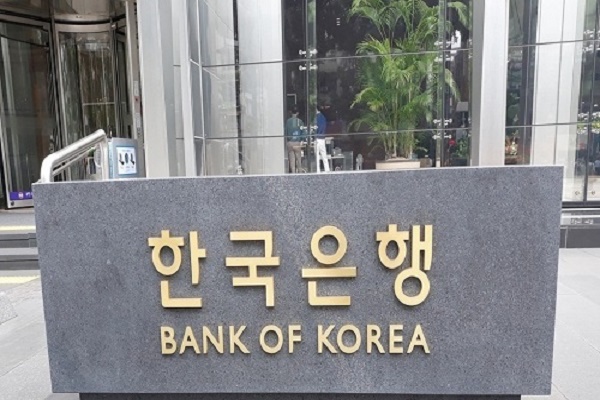
South Korea's central bank again left its benchmark interest rate unchanged on Thursday as a weakened won and rising inflation concerns limited room for further easing.
In a widely expected decision, the Monetary Policy Board of the Bank of Korea (BOK) held the key rate at 2.5 per cent at its rate-setting meeting in Seoul, marking the fifth consecutive on-hold decision since July, reports Yonhap news agency.
"Inflation is expected to gradually decline, though the elevated exchange rate remains a source of upside risk. Regarding financial stability, risks still remain related to housing prices in Seoul and its surrounding areas, to household debt and to the heightened exchange rate volatility," the BOK said in a released statement.
Thursday's rate freeze decision was unanimous, while one of the board's six members voiced the need to keep open the possibility of further rate reductions in the next three months, BOK Gov. Rhee Chang-yong told a press briefing.
The BOK dropped references to a possible rate cut from its policy statement for the first time since it entered an easing cycle in October 2024.
"Beyond the three-month time frame, uncertainty remains too high to make any definitive call," Rhee said. "While there are some upside factors for economic growth, inflation remains sensitive to the exchange rate and uncertainty over the direction of U.S. monetary policy is elevated. We will determine the policy path based on incoming data."
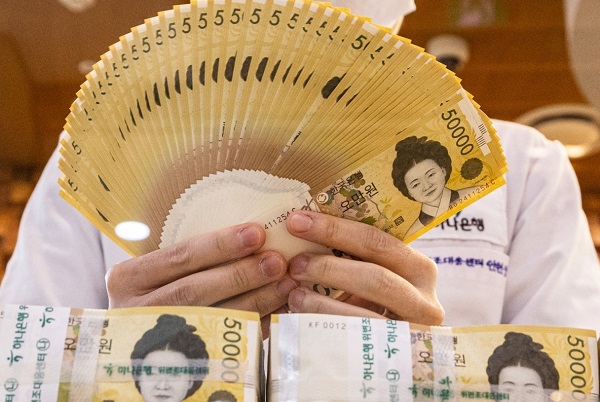
The latest pause came amid a weakened won and heightened volatility in the foreign exchange market.
The won sank to the mid-1,480 won per U.S. dollar range late last month, nearing the lowest level in more than 16 years, but authorities' strong intervention and a series of policy measures had pushed it back to the 1,420 won level.
The currency, however, has reversed course since Dec. 30 and fallen against the greenback for 10 consecutive trading sessions through Wednesday to be quoted at 1,477.5 won, marking its longest losing streak since 2008, when the country was hit by the global financial crisis.
Under the circumstances, a rate cut could prompt further capital outflows, thereby exacerbating downward pressure on the local currency, experts say.
"The Korean won is markedly undervalued relative to the country's economic fundamentals and its current level cannot be justified by fundamentals alone," Rhee said.
About three-quarters of the currency weakness was due to a strong U.S. dollar, a weak Japanese yen and geopolitical risks, while the remaining quarter stemmed from domestic factors, including a sharp rise in overseas securities investments by domestic investors, the central bank governor said.
"Given that South Korea holds substantial external assets, it is difficult to say that the exchange rate alone could trigger a financial crisis, though the currency level can affect inflation and affect importers and ordinary households, creating domestic strains," Rhee added.
Consumer prices rose 2.3 per cent from a year earlier in December, remaining above the bank's 2 per cent target for the fourth consecutive month.
Import prices rose for the sixth consecutive month last month despite a decline in global oil prices, marking the first such streak since 2021.
The BOK expects the local economy to grow 1.8 per cent this year, up from around 1 per cent last year, on the back of strong exports and a recovery in private consumption.