Signs Your Car Battery Is Weak
A car battery is one of the most important components of a vehicle. It provides the electrical power needed to start the engine and supports systems such as lights, infotainment, and other electronic features. Like any other component, a battery becomes weaker over time.
Recognising the warning signs early can help prevent unexpected breakdowns and starting problems.
1. Slow Engine Cranking
One of the most common signs of a weak battery is a slow engine crank. If the engine takes longer than usual to start or you hear a sluggish cranking sound when turning the key or pressing the start button, the battery may not be supplying enough power.
2. Dim Headlights
If your headlights appear noticeably dimmer than usual, especially when the engine is switched off, it could indicate a weak battery. However, dim lights can also be caused by alternator or electrical-system problems, so the battery should be checked.
3. Clicking Sound When Starting
A rapid clicking sound when you try to start the car is another common warning sign. It can happen when the starter motor is not receiving sufficient electrical power from the battery.
4. Electrical Features Work Slowly
Weak batteries can sometimes affect electrical components. You may notice that power windows, interior lights, infotainment systems, or other electronics behave unusually or operate more slowly than normal.
5. Battery Warning Light
If the battery or charging-system warning light appears on the dashboard, do not ignore it. It can indicate a problem with the battery, alternator, charging system, or related electrical components.
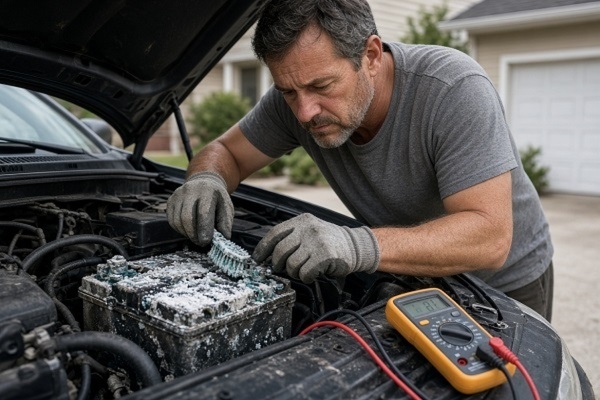
6. Corrosion Around Battery Terminals
White, blue, or greenish deposits around the battery terminals can indicate corrosion. Corroded connections can interfere with the flow of electricity and may contribute to starting problems.
7. Swollen Battery Case
A battery case that looks swollen or distorted can indicate internal damage or excessive heat exposure. A visibly swollen battery should be inspected and replaced by a qualified professional rather than continued in use.
8. Frequent Jump-Starts
If you regularly need to jump-start your car, the battery may no longer be holding a sufficient charge. Repeated jump-starting should not be treated as a permanent solution. The battery and charging system should be tested.
9. Unusual Smell
A strong sulphur-like or rotten-egg smell around the battery can indicate a battery problem. If you notice this, avoid unnecessary handling and have the vehicle inspected by a professional.
10. Battery Is Several Years Old
Even when a battery appears to work normally, its performance can decline with age. Battery life varies depending on climate, driving habits, vehicle usage, and battery type. An older battery is more likely to cause starting problems, particularly during extreme temperatures.
How to Check a Weak Battery
If you notice one or more of these signs, get the battery tested rather than immediately replacing it. A technician can check the battery's voltage, starting performance, and the vehicle's charging system.
It is also important to inspect the battery terminals and cables for loose connections or corrosion.
How to Avoid Battery Problems
Regular vehicle maintenance can help reduce battery-related problems. Keep the terminals clean, avoid leaving headlights or electronic accessories switched on when the engine is off, and have the battery checked during routine servicing.
If your car frequently struggles to start, professional inspection is the safest way to determine whether the battery, alternator, starter, or another electrical component is responsible.
Conclusion
A weak car battery often gives warning signs before it completely fails. Slow engine cranking, dim lights, clicking sounds, electrical issues, dashboard warnings, and frequent jump-starts are all reasons to have the battery checked.
Identifying these signs early can help you avoid being stranded and keep your car reliable on the road.




.jpg)