Ramky Infrastructure zooms on securing contract worth Rs 1401.84 crore

Ramky Infrastructure is currently trading at Rs. 481.80, up by 51.50 points or 11.97% from its previous closing of Rs. 430.30 on the BSE.
The scrip opened at Rs. 453.05 and has touched a high and low of Rs. 493.15 and Rs. 449.55 respectively. So far 239361 shares were traded on the counter.
The BSE group 'B' stock of face value Rs. 10 has touched a 52 week high of Rs. 706.50 on 07-Oct-2025 and a 52 week low of Rs. 374.40 on 07-Apr-2025.
Last one week high and low of the scrip stood at Rs. 493.15 and Rs. 426.10 respectively. The current market cap of the company is Rs. 3335.33 crore.
The promoters holding in the company stood at 69.81%, while Institutions and Non-Institutions held 2.02% and 28.17% respectively.
Ramky Infrastructure has entered into an agreement with Maharashtra Industrial Township (MITL) for EPC-based infrastructure works within Dighi Port Industrial Area (DPIA) Phase 1 under the Delhi Mumbai Industrial Corridor (DMIC). The total contract value is Rs 1401.84 crore, inclusive of GST and Operations and Maintenance (O&M) Revenues. The project has to be completed within 930 days from appointed date and the O&M period of 4 years from COD date, which is extendable upon mutual discussion.
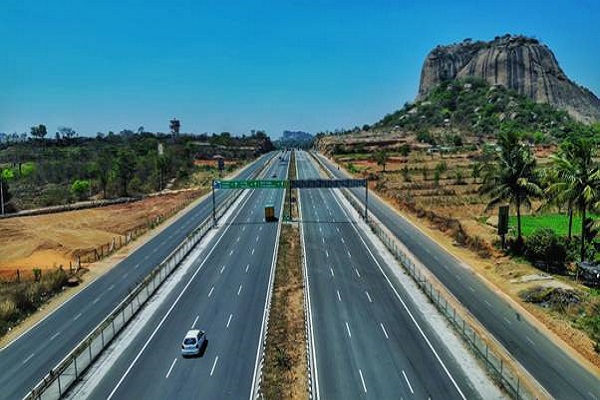
MITL is a Special Purpose Vehicle (SPV) formed with the equity participation of the Government of India and the Maharashtra State Government for developing Parcel B of the DPIA in Raigad District, Maharashtra. The scope of work covers end-to-end delivery from design and engineering through construction, testing, commissioning, and performance-based operations. The infrastructure package includes key industrial-area networks, such as roads and allied structures, stormwater systems, water treatment and distribution, sewerage systems, recycled water distribution, power distribution, and utility ducts for ICT, among other associated works. The project is part of DPIA development in Raigad district, Maharashtra.
Ramky Infrastructure will undertake the project using its internal engineering, planning, and commissioning capabilities, supported by standardized monitoring and delivery controls. Operations preparedness will be built into the execution roadmap from the outset, enabling a smoother transition from commissioning to performance-based operations and ensuring consistent service outcomes.