Post Budget Analysis and Stock Ideas- Axis Securities

Growth Continuity with Fiscal Discipline; Marginal Financial Market Headwinds
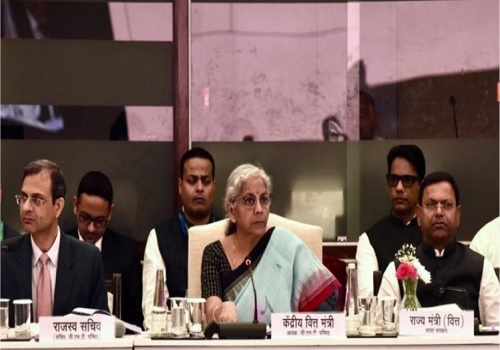
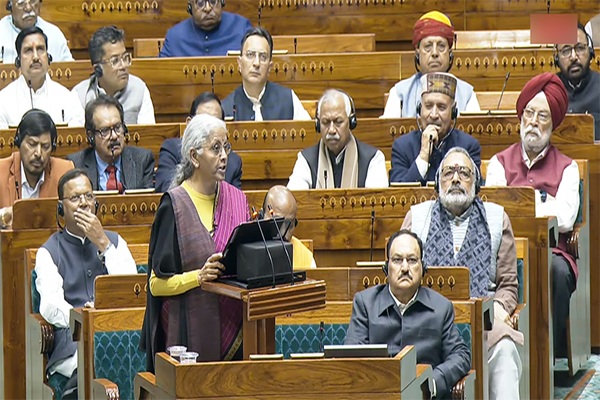
The Union Budget 2026-27 was presented today by the Finance Minister Nirmala Sitharaman. The Union Budget FY26–27 was presented against a backdrop of resilient domestic growth, moderating inflation, and a challenging global environment marked by geopolitical risks, tighter global financial conditions, and uneven recovery across major economies. Framed against a backdrop of fiscal prudence, the FY26-27 Budget reflects India’s transition from consolidation to long-term capacity building. Having successfully anchored the fiscal deficit below 4.5% of GDP, the government is now pivoting toward infrastructure-led growth and manufacturing competitiveness. Guided by the Viksit Bharat 2047 vision, this budget prioritises structural reforms and job creation over populist measures, signalling a clear commitment to scaling India’s global economic footprint.
Our Key Takeaways from the Union Budget:
Continued Thrust on CAPEX: Capital expenditure has been increased to ~Rs 12.2 Lc Cr, marking a ~9% YoY rise and extending the multi-year focus on public investment over the revised estimates. We believe these CAPEX estimates are reasonable and align with the nominal GDP growth rate of 10% for FY27. Its unwavering focus remains on Roads, Power, Urban Development, and Railways, sectors that are expected to drive significant long-term economic multipliers. Public capex continues to act as a key multiplier for private investment, employment creation, and medium-term productivity gains.
Fiscal Math Reasonable: The fiscal deficit for FY26–27 has been budgeted at ~4.3% of GDP, reflecting a marginal improvement over the previous year and reaffirming the government’s commitment to medium-term fiscal consolidation. The fiscal stance balances prudence with growth imperatives, reinforcing macro stability and supporting India’s sovereign credibility.
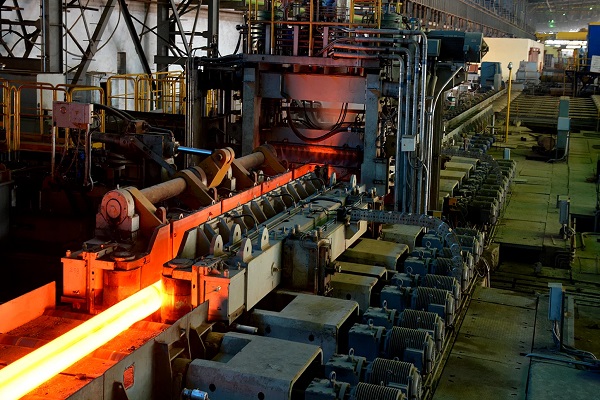
Manufacturing & Strategic Industries: A stronger focus on domestic manufacturing with incentives across electronics, machinery, textiles, and rare earth mineral corridors. Under India Semiconductor Mission 2.0, the outlay has been increased to Rs 40,000 Cr for building the semiconductor ecosystem and supply chain capabilities.
Bio Pharma SHAKTI: The FM has proposed an outlay of Rs 10,000 Cr over five years to strengthen biologics and biosimilars, focusing on integration and upgradation of NIPERs and creation of over 1,000 accredited clinical trial sites. This marks a clear pivot from volume-led generics to a value-led Bio-Pharma hub with global ambitions.
Increase in Securities Transaction Tax (STT): The upward revision in STT rates is a marginal negative for capital market participants, particularly high-frequency traders and derivatives volumes. However, the overall impact on long-term investors is expected to be limited.
The Union Budget FY26–27 largely reinforces India’s medium-term growth narrative through sustained capital expenditure and gradual fiscal consolidation. While the increase in STT and buyback tax introduces a modest near-term headwind for equity markets, the broader macro framework remains supportive. Stable fiscal metrics, controlled borrowing, and infrastructure-led growth continue to provide a constructive foundation for long-term investors.
Our Positive Budget Play (Coverage): Ultratech Cement; Ashok Leyland; Max Healthcare; HCL Technologies; Welspun Living; Embassy Office Park REIT, Ahluwalia Contract ,Biocon
Our Positive Budget Play (Non-Coverage): GMDC(Rare Earth play); REC (Restructuring Play); Anant Raj Ltd (Data Centre Play); Syrma SGS Tech (EMS Play); MTAR (Nuclear Play); Narayan Hrudayalaya Ltd.
For More Axis Securities Disclaimer https://simplehai.axisdirect.in/disclaimer-home
SEBI Registration number is INZ000161633