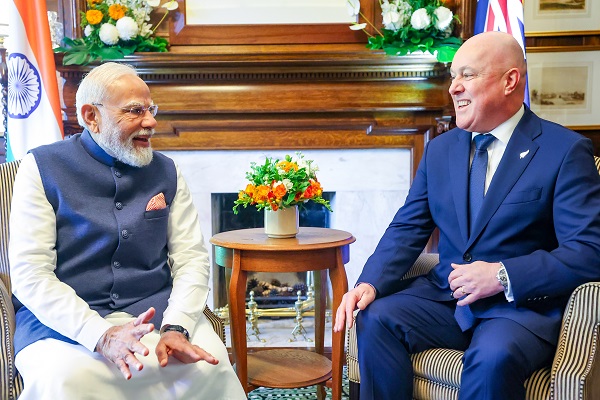
PM Narendra Modi's New Zealand visit marks historic milestone, FTA to deepen strategic ties: NZ Trade Minister Todd McClay
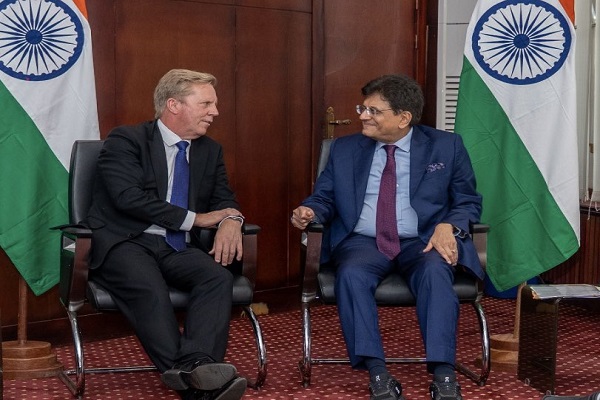
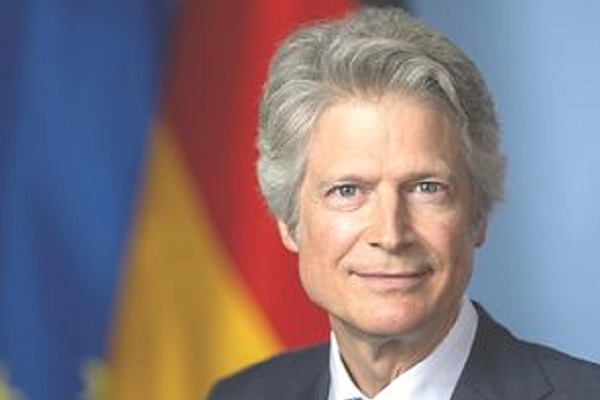
New Zealand's Minister for Trade and Investment, Hon Todd McClay, on Friday described Prime Minister Narendra Modi's upcoming visit to New Zealand as a very significant milestone, saying it comes at a transformative moment in bilateral ties following the signing of the India-New Zealand Free Trade Agreement (FTA).
In an exclusive interview with IANS, McClay said the FTA would unlock new opportunities across trade, technology, agriculture and investment, while also strengthening cooperation amid global geopolitical uncertainties.
He also praised India's economic transformation under Prime Minister Modi and described him as a trusted global leader.
Here are the excerpts of the interview:
Q: How significant is Prime Minister Modi's visit to New Zealand?
Todd McClay: It is very significant. It is the first visit by an Indian Prime Minister to New Zealand in 40 years, and it comes just a few months after we signed our Free Trade Agreement. There will be a major celebration in our largest city, and New Zealanders are looking forward to welcoming Prime Minister Modi, especially the Indian-New Zealand community. The Indian diaspora is now our third-largest ethnic community, and many people will turn out to welcome him and make him feel at home.
Q: How is the India-New Zealand FTA going to boost trade ties, especially in emerging technologies like critical minerals and MSMEs?
Todd McClay: Quite significantly. It is one of the highest-quality trade agreements either of our countries has negotiated. It creates greater cooperation and gives businesses the confidence to work together under a trusted rules-based framework. Across sectors, including information and communications technology, we expect partnerships to grow rapidly. The agreement enables businesses to find high-quality partners and build long-term, sustainable relationships. Beyond trade, it will strengthen cooperation in science, people-to-people exchanges, culture and sports.
Q: How do you look at India's digital public infrastructure revolution? Can UPI come to New Zealand?
Todd McClay: Very much so. New Zealand is a very open economy. While any system has to fit within our regulatory framework, I don't see that as a major challenge. Digital infrastructure is becoming increasingly important as we modernise our economy. The Free Trade Agreement creates greater certainty for businesses, and I think it will encourage discussions on digital cooperation. As New Zealand invests more in India, and India looks at opportunities in New Zealand, there will be increasing conversations around platforms such as UPI and other digital innovations.
Q: There have been recent US-Iran flare-ups. Will this impact global supply chains? Oil prices are rising again. How can India and New Zealand jointly tackle geopolitical uncertainties?
Todd McClay: The developments in the Middle East are concerning, and we hope the issues are resolved peacefully through dialogue. Supply chains always face challenges during periods of geopolitical tension, but the Free Trade Agreement provides greater certainty for India and New Zealand to work together. I believe shipping links between our countries will strengthen. Air New Zealand is opening three offices in India to promote connectivity, while Air India and Air New Zealand have sought approval to cooperate on flights. At a time when parts of the world face uncertainty, our agreement helps build dependable trade and investment relationships.
Q: India remains the fastest-growing major economy. How has it managed this despite global shocks?
Todd McClay: It is largely because India continues to invest in itself. There has been significant investment in roads, infrastructure, universities and airports. India has become a confident nation that is increasingly engaging with the rest of the world. Free trade helps economies grow because it provides certainty and common rules that businesses can trust. Even when geopolitical disruptions create challenges elsewhere, agreements like the India-New Zealand FTA encourage investment and trade by giving businesses the confidence to expand.
Q: What are your thoughts on India's economic development and inclusive growth under Prime Minister Modi?
Todd McClay: It has been extremely impressive. I have been visiting India for many years and was involved in trade discussions almost a decade ago. India today is a transformed nation. It is confident, upwardly mobile and has a young, increasingly educated population. Many young Indians are gaining international experience before returning home to contribute to the country's growth. While there is always more work to do, the transformation has been remarkable. The Free Trade Agreement allows New Zealand to become a stronger partner in India's development. Agriculture is one example where New Zealand's expertise and agri-tech innovations can support India's efforts to improve farm productivity and help raise farmers' incomes.
Q: How do you assess Prime Minister Modi as a global leader?
Todd McClay: Prime Minister Modi has played a significant role on the global stage. He is respected, liked and trusted by many world leaders. When he arrives in New Zealand, people will see the enthusiasm with which New Zealanders welcome him. Calm and responsible leadership is essential in today's world. Along with New Zealand Prime Minister Christopher Luxon, Prime Minister Modi represents the kind of leadership that is willing to work constructively and demonstrate how nations can cooperate for shared progress.