Piyush Goyal calls for WTO-compliant approach to fix global trade distortions
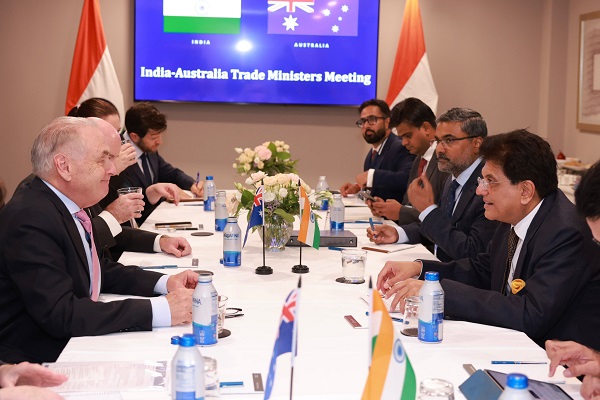
India shares the concerns of many G20 Members that trade-distorting support in some economies can lead to dumping and predatory pricing, and said such concerns are addressed through WTO-consistent measures, including anti-dumping and countervailing duties, based on evidence and subject to judicial review, according to Commerce and Industry Minister Piyush Goyal.
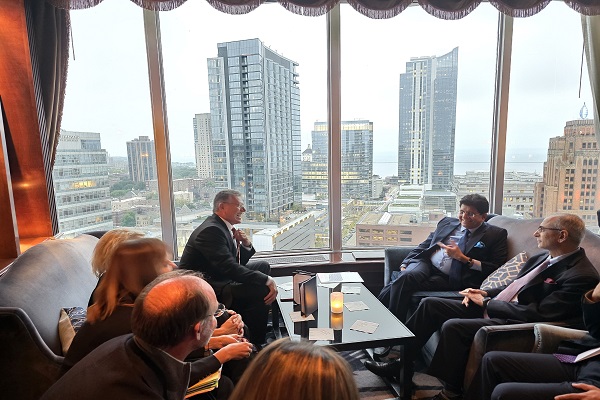
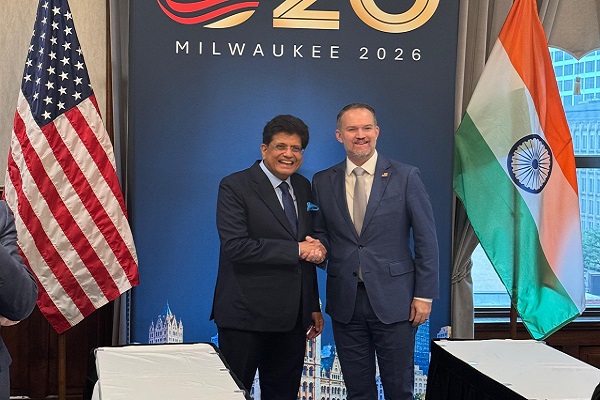
Participating in the concluding day of the G20 Trade Ministers’ Meeting in Milwaukee, Wisconsin, the minister spoke in sessions on structural excess capacity and production, updating the Most-Favoured-Nation principle, ending forced labour in global supply chains, and the closing session.
Goyal emphasised that industrial capacity in itself is not the issue, while distortions can arise where geographical concentration of production is driven by hidden subsidies and support.
He said diversification of production and supply chains is a legitimate objective but cannot be used as a pretext for measures outside WTO rules or for shifting the burden of adjustment onto developing countries, which must retain policy space to industrialise.
Goyal also said that sharing statistics and data should take place within existing mechanisms, according to an official statement.
He further stated that India’s trade with G20 members depends on a transparent, non-discriminatory and rules-based trading system.
The ‘Most-Favoured-Nation’ (MFN) treatment is a key guarantee of this system, ensuring that the same terms apply to the smallest trader and the largest trader, said Goyal.
He emphasised that consensus remains central to the WTO, and that special and differential treatment must be preserved to enable developing countries to catch up with developed economies. He also called for restoration of the two-tier dispute settlement system.
Speaking on ending forced labour in global supply chains, Goyal said India’s commitment to the elimination of forced labour is absolute and unconditional.
He noted that Article 23 of the Constitution prohibits forced labour as a fundamental right, enforceable by the Supreme Court.
India has ratified ILO Conventions 29 and 105 and, in July 2026, amended its Foreign Trade Policy to prohibit the import of goods produced using forced labour.
Goyal also said that measures at the border must be based on specific and verifiable evidence rather than presumptions about entire countries, regions or sectors, and must respect due process and WTO rules.
He said the International Labour Organization is the competent, universal and tripartite body for labour standards. India supports the objective of eliminating forced labour and voluntary exchange of good practices among G20 members, provided that such cooperation does not involve monitoring of members, create new obligations or result in information being used as a basis for unilateral trade action.
The Minister reaffirmed India’s commitment to a rules-based, fair, equitable, non-discriminatory, transparent, open, inclusive and multilateral trading system with the WTO at its core.