Managing Jet Lag During International Travel: Practical Tips for a Smooth Journey
International travel is exciting, offering the opportunity to explore new cultures, cuisines, and landscapes. However, long flights across multiple time zones often bring an unwelcome companion—jet lag. Jet lag occurs when your body’s internal clock, also known as the circadian rhythm, struggles to adjust to a new time zone. The result can include fatigue, difficulty sleeping, lack of concentration, and digestive discomfort. Fortunately, with the right strategies, travelers can manage jet lag effectively and enjoy their trip from the moment they arrive.
Understanding Jet Lag
Jet lag happens when the body’s natural sleep-wake cycle becomes misaligned with the local time at the destination. Traveling east typically causes more severe jet lag than traveling west because it requires the body to adjust to an earlier schedule. The severity also depends on factors such as the number of time zones crossed, individual sleep habits, and overall health.
Adjust Your Schedule Before Departure
One of the best ways to reduce jet lag is to start adjusting your sleep schedule a few days before your trip. If you are traveling east, try going to bed earlier each night. If heading west, stay awake a bit longer in the evening. Gradually shifting your routine helps your body prepare for the upcoming time difference.
Stay Hydrated During the Flight
Dehydration can worsen the symptoms of jet lag. Airplane cabins have low humidity, which can lead to dehydration during long flights. Drink plenty of water throughout your journey and limit beverages like caffeine and alcohol, as they may disrupt sleep and worsen fatigue.
Get Plenty of Natural Light
Exposure to sunlight is one of the most effective ways to reset your body clock. After arriving at your destination, spend time outdoors during daylight hours. Natural light helps regulate melatonin production, allowing your body to adjust more quickly to the new time zone.
Sleep Strategically
Try to align your sleep with the local time at your destination. If you arrive during the day, resist the temptation to take long naps. Short naps of 20–30 minutes can help reduce fatigue without interfering with nighttime sleep. At night, create a comfortable sleeping environment by keeping the room dark, cool, and quiet.
Stay Active
Light physical activity can help combat tiredness and boost your mood. Gentle exercises such as walking, stretching, or yoga can stimulate circulation and help your body adapt to the new schedule.
Eat According to Local Time
Adjusting your meal times to match the local schedule can also help your body adapt. Eating light and healthy meals at regular times signals your body that it is time to stay awake or rest, depending on the local routine.
Consider Travel-Friendly Sleep Aids
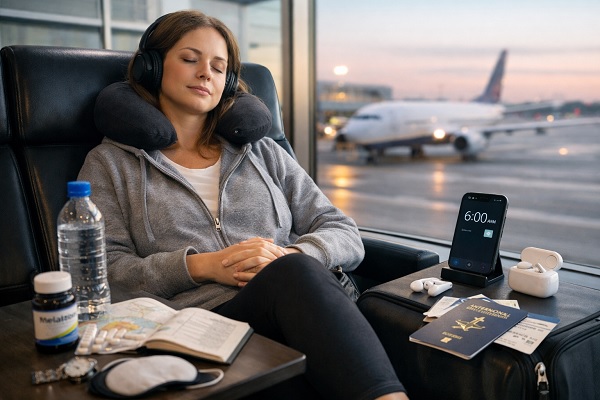
Travel accessories like eye masks, neck pillows, and noise-canceling headphones can make it easier to rest during flights. Some travelers also use natural sleep supplements, but it is always advisable to consult a healthcare professional before using them.
Final Thoughts
Jet lag may be a common challenge for international travelers, but it doesn’t have to ruin your trip. By preparing your body before departure, staying hydrated, getting natural sunlight, and aligning your sleep and meals with the destination’s time zone, you can significantly reduce the effects of jet lag. With these simple strategies, you can arrive at your destination feeling refreshed and ready to enjoy your international adventure.