India to stick to fiscal consolidation path in February 1 budget, say all economists: Reuters Poll
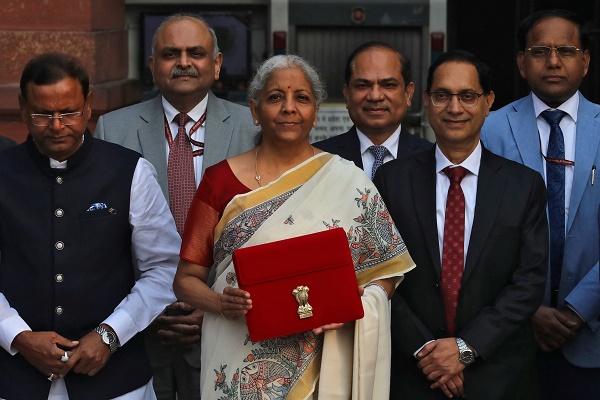
The Indian Government will stick to its path of fiscal consolidation in its February 1 budget, all economists polled by Reuters said, mainly due to slower revenue growth following recent tax cuts.
Lower income has left the government little room but to cut back spending and rely on dividend transfers from the Reserve Bank of India, they said.
Prime Minister Narendra Modi's government has mostly kept a tight grip on public spending, but has also gradually handed over spending obligations to state governments in order to meet its own fiscal deficit targets. India secured a sovereign credit rating upgrade from Standard & Poor's last year.
Capital spending has risen more than fivefold over the past decade and has been a key contributor to recent strong growth in Asia's third-largest economy.
All 35 economists who answered an additional question in a Reuters poll conducted January 14-22 said the budget would again be consolidatory.
They forecast the fiscal deficit at 4.2% of gross domestic product for the next fiscal year, down from an expected 4.4% in the current year and 4.8% in the previous year. Forecasts ranged from 4.0% to 4.6%.
While the Indian economy expanded 8.2% in the July-September quarter, revenues have lagged. Net tax collections until November 2025 are 3.4% lower than in the same period last fiscal year and less than half the full-year budget estimate.
"There will be some cuts in expenditure to meet the shortfall in revenue...there is no other option," said Anitha Rangan, chief economist at RBL Bank.
Some economists said the government will have to rely even more on non-tax revenue to meet its fiscal targets, particularly dividend transfers from the RBI and public sector enterprises. Transfers from the central bank alone have surged by nearly 5,000% over the past two decades, according to RBI data.
"Especially with the kind of tax shortfall we are experiencing in the current fiscal year, the excess dividend has come in really handy. Otherwise, the government would have had to pull back expenditure a lot (more) to meet the fiscal deficit target," said Dhiraj Nim, economist at ANZ.
Starting next fiscal year, the government will shift its budget focus to federal debt-to-GDP from the current deficit as a percentage of GDP.
Economists expect borrowing on that measure to fall to a median 55.1% next fiscal year, down from around 57% currently. Forecasts ranged from 54.9% to 56.0%. Gross borrowing next fiscal year was expected to rise to 16.27 trillion rupees from 14.6 trillion in the current year, the poll showed. Forecasts ranged from 11.6-17.5 trillion rupees.
But with New Delhi's finances under strain, economists said they expect some of the burden to shift to state governments, which together are set to borrow nearly as much as the central government this fiscal year.
"State governments may see their public debt ratios rise for the next few years, as they do not have a similar consolidation path," noted Pranjul Bhandari, chief India economist at HSBC.
That in turn was preventing borrowing costs in financial markets from falling, according to a separate Reuters poll.
With private investment lagging India's growth rate for years now, the government is again expected to raise capital expenditure to a record 12.0 trillion rupees in 2026-27, or about 3.1% of GDP in the coming fiscal year, the poll predicted.
Many economists question the approach.
"The capex that you have done has not been so fruitful so far," said Dhananjay Sinha, chief executive and co-head of institutional equities at Systematix Group. "And if those expenditures do not translate into private investment, higher employment and income opportunities, then the debt and the infrastructure you create get underutilised."
(Reporting by Pranoy Krishna and Vivek Mishra; polling by Susobhan Sarkar and Veronica Khongwir; Editing by Ross Finley, Hari Kishan and Sharon Singleton)










More News

Union Budget aims at structural reforms and long-term stability: Retired IRS Officer