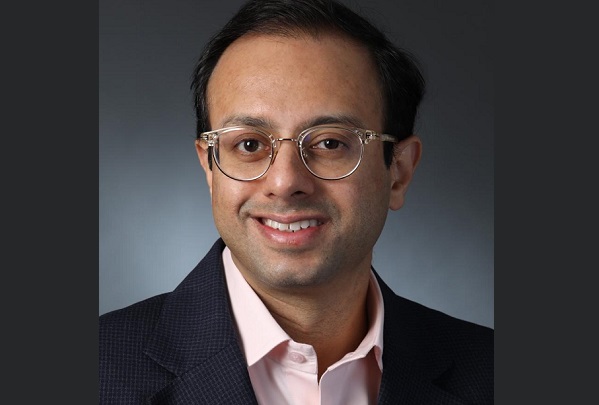
India Strategy : Growth beyond transfers by Sanjeev Prasad, MD & Co-Head, Kotak Institutional Equities

Growth beyond transfers
We hope the government can implement follow-up reforms in a few areas to move India’s growth trajectory to a higher level. The recent interest rate and tax rate cuts may provide a short-term consumption boost to the economy, but structural reforms will be critical to push India’s growth to a higher level and leverage India’s favorable demographics.
Self-sustaining cycle critical
We believe that the central government and state governments may have to follow the recent fiscal stimulus and labor reforms through further structural reforms (administrative, fiscal, judicial/legal, policy) to put India’s growth trajectory on a higher and sustainable path. Fiscal transfers from the government to households in the form of income tax rates and GST rates cuts can provide a short-term boost to consumption at best.
Demographics can help to a point only
We expect India’s favorable demographics, with (1) 96 mn people reaching the working-age population between FY2025 and FY2035 and (2) the share of working-age population in total population rising from 68% in FY2025 to 69% FY2035, to provide the human capital for the next phase of India’s growth. However, it would be crucial for India to (1) generate a sufficient number of quality jobs and (2) invest in human and physical capital for higher productivity (value-add/capita or GDP/capita).
Supply-side reforms key to higher investment rate and jobs
We stress the importance of further supply-side reforms for a step-up in India’s investment rate, which is imperative for India to create a sufficient number of jobs to match the sharp increase in potential workers over the next decade or so. We do not see most basic factors of production (capital, labor, land) as impediments for investment. India’s overall investment rate has declined to 31.4% in FY2024 from a high of 39% in FY2012.
Greater role of states and private sector critical going forward
We believe more aggressive investments by (1) states in infrastructure and (2) the private sector in manufacturing would be critical for a higher investment rate. We see a large investment opportunity for states in urban infrastructure (housing, transportation and water), but states face financial and institutional challenges to pursue the opportunity more aggressively. In our view, a higher share of government finances with greater accountability will be critical for states to invest. We see similar large opportunities for the private sector for investment in manufacturing, but (1) companies may need to accept lower RoICs given higher investment in capex and R&D to be competitive versus global players, and/or (2) the government may need to provide a judicious mix of ‘incentives’ and ‘disincentives’ for companies to invest.
Please refer disclaimer at https://www.kotaksecurities.com/disclaimer
SEBI Registration No. INZ000200137