India's November power output falls on weak cooling demand, slower industrial activity
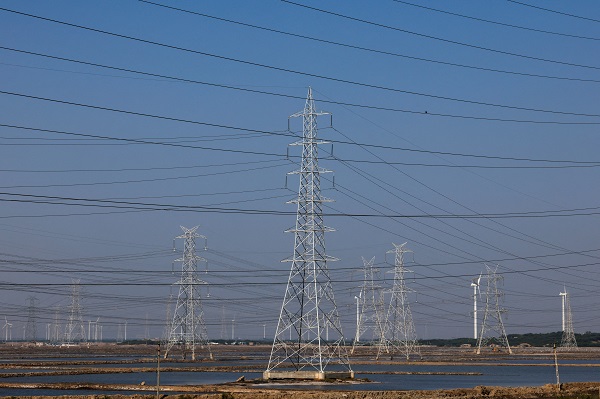
India's power output fell for a second month in November as temperate weather and a slowdown in industrial activity kept electricity demand tepid, government data showed.
Total electricity generation in November fell about 1% year-on-year to 134.26 billion kilowatt-hours (kWh), Reuters calculations based on daily data from federal grid regulator Grid-India showed, following a 6% annual drop in October.
India's manufacturing sector lost some momentum in November with growth decelerating to the slowest pace in nine months as steep U.S. tariffs took a heavy toll on demand.
This also marked the first time power demand had fallen in the month of November in at least five years. Demand generally picks up in the latter part of the year as industrial and agricultural activity recovers after monsoon season, analysts said.
"The early onset of winter has reduced cooling requirements, while previously, weak summer conditions and an early monsoon had already suppressed demand," said Ankit Jain, vice president of corporate ratings at ratings agency ICRA.
"These seasonal variations highlight the strong correlation between temperature patterns and electricity consumption, impacting both short-term demand forecasts and generation planning."
Reflecting the slowdown in demand, ICRA has trimmed its full-year power demand growth forecast for India sharply to 1.5%–2.0%, from 4.0%–4.5% previously.
The country's coal-fired electricity generation in November fell 5.8% from a year earlier as overall power demand declined.
Coal-fired generation, which typically accounts for about 75% of India's electricity output, has fallen on an annual basis in seven out of 11 months this year, the most since 2020, Grid-India data showed.
The sustained growth in renewable energy has also reduced India's reliance on coal for electricity generation.
India's renewable energy output surged to 18.55 billion kWh in November, up 24% from a year earlier.
India added a record 25.4 gigawatts of new solar and wind capacity in the first seven months of 2025, and plans to increase non-fossil-fuel power capacity to 500 GW by 2030.